Anthropic's SpaceX Compute Deal Rewrites AI Infrastructure Rules
The agreement to run Claude on Elon Musk's Colossus supercomputer caps a six-month period where every major foundation model lab reshuffled its cloud relationships, leaving the infrastructure map transformed.
 teslarati.com
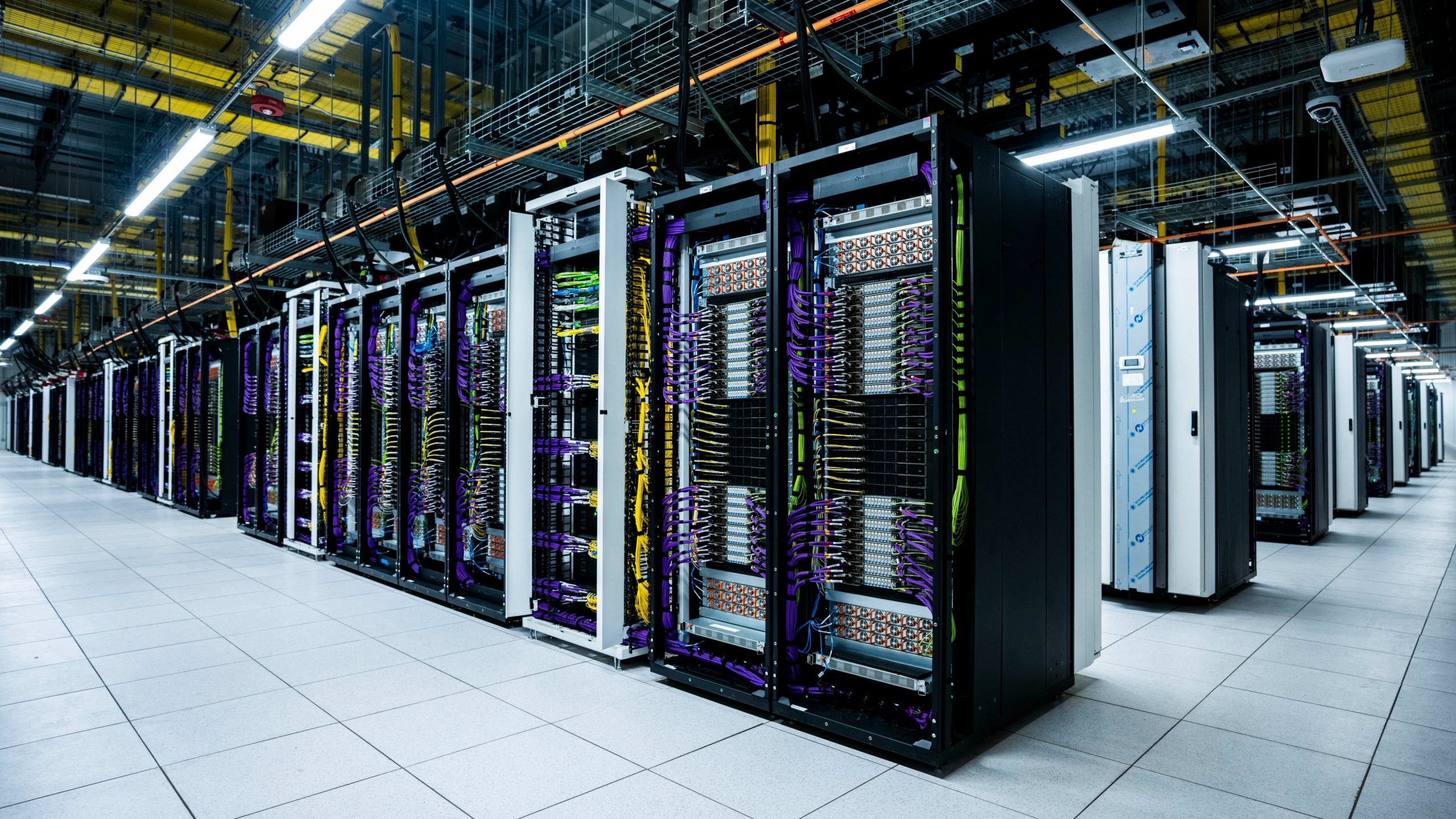
On the morning of Wednesday, May 6, Dario Amodei walked onto a conference stage in San Francisco, sat down in a chair, and told several hundred developers that Anthropic's Claude model would soon run on a supercomputer owned by Elon Musk. The venue was the company's Code with Claude developer conference. The announcement, delivered with Amodei's characteristic understatement, landed in the room like a stone dropped into still water. Within hours, the news had been picked up by Forbes and every tech outlet on the beat. The company that built its reputation on constitutional AI and safety research had signed a compute agreement with SpaceXAI, the entity formed just weeks earlier when Musk folded xAI into SpaceX. The deal gives Anthropic access to Colossus 1, a data center in Memphis, Tennessee, delivering more than 300 megawatts of power and housing over 220,000 NVIDIA GPUs.
The numbers are the story, but the subtext is the real story. Anthropic now runs workloads across at least four distinct compute environments: Amazon Web Services, where it has a decade-long cloud commitment worth more than $100 billion; Google Cloud, where it has used TPUs for years; Microsoft Azure through a separate arrangement; and now Colossus 1, a facility built by a direct competitor. No other frontier AI lab operates across this many competing infrastructure providers simultaneously. As Wired noted in its analysis the same day, the deal represented not just a capacity expansion but a strategic entanglement that would have been unthinkable eighteen months earlier. The server racks in Memphis, humming behind biometric locks and concrete walls, now power inference for Claude Pro and Claude Max subscribers alongside AWS Trainium clusters in Ohio and Google TPU pods in Iowa.
To understand how the industry arrived at this moment, you have to rewind to January 2026, when Bloomberg published a detailed graphic breaking down what it called the AI industry's 'circular deals.' Cloud providers were investing billions into AI labs, which immediately spent those billions back on cloud infrastructure from the same providers. Amazon had put $4 billion into Anthropic in 2024; Anthropic committed to spending it on AWS. Microsoft had poured over $13 billion into OpenAI; OpenAI ran almost everything on Azure. The diagram looked like a closed loop, and to critics it looked like vendor lock-in dressed up as strategic partnership. The Colossus deal cracks that loop open. Anthropic is now paying a company run by Elon Musk for compute, and that company also builds a competing model called Grok.
The timing was no accident. On April 20, just two weeks before the Colossus announcement, Amazon and Anthropic expanded their own partnership. The GeekWire report detailed the numbers: up to $25 billion in new Amazon investment, paired with Anthropic's commitment to spend more than $100 billion on AWS technologies over ten years, including custom Trainium chips and Graviton processors, across an eventual 5 gigawatts of compute capacity. Todd Bishop, GeekWire's co-founder, noted that the arrangement 'mirrored' a near-identical deal Amazon had struck with OpenAI two months earlier. Amazon was now the compute landlord to both of the world's most prominent frontier labs. Two weeks later, Anthropic added a third landlord. The sequence felt less like escalation and more like insurance.
The Microsoft-OpenAI relationship, once the template for how a lab and a cloud provider should pair, had already been rewritten by the time Anthropic took the stage in San Francisco. On April 27, SiliconANGLE reported that the two companies had revised the contract governing their technology partnership for at least the third time. The key change: OpenAI could now serve all its products to customers across any cloud provider, not just Azure. The old exclusivity clauses were gutted. OpenAI's models began appearing on Amazon Bedrock within days.
The multi-cloud hedge goes mainstream
Google's position in this reshuffled landscape is distinct. The company has not signed the kind of headline-grabbing, multi-billion-dollar compute lock-in deals that Amazon and Microsoft have pursued. Instead, it has leaned on vertical integration. Its eighth-generation TPUs, detailed in an April 2026 technical briefing, are designed to keep DeepMind's most demanding training runs on Google infrastructure by being genuinely faster than anything available for rent elsewhere. It is a subtler argument but one that reduces the lab's exposure to exactly the kind of capacity crunch that drove OpenAI and Anthropic to diversify.
The power numbers behind these partnerships are becoming harder to ignore. Chamath Palihapitiya, speaking on the All-In podcast in early May, warned that power constraints could 'cripple' both OpenAI and Anthropic within the next two years if current growth trajectories hold. His argument, reported by Yahoo Finance, was that AI labs are consuming electricity at rates that outstrip utility buildout timelines by a factor of three. The Colossus 1 facility alone draws 300 megawatts, roughly the peak demand of 60,000 U.S. homes. AWS has committed to delivering 5 gigawatts of compute capacity to Anthropic. The math of gigawatt-scale AI infrastructure is colliding with the physics of power grid interconnection queues that, in many U.S. regions, stretch five to seven years.
What the power numbers actually mean
The cheapest signal that the multi-cloud strategy is working will not be a press release. It will be uptime. When one cloud provider's region goes dark, and every major provider has experienced a regional outage in the past eighteen months, the lab that can fail over inference traffic to a second or third provider within minutes will keep its paying subscribers online. That is the operational reality behind the partnership announcements.
Not every compute partnership announced this season fits the big-lab, big-cloud template. On April 29, MIT and IBM launched the MIT-IBM Computing Research Lab, an expansion of their existing AI partnership into quantum computing research. The WinBuzzer report noted that the lab would focus on hybrid classical-quantum workflows for machine learning, an area that remains years from commercial relevance but that both institutions are betting will define the post-GPU era. It is the kind of partnership that generates fewer headlines than a 220,000-GPU cluster but may reshape the hardware assumptions of the 2030s. IBM's broader push, outlined at its Think 2026 conference in early May, positions the company as the enterprise counterweight to the hyperscaler-laboratory deals dominating the news cycle.
Two years ago moving a training run between clouds would have been a month-long negotiation. Now it's a Tuesday., Post-training researcher at a major AI lab, speaking on background
The shift has implications for how the labs are valued. When Amazon invested $25 billion in Anthropic in April, it was not just buying equity; it was buying a guaranteed revenue stream that will flow back to AWS over the next ten years. The same dynamic applies to the $50 billion Amazon committed to OpenAI two months earlier. These are not arms-length infrastructure purchases. They are structurally circular, and the circularity is the point. It keeps the cloud provider's revenue growth on track while giving the lab the compute it needs to train the next generation of models. The risk, as the Colossus deal makes clear, is that the labs are increasingly unwilling to let one circle close around them entirely.
Dario Amodei has been careful, in public and private, not to frame the SpaceX deal as a hedge against Amazon. At the Code with Claude conference, he described it as a capacity expansion driven by subscriber growth for Claude Pro and Claude Max. Anthropic's press release the same day noted that the company's annualized revenue had reached $30 billion, a figure that demands infrastructure spend at a scale few providers can support alone.
The June 2026 quarterly earnings calls for Amazon, Microsoft, and Google will be the first checkpoint where analysts can press each company on what these multi-cloud shifts mean for margins. Amazon will report AWS revenue that includes Anthropic's rising infrastructure spend; Microsoft will report Azure numbers that no longer capture all of OpenAI's workloads; Google will face questions about whether its TPU strategy is winning or merely holding ground. The cheapest signal to watch is not the headline revenue number but the 'remaining performance obligations' line item in each cloud provider's quarterly filing, the committed future revenue that has not yet been recognized. If that number rises sharply at Amazon while flattening at Microsoft, the partnership restructuring will have left a measurable footprint.
Late on the afternoon of May 6, after the conference sessions had ended and the exhibitor booths were being packed up, a small group of Anthropic engineers stood near the back of the Moscone Center's lower lobby. One of them held a phone showing a real-time dashboard of GPU utilization across the company's four compute environments. All four bars were green. In the new architecture of AI compute, that silence is the whole point.
Read next
