Smartphone Innovation Stalled After 2020, MWC 2026 Confirms No Fix
At MWC 2026 in Barcelona, the industry's response to smartphone upgrade fatigue included thinner slabs, crease-prone foldables, and a modular concept that likely will not ship, leaving Aleksy Nwankwo wondering who this is for.
 androidauthority.com
The smartphone industry has not produced a genuinely necessary upgrade since 2020, and at MWC 2026 in Barcelona it finally stopped pretending otherwise.
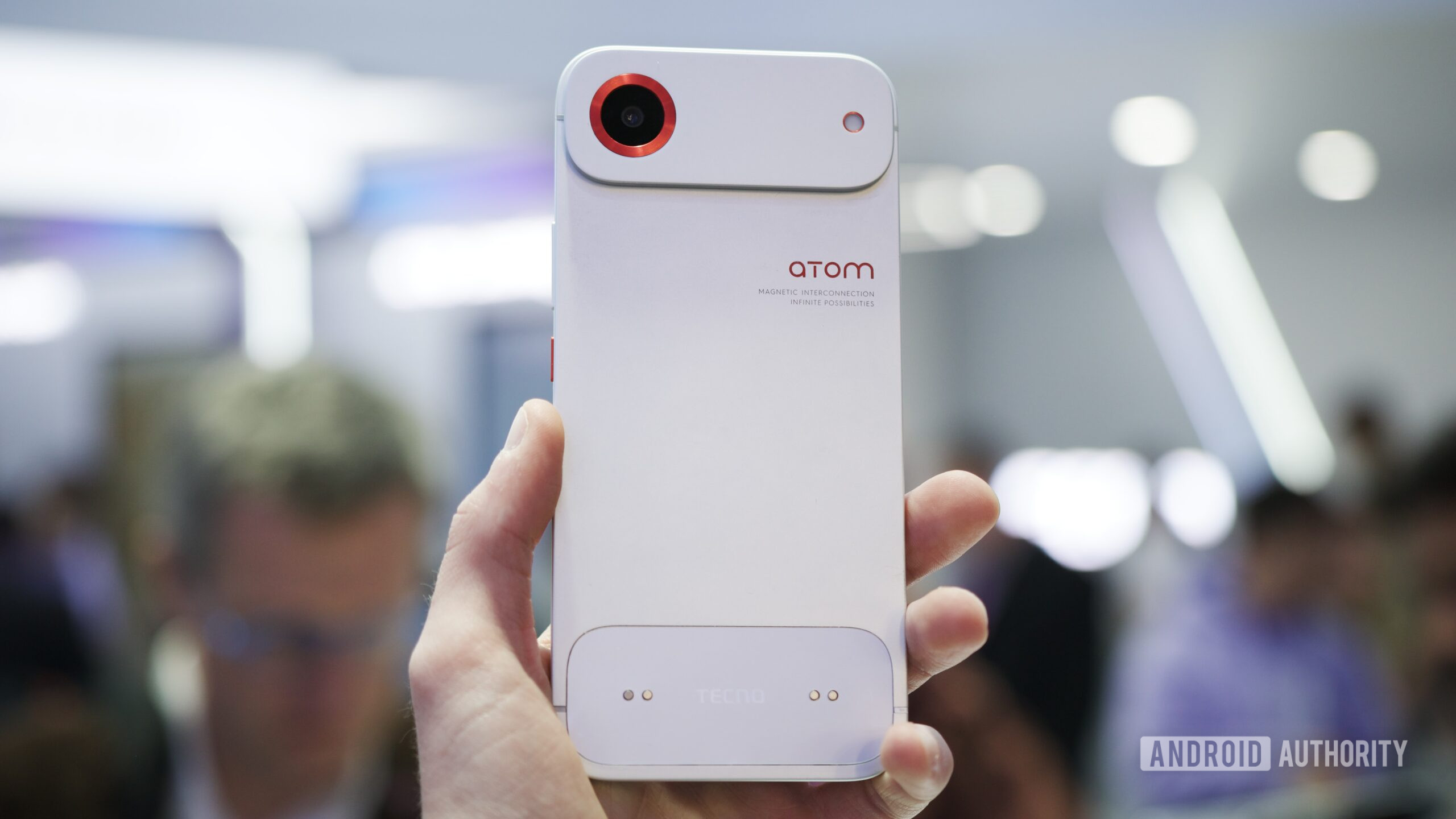
I stood at the Tecno booth on the first press day and watched a product manager snap a battery module onto a phone chassis that measured 4.9 millimeters thick. The module clicked into place with a satisfying magnetic thunk. Around me, a dozen journalists filmed the same motion on their phones, which were themselves slabs of glass and aluminum indistinguishable from the slabs they bought in 2023. The Tecno concept was easily the most talked-about device on the floor. It will almost certainly never ship. That gap, between what generates buzz and what actually reaches a checkout page, is the entire story of consumer mobile hardware in 2026.
Here is the thesis I am going to earn over the next 2,000 words: the phone and tablet market has entered a period of such profound conceptual exhaustion that even the trade show circuit, the industry's own cheerleading apparatus, cannot hide it. The most exciting products at MWC 2026 were concepts that will not launch. The products that will launch are iterative refinements of a form factor that peaked four hardware generations ago. And the one thing consumers are actually asking for, a reason to upgrade before their current device physically fails, remains the one thing nobody in Barcelona had an answer for.
Tecno's modular phone was the show's main character. The company showed a base handset, thinner than an iPhone Air, that accepted clip-on modules including a secondary battery, a dedicated camera grip with optical zoom, and a speaker array. Tom Bedford, reporting for Android Police, called it one of two concepts that dominated the show floor. The other was Honor's robot phone, a device with a motorized camera that swiveled to track faces. Bedford liked the Tecno better. I handled both and I agree with him. The Tecno feels like something a product team built because they were genuinely trying to solve a problem: how do you make a phone thin when thinness fights battery life and camera physics? The Honor robot phone feels like something a marketing team commissioned to win a headline.
But liking a concept is not the same as believing in it. Modular phones have a graveyard all their own. Google's Project Ara collapsed in 2016 before shipping a single unit. The LG G5's slide-out modules lasted exactly one generation before LG abandoned the idea and, shortly afterward, the smartphone business entirely. Motorola's Moto Mods clung to life for three years on the strength of a single carrier partnership. Every time the industry pitches modularity, it frames it as the future. Every time, it fails for the same reason: the economics of manufacturing precision modules at consumer-friendly prices do not work, and the accessory ecosystem required to sustain the idea never materializes. Tecno's PM declined to discuss pricing or shipping timelines on the record.
If modular is the concept that generates buzz without a ship date, foldable is the category that shipped and stopped generating buzz anyway. Samsung has now released eight generations of Galaxy Z Flip and seven generations of Z Fold. Motorola just announced its 2026 Razr lineup starting at $799, which Android Authority reports will carry a familiar 6.9-inch inner display and a largely unchanged design language. The updates are a newer Dimensity chip and a larger battery. That is it. Those are the talking points. A chip and a battery. I tested the Razr 2025 for six weeks last year and I would struggle to tell you three meaningful differences between it and the 2026 model without a spec sheet in front of me.
Apple's entry into foldables, rumored for fall 2026, is supposed to change the conversation. The leaks point to a 7.8-inch inner display, a titanium frame, and the name "iPhone Ultra." Mashable ran the headline "Here we go again" a full year ago, and the weary tone was earned. We have been reading about Apple's foldable iPhone since at least 2020. The rumors resurface quarterly, each cycle adding a millimeter of spec detail and zero evidence of a shipping product. When Foxconn reportedly began trial production in April 2026, the news landed not with excitement but with the exhausted resignation of an audience that has been promised this product for six years and has, in the interim, watched Samsung iterate the Fold eight times without solving the crease, the dust resistance, or the battery anxiety that made foldables a compromise in the first place.
Apple's motive is not mysterious. iPhone sales have declined. The company's Q1 2026 earnings showed the iPhone 17 series performing well, but the broader trend line points down. Tom's Guide, reporting on the earnings call, noted Tim Cook describing the 17 line as "by far the most popular" iPhones, which is the kind of thing you say when you are selling slightly fewer of them than you used to and need investors to focus on the superlative rather than the denominator. Apple's plan, as reported by Digital Trends, is to boost sales with foldable and thinner iPhones. The strategy amounts to: our slab phones are no longer driving upgrades, so we will make a foldable slab and a thinner slab and hope those do. I cannot fault the logic because there is no logic to fault. It is a bet placed in the absence of any better idea.
The tablet market is worse. At MWC 2026, Xiaomi announced a compelling new tablet alongside its 17 Ultra flagship phone. Tablets peaked with the 2018 iPad Pro, maybe the 2020 model. Every tablet released since has been a screen refresh, a processor bump, or a camera upgrade on a device nobody should be using as a camera. The foldable iPad rumors, persistent as the foldable iPhone rumors, propose solving the tablet's identity crisis by making it fold into something smaller, which is a phone. The industry's answer to "what is a tablet for" has become "what if it were a phone instead."
TechRadar's team tested 30 phones in two days at MWC 2026 and published their top six picks. The winners included the Xiaomi 17 Ultra, a phone whose primary innovation over its predecessor is a camera bump that now occupies roughly a third of the rear surface area, and the Honor Magic 8 Pro, which has a slightly brighter screen than the Magic 7 Pro. These are good phones. I am not arguing they are bad products. I am arguing that a reviewer handed any of these devices alongside their 2024 equivalents would need to run benchmarks side by side to tell them apart, and that is a damning thing to say about an industry that asks consumers to spend $800 to $1,200 on a replacement every two or three years.
The consumer has figured this out. Smartphone upgrade cycles have stretched. In India, shipments are projected to decline 10 to 12 percent in 2026, driven partly by rising component costs but also by a user base that no longer sees an annual or biennial upgrade as necessary, according to data from analyst firms tracking the market. A phone purchased in 2022 still runs current software, still takes photos good enough for Instagram, and still holds a charge through most of a day. The battery might be at 83 percent health, but a repair costs $89, not $999. The rational consumer decision in 2026 is to replace the battery, not the phone. The industry has no answer to this rationality except to make phones thinner, which makes the battery smaller, which makes the problem worse.
We keep showing up to MWC hoping to see the next thing, and what we get is the last thing, but thinner., A veteran phone reviewer at a competing publication, speaking off the record over coffee at the Fira Gran Via
I want to be fair about what "thinner" actually costs. Making a phone thin in 2026 is a genuine engineering achievement. Tecno's 4.9mm chassis required a custom battery chemistry, a redesigned antenna stack, and a logic board laid out with a density that a senior hardware lead at a competing manufacturer described to me as "near-impossible at consumer yield rates." The problem is not the engineering. The problem is that thinness is a solution to a question nobody asked. Consumers want longer battery life, more durable screens, and cameras that work reliably in imperfect light. They do not want a phone that disappears into a pocket lining and dies by 4 p.m. The industry keeps optimizing the wrong variable because it is the variable that photographs well in a press render.
I tested the iPhone 17 Pro Max for three months as my daily driver. I tested the Xiaomi 17 Ultra for two weeks post-MWC. I carried a Galaxy Z Fold 6 for the entirety of January. These are three of the most capable computing devices ever made, and I mean that without irony. They edit 4K video. They run local AI models. They translate languages in real time. And yet I struggle to recommend any of them over their predecessors, because the delta between what a 2024 flagship could do and what a 2026 flagship can do is imperceptible to a human being who is not running Geekbench. When I filed my Xiaomi 15 Ultra review last year, I wrote that the camera was the best on any phone I had tested. The Xiaomi 17 Ultra camera is marginally better in exactly one scenario: 10x zoom in low light. I had to shoot a brick wall at midnight to confirm it. That is not a feature. That is a footnote.
The question I keep returning to is the one my editor asked when we planned this piece: where do these products end up in eighteen months? An iPhone 17 Pro Max will still be in a pocket, because Apple's software support runs five years and the hardware is built to last. A Galaxy Z Fold 6 might be in a drawer, its inner screen protector peeling at the crease, its trade-in value a third of its retail price. A Tecno modular phone, if it ever ships, will be in a landfill or, more charitably, on a shelf in a collector's office, a curiosity from an era when the industry still believed hardware novelty could rescue it from software sameness. A Motorola Razr 2026 will be on Swappa for $400, and the buyer will get the same experience as the person who paid $799 on launch day. That is a good thing for buyers and a terrible thing for manufacturers.
What I wish the industry had done instead is straightforward: pick one hard problem and solve it completely. Give me a phone that lasts three full days on a charge, not a phone that is half a millimeter thinner than last year's. Give me a tablet that runs real desktop software, not a tablet with a processor faster than a MacBook that is still locked to iPadOS's infantilized multitasking. Give me a foldable with an invisible crease and IP68 dust resistance, or do not give me a foldable at all. Stop shipping concepts that tease a future you have no intention of manufacturing, and stop shipping products that iterate on a formula that stopped exciting anyone half a decade ago. The industry acts as though consumer indifference is a mystery to be studied. It is not. Consumers are indifferent because you stopped giving them reasons to care.
MWC 2027 will be here in eleven months. I will fly to Barcelona, check into the same hotel near Plaça d'Espanya, and walk the same eight halls of the Fira Gran Via. I will see a new modular concept, a new foldable that fixes last year's foldable's most obvious flaw, and a new flagship slab that is thinner, brighter, and more expensive than the one before it. The press will write the same headlines. The product managers will give the same off-the-record caveats about cost and yield. And somewhere in Hall 2, a junior engineer will show me a prototype that genuinely could change things, a prototype that will never ship because the business case does not close and the supply chain is not ready and the market research says consumers want something safe. The phone in my pocket will be the same one I brought to Barcelona. And that, more than any concept or keynote, will be the real headline.
Read next
