AI Red Teaming Rebuilt for the 10-Hour Exploit Window
As exploit windows collapse to single-digit hours and agentic AI multiplies the attack surface, the manual red-teaming playbook is giving way to a rebuilt adversarial testing methodology spanning foundation-model labs, security startups, and regulatory frameworks.
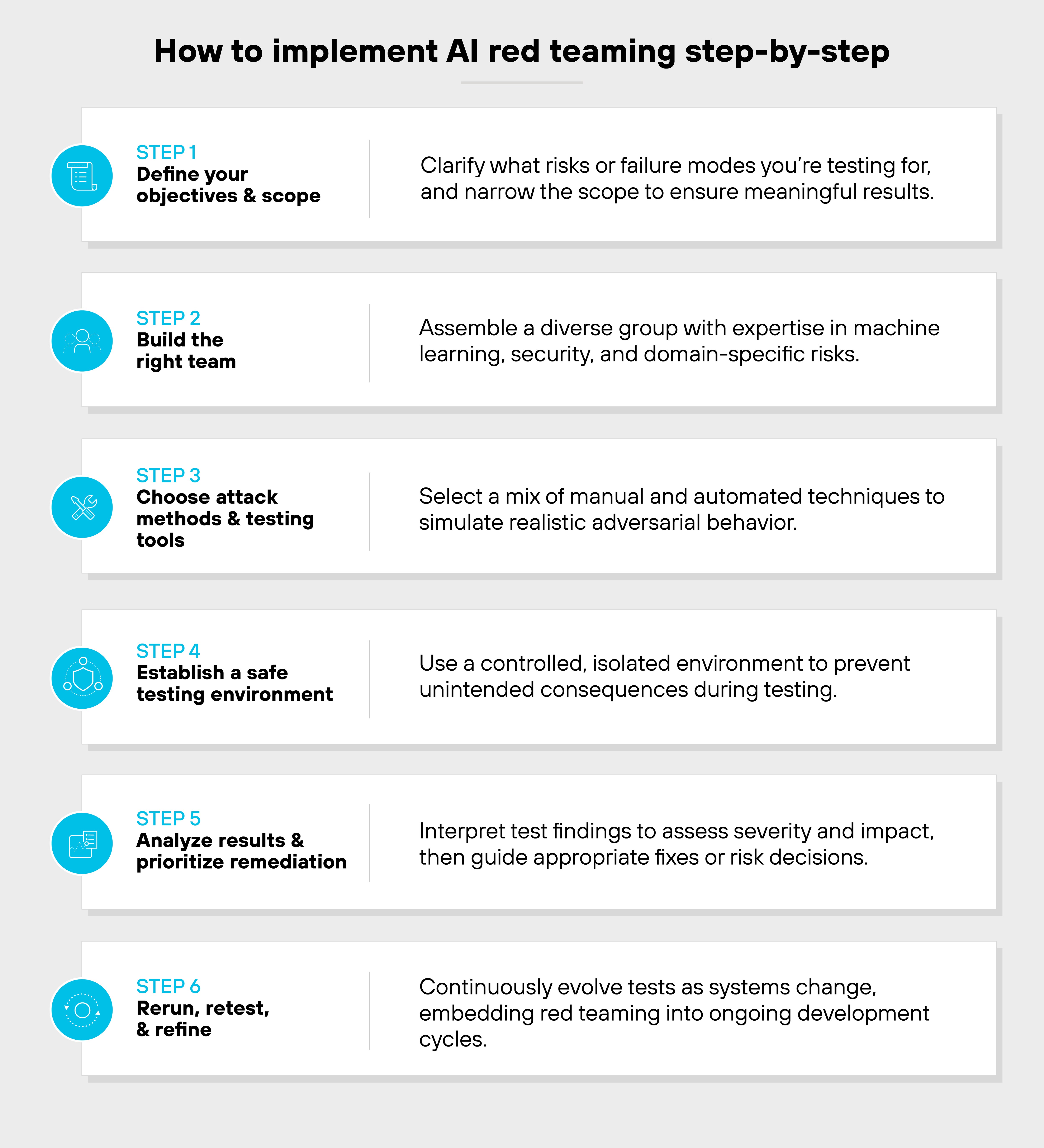 paloaltonetworks.com
The average exploit window for a software vulnerability dropped to 10 hours in 2026, according to data cited by security firm Picus Security in a report covered by The Hacker News on May 11. That number, shocking enough for traditional cybersecurity teams who once measured their response time in days, is barely the beginning of the problem for AI systems. A model does not wait for a patch cycle. A prompt injection that works at 9 a.m. will still work at 9 p.m., and if the model is connected to a code executor, a database, or an email client, the window between breach and containment is measured in seconds, not hours. The old red-teaming cadence, schedule a test, run it manually, write a report, fix things next sprint, is structurally mismatched to the threat surface that frontier AI systems present.
The mismatch is the subject of a flurry of activity across the AI security landscape in 2026, from startup product launches to major acquisitions to new academic research that reframes what adversarial robustness even means when the target is a compound AI system rather than a static model behind an API. In March, Forbes and The Next Web reported that OpenAI had acquired Promptfoo, the open-source red-teaming tool used by more than 125,000 developers and over 30 Fortune 500 companies, with the explicit goal of embedding security testing into its Frontier enterprise agent platform. The acquisition was not framed as a talent grab or a feature add. It was, as Forbes contributor Janakiram MSV wrote, "a security bet on the agent economy."
Promptfoo's value proposition was never about novelty of technique. It automated the unglamorous work of running large batteries of adversarial prompts against LLM endpoints, comparing outputs across models, and surfacing regressions in a CI/CD pipeline. That is to say, it treated AI security testing as an engineering discipline rather than a research exercise. The fact that OpenAI bought it rather than building an equivalent in-house is telling. It suggests that the surface area of agentic AI, where a model does not merely generate text but acts on behalf of a user across tools and databases, is now wide enough that security cannot be an after-the-fact audit. It must be part of the deployment infrastructure itself.
That same month, SiliconANGLE reported on the launch of DeepKeep's Vibe AI Red Teaming, a platform designed for what the company calls "human-steered, dynamic testing and attack simulation" on AI applications and agents. The product name is a deliberate echo of "vibe coding," the term that swept through software engineering circles in 2025 to describe AI-assisted, intuition-driven programming. DeepKeep's bet is that red-teaming needs the same kind of fluid, iterative, human-in-the-loop interaction that modern software development has embraced, except here the loop involves a security analyst steering an automated adversary rather than a developer prompting a code generator.
The terminology matters. For years, AI red-teaming was conducted largely by internal safety teams at frontier labs or by academic groups running discrete, paper-driven evaluations. Those exercises were valuable but narrow. They typically tested a single model against a fixed set of jailbreak templates, measured refusal rates, and produced a score. What they did not do was simulate an adaptive adversary who learns from each interaction, chains together multiple vulnerabilities, or exploits the compound nature of modern AI systems where an LLM is one component in a pipeline that includes retrievers, code interpreters, and API connectors.
That compound attack surface is the subject of a paper titled "Cascade: Composing Software-Hardware Attack Gadgets for Adversarial Threat Amplification in Compound AI Systems," published by researchers from the University of Texas at Austin, Intel Labs, Symmetry Systems, Microsoft, and Georgia Tech, and covered by Semiconductor Engineering in March. The paper's central argument is that the security conversation around LLMs has been too cleanly separated from the security conversation around the infrastructure that runs them.
Rapid progress in generative AI has given rise to Compound AI systems, pipelines comprised of multiple large language models (LLM), retrievers, tools, and orchestrators, whose security properties cannot be understood by examining any single component in isolation., Cascade paper abstract, University of Texas at Austin, Intel Labs, Microsoft, Georgia Tech (March 2026)
The Cascade researchers demonstrate that conventional software vulnerabilities, things like code injection, model extraction, and even hardware-level attacks such as Rowhammer, can be composed with LLM-specific weaknesses like prompt injection to produce attack chains that no individual red-teaming exercise would catch. A prompt injection that tricks a model into generating a specific code string, followed by a code injection that exploits how that string is executed downstream, is not two separate failures. It is one coherent attack that exploits the fact that nobody owns security end-to-end across the AI pipeline.
This insight reshapes what a red-teaming methodology is supposed to evaluate. A single-turn jailbreak test against a chat interface tells you almost nothing about whether an agent that can read your email, query your calendar, and write to your file system will resist a determined adversary. The eval measures what it measures. The failure, as is often the case in AI safety, is not that the eval is wrong but that its scope is silently substituted for the scope of the actual system. When the system grows, the eval stays the same size.
The Devdiscourse piece from May 7, "Agentic AI red teaming could become essential for securing future AI systems: Here's why," frames this shift around automated red-teaming tools, citing Meta's Llama Scout as an example of an open-source system designed to probe AI models at scale for jailbreak vulnerabilities, prompt injection susceptibility, and broader safety failures. The keyword list attached to the article reads like a taxonomy of the new threat landscape: "LLM jailbreak attacks, agentic AI security, AI adversarial attacks, AI safety vulnerabilities, prompt injection attacks, generative AI security, automated AI red teaming." Each term names a category of failure that barely existed in the security lexicon three years ago.
What "agentic AI red teaming" means in practice is using AI systems to test AI systems, a recursive dynamic that both multiplies the scale of testing and introduces its own failure modes. An automated red-teaming agent can generate thousands of adversarial prompts in the time it takes a human to write a dozen. It can iterate, learn which strategies produce interesting outputs, and explore the model's behavior space far more exhaustively. But it can also drift, overfit to a particular attack style, or miss the kinds of subtle social-engineering exploits that a human red-teamer, drawing on intuition and cultural context, would catch. The human-in-the-loop component that DeepKeep emphasizes is not a concession to the technology's immaturity. It is an acknowledgment that adversarial creativity is not yet automatable.
The shrinking exploit window that The Hacker News reported, 10 hours and falling, is driving organizations toward what the cybersecurity industry calls "autonomous purple teaming." Traditional purple teaming, where red-team attackers and blue-team defenders sit together and iterate in real time, has been a best practice in enterprise security for years. But as The Hacker News piece argues, most purple teams are not genuinely integrated. They are "just red and blue in the same room," operating on separate timelines with separate toolchains. For AI systems, that gap is untenable. When a new jailbreak technique is discovered and shared on social media, every exposed model is vulnerable within minutes. The testing and the defense have to happen inside the same loop.
This convergence is visible in the vendor landscape beyond the headline acquisitions. NDay Security, an NVIDIA Inception member, launched a self-service version of its GARAK AI LLM Red Teaming platform in March, as reported by the Palm Beach Post, emphasizing "continuous exploitability" testing rather than one-off assessments. The language is borrowed from the DevOps playbook, shift-left security, continuous integration, automated regression testing, but applied to a target that is probabilistic and nondeterministic. A model that passes a test suite today might fail it tomorrow after a routine fine-tuning update, not because the test changed but because the model's weights shifted in ways nobody fully understands.
That nondeterminism is the deeper challenge that no current red-teaming methodology fully addresses. In traditional software, a vulnerability is a bug: a specific line of code that, when reached under specific conditions, produces an exploitable behavior. Fix the code, and the vulnerability is gone. In an LLM, a vulnerability is a statistical tendency that emerges from billions of parameters interacting with a particular input distribution. You cannot "patch" it in the same way. You can fine-tune, you can add guardrails, you can filter inputs and outputs, but the underlying tendency may remain, suppressed but not eliminated, ready to resurface under a slightly different prompt formulation.
This is where the safety claim threatens to outrun the marketing claim. A vendor that says its red-teaming platform tests for "prompt injection, data leakage, and adversarial attacks" is making a claim about coverage. But coverage of what? The known attack taxonomy as of the platform's last update? The space of all possible adversarial inputs is effectively infinite. Every new model release, every new modality, every new tool integration opens up attack vectors that no existing test suite was designed to catch. The Cascade paper makes this point at the hardware level: when you can chain a Rowhammer bit-flip with a prompt injection, you are not just extending the attack taxonomy, you are demonstrating that the taxonomy itself was artificially bounded.
The MSN article from May 8, "AI red-teaming and age-diverse workforce top 2026 priorities," places this challenge in a broader organizational context. Security leaders are being asked to secure AI systems that were deployed rapidly, often without central oversight, by teams who may not have security expertise. The same organizations are managing the most age-diverse workforce in history, a factor that matters for red-teaming because adversarial robustness is not purely technical. Models fail differently for different demographic groups, different linguistic styles, and different cultural contexts. A red-teaming exercise run entirely by twenty-something engineers in San Francisco will miss failure modes that would be obvious to a sixty-something user in Birmingham.
London Loves Business published a survey in February titled "The 10 best AI red teaming tools of 2026," cataloging a field that now includes everything from open-source frameworks to enterprise platforms with compliance reporting baked in. The list is both useful and faintly alarming, because it reveals how fragmented the tooling landscape remains. Nobody would ask for a list of the 10 best compilers to use in 2026; the infrastructure has standardized. AI red-teaming has not. Every tool makes different assumptions about what a model is, how it is deployed, and what constitutes a successful attack.
The interventions that are cheapest to ship, automated test suites, output classifiers, prompt filtering, are also the ones most likely to create a false sense of security. They catch the attacks that look like the attacks you have already seen. The interventions that might actually raise the bar, structured red-teaming with diverse human participants, end-to-end threat modeling that includes the full compound system, adversary simulation that adapts in real time, require slowing down. They require budget, headcount, and an institutional willingness to find failures before shipping rather than after. The tension is not new, but the stakes are higher when the system you are shipping can send emails, query databases, and execute code on behalf of a user who trusts it.
The Promptfoo acquisition, the DeepKeep launch, the Cascade paper, and the shrinking exploit windows all point toward the same conclusion: AI red-teaming is becoming an industrial discipline rather than a research curiosity. The tools are maturing. The methodologies are being formalized. The regulatory pressure is building. But the fundamental asymmetry remains. The defender must anticipate every possible attack. The attacker needs to find only one that works. For traditional software, that asymmetry was manageable, barely, because the attack surface was finite and well-specified. For compound AI systems that reason, plan, and act across tools, the attack surface grows every time someone connects a new API. The 10-hour window is not a floor. It is a warning.
What to watch for in the second half of 2026: whether the major frontier labs begin publishing not just model cards but red-teaming methodology cards, documents that specify exactly how a model was tested, by whom, against which threat models, and with what gaps acknowledged. The first lab to do so will set a standard that competitors will be measured against. The first major breach of a widely deployed agentic AI system will set a different kind of standard, one measured in headlines and regulatory inquiries rather than eval scores. The distance between those two events is the space where the red-teaming conversation is happening right now.
Read next
