Direct GPU Leases Let AI Labs Bypass Hyperscalers for Frontier AI
From a $32.2M GPU lease in British Columbia to Anthropic's takeover of a SpaceX supercomputer in Memphis, frontier AI labs are building a parallel compute infrastructure market that bypasses hyperscaler clouds.
 theregister.com
In this article
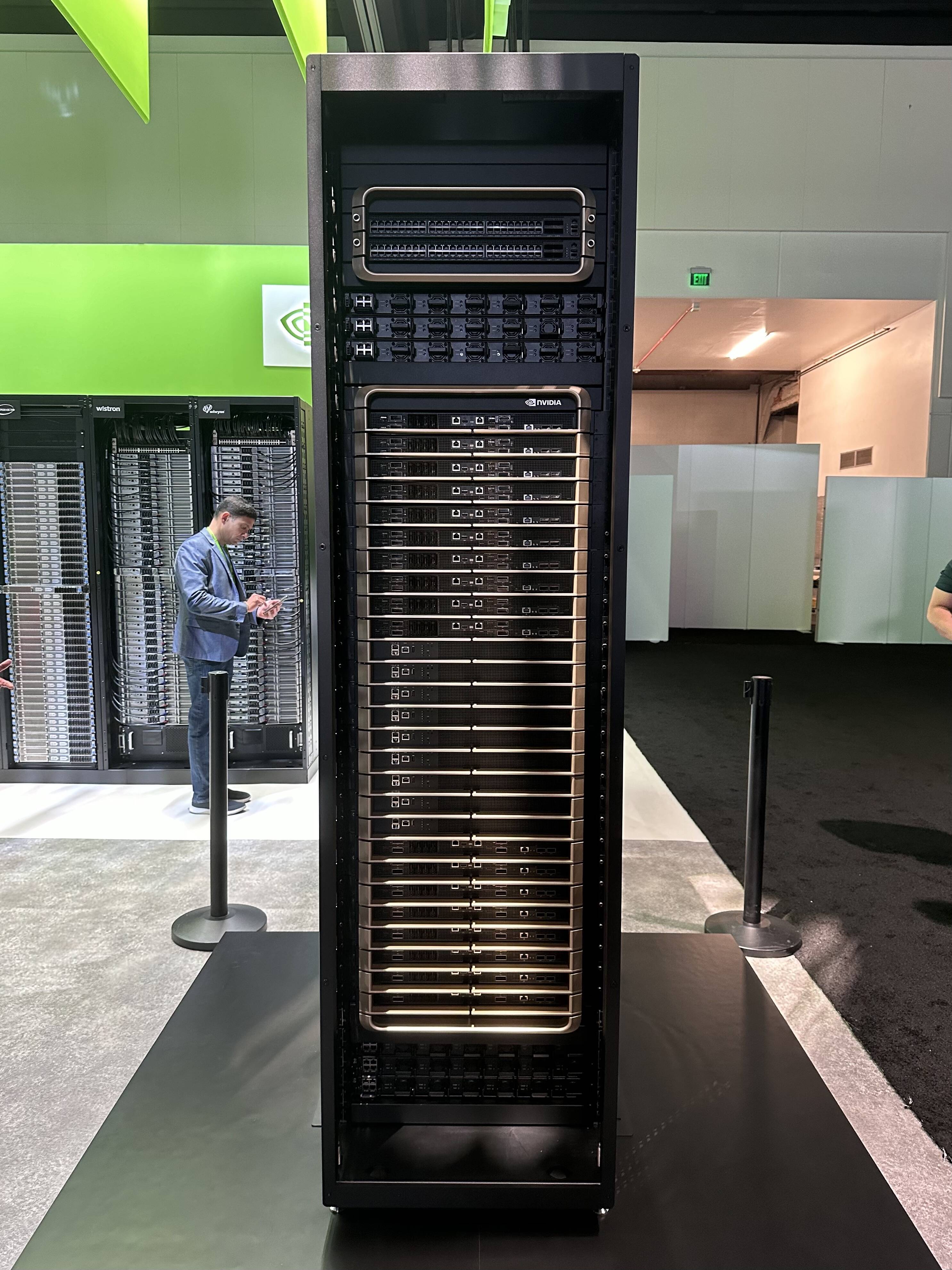
On May 12, a company called Alpha Compute Corp. filed a press release with Nasdaq announcing it had closed a $32.2 million revenue contract with a customer it described only as "a leading frontier artificial intelligence laboratory." The deal was for 504 NVIDIA B200 GPUs deployed in a Canadian data center, leased over two years. The filing, brief and boilerplate in tone, landed without much notice. It named no names. It required no regulatory approval. It did not involve Amazon, Microsoft, or Google.
The press release matters because of what it signals about the market structure underneath it. A frontier AI lab, one of the handful of organisations training the most capable models in the world, chose to source a production GPU cluster from a GPU-as-a-service firm headquartered in the British Virgin Islands rather than from a hyperscaler cloud. Alpha Compute is not a household name. Its stock trades on Nasdaq under the ticker ALP. The contract it disclosed, reported by Nasdaq and Markets Insider, is a small but precise piece of evidence that the compute supply chain for frontier AI is fragmenting, and fragmenting fast.
The Alpha Compute contract is not the largest of its kind. It is not even close. But it is legible in a way that the bigger deals are not: a single cluster, a fixed price, a named GPU type, a known location. That legibility makes it a useful lens for examining the three larger forces reshaping how frontier labs acquire compute. The first is the emergence of non-hyperscaler infrastructure providers as credible alternatives to the big three clouds. The second is the entry of entirely unexpected counterparties, companies whose core business has nothing to do with renting servers. The third is the speed at which labs are converting compute contracts into product changes their users can feel.
The most dramatic illustration of the second force arrived six days before the Alpha Compute filing. On May 6, at its Code with Claude developer conference in San Francisco, Anthropic announced it had signed an agreement to lease the entire compute capacity of SpaceX's Colossus 1 data center in Memphis, Tennessee. The deal gives Anthropic access to roughly 220,000 Nvidia GPUs and 300 megawatts of power, Forbes and Ars Technica reported. The company that lands rockets is now, in effect, a cloud provider for the company that builds Claude.
The counterparty deserves scrutiny. SpaceX acquired Elon Musk's AI venture xAI in February 2026 in an all-stock transaction that valued the combined entity at $1.25 trillion, Moneycontrol reported. The Colossus facility in Memphis was originally built to train xAI's own model, Grok. By leasing the entire site to Anthropic, SpaceX is essentially monetising capacity that its in-house AI effort no longer needed at that scale. The deal also includes a clause in which Anthropic expressed interest in partnering with SpaceX to develop "multiple gigawatts of orbital AI compute capacity," an ambition that, if realised, would extend the infrastructure map beyond the planet's surface.
Anthropic did not limit itself to SpaceX. In the same announcement cycle, the company disclosed a portfolio of compute agreements that together represent one of the largest multi-provider infrastructure buildouts in the history of the AI industry. The list includes a deal with Amazon for up to 5 gigawatts of capacity, with nearly 1 GW of new capacity expected by the end of 2026; a 5 GW agreement with Google and Broadcom coming online in 2027; a strategic partnership with Microsoft and Nvidia that includes $30 billion in Azure capacity; and a $50 billion investment in American AI infrastructure with Fluidstack. The pattern is unmistakable: no single provider, no single geography, no single vendor relationship.
The product consequence of all this new compute arrived immediately. Anthropic announced it was doubling Claude Code's five-hour rate limits for Pro, Max, Team, and seat-based Enterprise plans, and removing the peak-hour limit reduction that had frustrated developers since its introduction in March 2025. API rate limits for Claude Opus models were raised significantly. The connection between infrastructure and user experience, long an abstraction discussed in procurement meetings, was made explicit on a conference stage: more GPUs meant fewer rate-limit error messages for paying customers.
Our enterprise customers, particularly those in regulated industries like financial services, healthcare, and government, increasingly need in-region infrastructure to meet compliance and data residency requirements., Anthropic, in a statement to Moneycontrol, May 2026
That sentence, attributed to Anthropic by Moneycontrol, captures the regulatory logic driving multi-provider strategies. A lab that relies exclusively on a single hyperscaler with data centers in a single region cannot serve financial services clients in Frankfurt, government agencies in Singapore, and healthcare systems in Toronto under each jurisdiction's data residency rules. Diversifying compute providers is partly a performance decision and partly a compliance one. Anthropic added that it is "very intentional about where we'll add capacity, partnering with democratic countries whose legal and regulatory frameworks support investments of this scale."
The Alpha Compute contract fits the same template at a smaller scale. The deployment is in Canada, a jurisdiction with data sovereignty frameworks compatible with both European and North American regulatory requirements. The 504 GPUs are NVIDIA B200s, the latest Blackwell-generation silicon, meaning the unnamed lab is not buying last-generation capacity at a discount. It is buying cutting-edge hardware from a non-hyperscaler provider for what appears to be a production workload, not an experiment.
The enterprise infrastructure market is shifting in parallel. At Dell Technologies World 2026, held in mid-May, Dell announced a suite of updates that signal how traditional hardware vendors are repositioning themselves for the same fragmentation. The company launched PowerRack, a turnkey compute, storage, and networking solution designed for AI workloads, and updated its AI Factory platform with Nvidia to support agentic AI use cases, DatacenterDynamics reported. SiliconANGLE described the moves as part of "a significant reorganization currently taking place within the enterprise infrastructure market." Dell is expanding partnerships with Nvidia, Nutanix, AMD, and Microsoft simultaneously, betting that no single alliance will be sufficient.
Michael Dell told CRN that agentic AI acceleration is extending the technology supply chain crisis into 2028. The warning matters because it comes from the executive whose company sits at the intersection of every major AI infrastructure supply chain: Dell sells servers to hyperscalers, to enterprises, to GPU-as-a-service startups, and increasingly to the labs themselves. If Dell cannot source enough components to meet demand through 2028, then the fragmentation of compute providers is not a transient phenomenon. It is the operating environment for the rest of the decade.
The Overbuild and the Idle GPU
If the labs are diversifying their compute sources, the enterprises they serve appear to be hoarding capacity they do not use. In April, cloud optimisation firm Cast AI published a report finding that 95 percent of GPU capacity across thousands of organisations sits idle, Business Insider reported. The finding suggests a market defined by fear of missing out: companies reserve GPU clusters for workloads they may never run, because the alternative is being locked out of compute entirely when a training run or inference spike arrives. The overbuild is a rational response to scarcity, but it also means that a substantial fraction of the world's AI silicon is drawing power and producing nothing.
The idle-GPU data adds context to the Alpha Compute contract. A lab signing a two-year, $32.2 million lease for 504 B200 GPUs is not hoarding. It is buying a specific, committed capacity for a specific workload, on a timeline that suggests the hardware will be running at high utilisation from the moment it comes online. That is the difference between a compute partnership structured as a financial hedge and one structured as a production input. The labs are increasingly doing the latter, while the broader enterprise market is stuck in the former.
The question hanging over every one of these deals is whether the labs can convert compute into revenue faster than the depreciation on the GPUs accumulates. Alpha Compute's $32.2 million contract works out to roughly $16.1 million per year, or about $32,000 per GPU per year at list price. That is a meaningful unit cost for a lab whose business model depends on selling API tokens and subscriptions. If the lab can generate more than $32,000 in annual revenue per GPU, the contract is accretive. If it cannot, the contract is a drain. The same calculus applies to Anthropic's Colossus lease, scaled up by three orders of magnitude.
What to Watch For
The cheapest signal that a lab's compute strategy is working is a rate-limit increase. When Anthropic doubled Claude Code's limits the same week it announced the SpaceX deal, it was effectively telling the market that new GPUs translate to new capacity, and new capacity translates to relaxed constraints for paying users within days. If OpenAI responds with its own rate-limit increases for Codex, or if Google DeepMind expands Gemini's context windows without a corresponding price hike, those will be signals that their own compute pipelines are delivering. Conversely, if a lab signs a major compute deal and its rate limits remain unchanged, the market should ask where the GPUs went.
The second signal is geographic. Anthropic's statement about adding inference capacity in Asia and Europe through its Amazon collaboration suggests that the next phase of compute diversification is not about aggregate teraflops but about regional latency and data sovereignty. A lab that can serve inference from a data center in Mumbai, Frankfurt, and São Paulo will win regulated-industry contracts that a lab serving everything from northern Virginia cannot touch. Watch for new data center announcements from the labs in jurisdictions with strict data localisation laws. Those announcements will reveal more about the competitive landscape than any aggregate capacity number.
The third signal is the counterparty list. The Alpha Compute contract, the SpaceX deal, and the Fluidstack investment all share a common feature: none of the providers is a traditional hyperscaler. If a frontier lab signs a compute contract with a telecom company, a sovereign wealth fund's infrastructure arm, or an energy utility, the fragmentation thesis will be confirmed. The market for AI compute is becoming a market, with multiple buyers, multiple sellers, and price discovery happening in public filings rather than in private negotiations between two counterparties who have known each other for a decade.
The 504 GPUs in British Columbia will begin serving inference requests sometime this quarter. The 220,000 GPUs in Memphis are already doing so. Neither cluster appears on the product pages of AWS, Azure, or Google Cloud. The compute map that mattered in 2024 had three big names on it. The compute map that matters in 2026 has at least half a dozen, and the number is growing. The question worth asking is not whether this fragmentation continues. The question is which lab will be the first to disclose, in a quarterly filing, that hyperscaler compute represents less than half of its total capacity. That filing, when it arrives, will mark the end of one era and the beginning of the next.
Read next
