DMA Gatekeeper Designation: How the EU Picks Tech Giants
Three years after the Digital Markets Act, the EU's gatekeeper designation machinery has produced court battles, designation disputes, and one historic fine, but the procedural details beneath the acronyms are what truly shape enforcement.
 alamy.com
On 8 July 2026, the General Court of the European Union issued a ruling in Case T-1080/23 that few in Brussels found surprising: Apple's challenge to its designation as a gatekeeper under the Digital Markets Act (DMA) was dismissed in its entirety. The three-judge chamber in Luxembourg rejected arguments touching the App Store, the iOS operating system, and the Commission's procedural choices alike. The ruling, reported by Reuters, means Apple remains bound by the full suite of DMA obligations for its two most commercially significant core platform services: interoperability mandates, anti-steering prohibitions, data portability requirements, and restrictions on self-preferencing.
The Apple judgment arrived only five weeks after the same court handed Meta a partial victory in a parallel designation challenge. On 3 June 2026, the General Court annulled the Commission's gatekeeper designation for Facebook Marketplace while upholding it for Messenger, faulting the EU executive's reasoning on Marketplace as insufficiently substantiated. The two rulings, read together, reveal a designation apparatus that is simultaneously robust and vulnerable: quantitative thresholds are hard to escape, but qualitative assessments must survive exacting judicial scrutiny.
To understand what is actually at stake in these courtrooms, it helps to begin with the statutory text. The DMA, formally Regulation (EU) 2022/1925, entered into force on 1 November 2022 and became applicable on 2 May 2023. Its Article 3 establishes a presumption of gatekeeper status for any undertaking providing a core platform service that meets three cumulative quantitative thresholds: annual European Economic Area (EEA) turnover of at least €7.5 billion in each of the last three financial years; more than 45 million monthly active end users established or located in the EU in the last financial year; and more than 10,000 yearly active business users established in the EU, also in the last financial year. The presumption is rebuttable, but the burden rests squarely on the company.
The Commission does not simply read the companies' self-reported figures and issue a letter. The designation process under Article 3(4) requires the undertaking to notify the Commission within two months of meeting the thresholds, after which the Commission has 45 working days, extendable, to adopt a formal designation decision. That decision must identify which specific core platform services fall within the gatekeeper's remit; the DMA lists ten categories, among them online intermediation services, online search engines, social networking services, video-sharing platform services, number-independent interpersonal communications services, operating systems, web browsers, virtual assistants, cloud computing services, and online advertising services.
Even where a company falls short of the quantitative thresholds, Article 3(8) grants the Commission residual power to designate it as a gatekeeper following a market investigation. This qualitative route considers factors such as the undertaking's size, the number of business users and end users, entry barriers, network effects, lock-in effects, and conglomerate advantages. The Commission has used this power sparingly but has opened at least two such investigations since the DMA took effect; the most closely watched targets an undertaking widely understood in Brussels to be a major e-commerce platform whose EEA user counts sit just below the 45-million threshold.
Running parallel to the DMA is the Digital Services Act (DSA), Regulation (EU) 2022/2065, which deploys a structurally similar but legally distinct designation trigger. Under the DSA, platforms with an average of 45 million or more monthly active users in the EU are classified as Very Large Online Platforms (VLOPs) and, for search engines, Very Large Online Search Engines (VLOSEs). In January 2026, the Commission formally designated WhatsApp as a VLOP, subjecting the Meta-owned messaging service to risk assessment obligations, independent audit requirements, algorithmic transparency duties, and data access provisions for vetted researchers. The DSA designation process, unlike the DMA's, does not require the Commission to specify which of the platform's services fall within scope; the designation attaches to the platform as a whole.
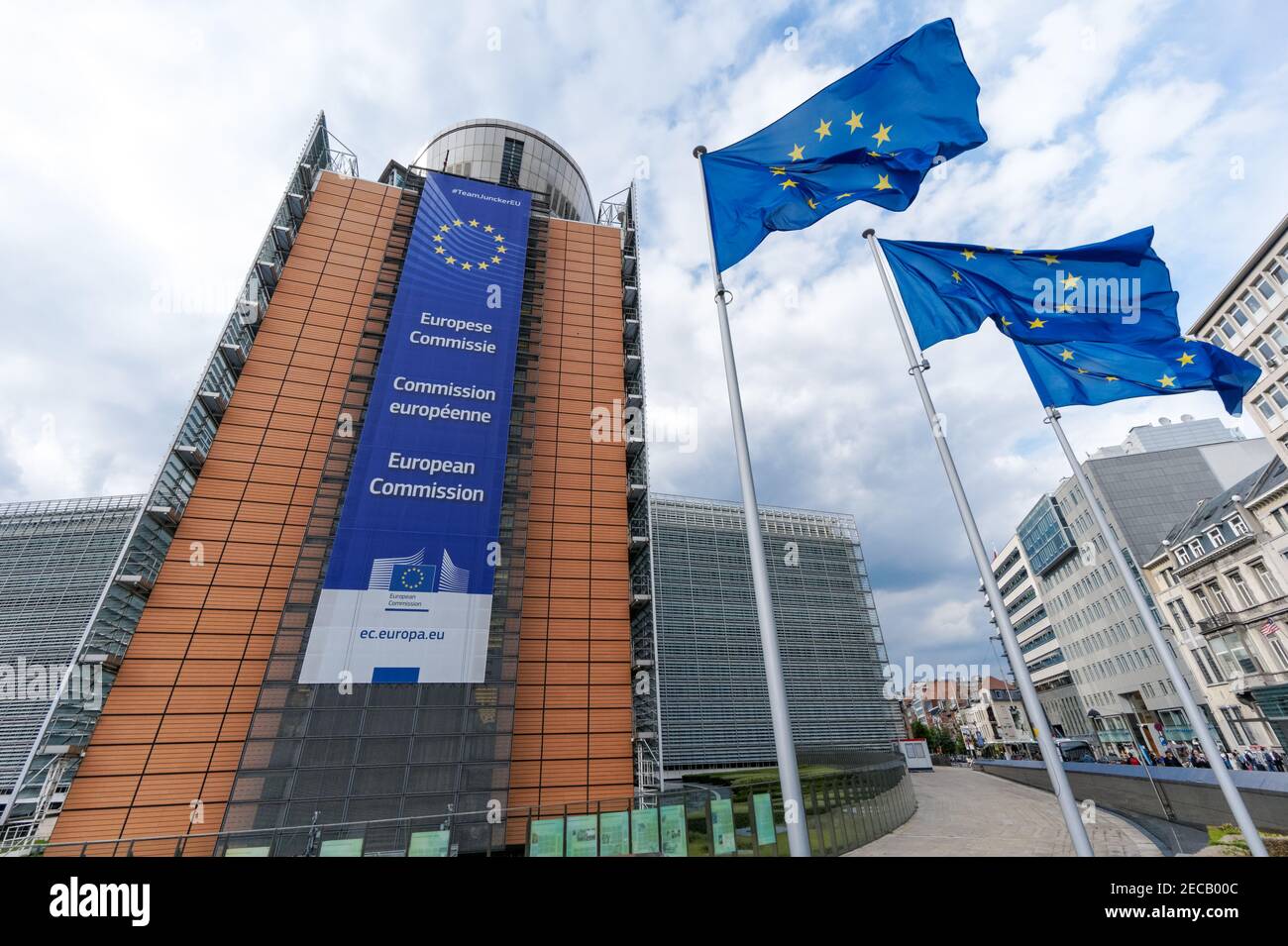
The two regulations differ in their enforcement architecture in ways that shape designation strategy. The DMA is enforced exclusively by the European Commission's Directorate-General for Competition (DG COMP), which acts as both investigator and decision-maker, subject only to judicial review by the EU courts. The DSA, by contrast, operates a multi-level enforcement model: the Commission retains exclusive supervisory authority over VLOPs and VLOSEs, while national Digital Services Coordinators (DSCs), appointed by each member state under Article 49, enforce the regulation for all other platforms. This bifurcation means that DSA designation is simultaneously a question of regulatory scope and a jurisdictional trigger; once a platform crosses the VLOP threshold, it shifts from national enforcement to the Berlaymont.
The Meta Marketplace ruling of June 2026 is the most instructive case study in how designation can fail under judicial review, and why the Commission's drafting practice has had to evolve. The General Court found that while Meta Platforms Ireland Limited unquestionably met the quantitative thresholds as an overall undertaking, the Commission had not adequately demonstrated that Facebook Marketplace constituted a distinct core platform service within the meaning of Article 2(2) of the DMA. The court accepted Meta's argument that Marketplace was functionally integrated into the Facebook social network rather than operating as a standalone intermediation service; the Commission's contrary finding, the judgment held, rested on an insufficient evidentiary record.
The Messenger portion of the same ruling tells the mirror story. The court upheld the Commission's designation of Messenger as a number-independent interpersonal communications service (NIICS), accepting that Messenger operates with sufficient functional autonomy from the Facebook platform to warrant separate designation. Meta had argued that Messenger was merely an integrated chat feature; the Commission, supported by user data showing independent Messenger app installations and usage patterns disconnected from Facebook engagement, persuaded the court otherwise. The split outcome underscores a principle that has become central to DMA litigation: functional separability matters as much as quantitative heft.
The Apple ruling reinforced this framework from the opposite direction. Apple had challenged its designation on three grounds: first, that the Commission erred in treating iOS and the App Store as separate core platform services rather than components of a single integrated ecosystem; second, that the Commission's market analysis was procedurally defective; and third, that the designation violated the principle of proportionality. The General Court rejected all three arguments, holding that the App Store operated as a distinct online intermediation service with its own set of business users, commercial terms, and competitive dynamics. 9to5Mac reported that the court found Apple's integration narrative unpersuasive in light of the App Store's separate revenue streams and governance structure.
The designation battles are not confined to Luxembourg's General Court. In May 2026, ByteDance's TikTok became the first gatekeeper to argue its case before the Grand Chamber of the Court of Justice of the European Union (CJEU), the EU's highest court. The Next Web reported that the hearing in Case C-627/24 P centred on whether the Commission had correctly applied the qualitative designation criteria under Article 3(8), given that ByteDance's EEA turnover fell below the €7.5 billion threshold. A CJEU ruling, expected by late 2026 or early 2027, will establish binding precedent on the evidentiary standard required for qualitative gatekeeper designations, with implications that extend well beyond short-form video.
Simultaneously, the Commission is pushing the DMA into a sector that until recently seemed shielded from gatekeeper scrutiny: cloud computing. On 25 June 2026, EU antitrust regulators issued preliminary findings that Amazon Web Services and Microsoft Azure meet the DMA's quantitative gatekeeper thresholds, a determination attributed to Reuters by U.S. News and World Report. The Next Web noted that a final designation decision was expected by year-end 2026. If confirmed, the cloud designations would impose interoperability obligations, restrictions on data lock-in, and prohibitions on tying practices that could reshape the architecture of enterprise cloud contracts across the single market.
The Google case provides the clearest illustration of what happens after designation sticks. In May 2026, Tech Times reported that the European Commission was finalising the largest fine in the DMA's history, targeting Google's alleged self-preferencing of its own services in search results. The fine, which would exceed the previous record of €4.34 billion set in the Android antitrust case, derives from Article 30 of the DMA, which authorises penalties of up to 10 percent of total worldwide annual turnover for non-compliance with gatekeeper obligations. The decision, expected in the third quarter of 2026, will be the DMA's first major penalty ruling and a stress test for the regulation's enforcement credibility.
On the DSA side, enforcement is proceeding along a different track, with designation triggering systemic risk management obligations rather than per-service compliance mandates. The designation of WhatsApp as a VLOP in January 2026 brought the total number of DSA-designated platforms to twenty-four, including all major social networks, marketplaces, app stores, and search engines. The Commission's most ambitious DSA enforcement action to date remains the ongoing proceeding against X (formerly Twitter), initiated in December 2023 over alleged breaches of transparency and risk assessment duties. A final decision in that case is expected before the end of 2026.
A separate DSA controversy emerged in mid-July 2026 when the Electronic Frontier Foundation (EFF) and ARTICLE 19 warned the European Commission that granting law enforcement agencies the status of 'trusted flaggers' under Article 22 of the DSA could enable de facto censorship without judicial oversight. The DSA's trusted flagger mechanism is designed to prioritise takedown notices from entities with demonstrated expertise in identifying illegal content; the question of whether police forces qualify, and under what safeguards, remains unresolved at the member-state level. The Commission has indicated that guidance on public-authority flaggers will be issued in the fourth quarter of 2026.
What emerges from this cascade of litigation, investigation, and enforcement is a regulatory apparatus that has moved well beyond the initial designation wave of September 2023, when the Commission named six gatekeepers (Alphabet, Amazon, Apple, ByteDance, Meta, and Microsoft) covering twenty-two core platform services. The apparatus is now in a phase of calibration: courts are refining the evidentiary standards for designation; new sectors are being drawn into scope; and the Commission is learning, sometimes through adverse rulings, how to build designation decisions robust enough to survive judicial review. The DMA's Article 3 thresholds remain the primary engine of designation, but the courts have made clear that meeting the numbers is a necessary, not a sufficient, condition.
For the policy-export watchers who track these files from Brasília, New Delhi, Seoul, and Canberra, the most significant development of 2026 is not any single ruling but the institutionalisation of judicial oversight over digital regulation. Jurisdictions that have borrowed the EU's gatekeeper language, including the United Kingdom's Digital Markets, Competition and Consumers Act 2024 and Brazil's proposed Bill 2768/2022, are now studying the Luxembourg case law to understand how independent courts constrain an expert regulator's discretion. The Meta Marketplace annulment is already being cited in submissions to the UK's Competition and Markets Authority.
The next procedural milestones are clustered in the autumn of 2026. The Commission's final designation decisions on AWS and Azure are expected by December; the Google DMA penalty decision is anticipated in September or October; the TikTok CJEU ruling will likely land in the first quarter of 2027; and the DSA trusted-flagger guidance is scheduled for the fourth quarter. Separately, the Commission is required under Article 53 of the DMA to publish its first evaluation report on the regulation's effectiveness by 3 May 2026; that report, delayed but now expected before the summer recess, will shape the legislative revision cycle that begins in earnest in 2027. The gatekeeper files are not closing; they are only now reaching the chapters that matter.