First-Look Reviews Are Marketing Infrastructure, Not Journalism
The months-long gap between Samsung's 2026 TV announcements, Microsoft's Project Helix release, and electric RV reveals turns early reviews into a content format where the reader is not the real customer.
 tomsguide.com
In this article
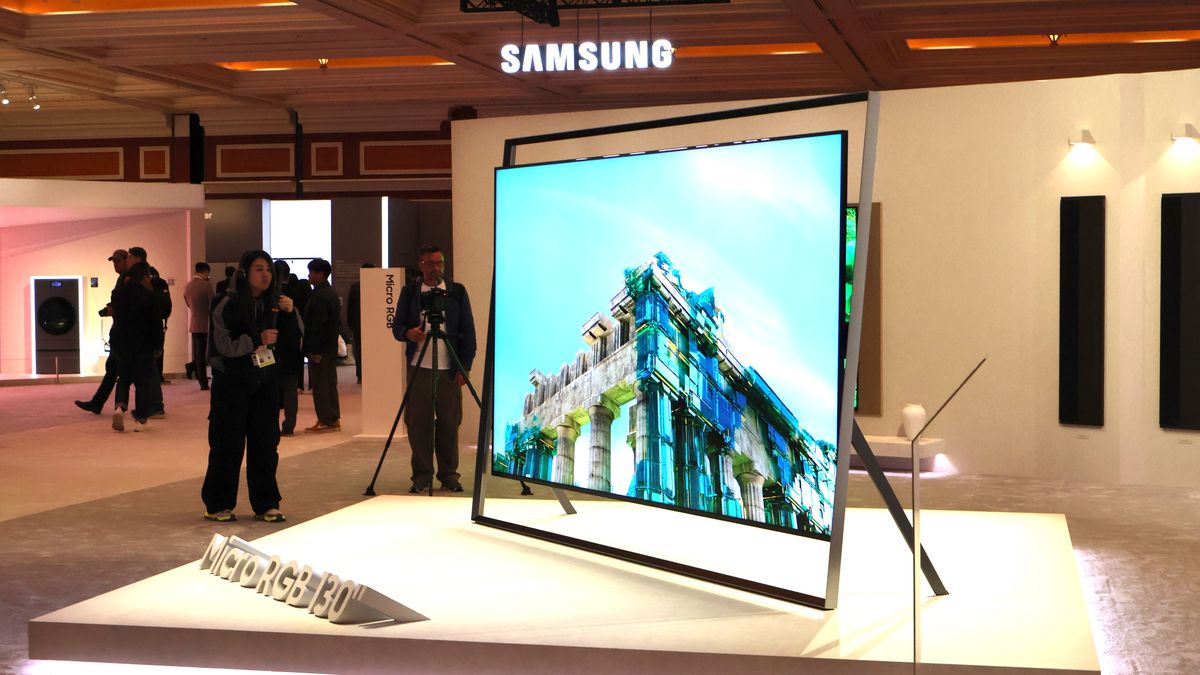
Samsung announced its 2026 television lineup on January 7 at the CES trade show in Las Vegas. The range included refreshed Neo QLED 4K sets, new OLED models, and the company's first Micro RGB displays. BGR published a piece titled "4 Cool New Features From Samsung's 2026 QLED TVs" on April 9. Samsung's own full pricing and availability details did not land until May 28, when Forbes reported the complete lineup including prices. That is a 141-day gap between the first wave of enthusiast press coverage and the moment a consumer could walk into a store, check a price tag, and buy one. The gap between BGR's feature roundup and Forbes' pricing breakdown was itself 49 days. In between: impressions without purchase context, excitement without a checkout button.
First-look reviews of products that have not shipped yet are not reviews. They are calendar placeholders. They fill the space between a manufacturer's announcement and a product's actual availability with controlled-access impressions, spec-sheet paraphrasing, and feature lists dressed as editorial judgment. The practice is not new. It is as old as the tech press itself. But across televisions, game consoles, and the hazy category of electric recreational vehicles, 2026 has compressed the pattern into something worth examining: a content format that launders launch timelines into coverage calendars while leaving readers with opinions about products they cannot act on. The question is not whether these pieces exist. The question is who they serve.
BGR's Samsung piece, syndicated to Yahoo Tech from the original on BGR, highlighted four features: AI-powered picture processing that adjusts brightness and contrast scene by scene, a redesigned solar-charging remote with a dedicated AI button, improved cloud gaming integration through Samsung's Gaming Hub, and "Vision AI" upscaling that sharpens lower-resolution content. The piece was competent, cleanly written, and entirely dependent on information Samsung had chosen to disclose. It could not answer the only question that matters for a review: should anyone buy this television? At the time of publication, the answer was structurally unavailable. The televisions had been announced, not shipped. The "first look" was a feature recap from a press briefing, dressed in the formatting conventions of a product review.
The timing matters because Samsung's release calendar created tiers of access. Digit covered the CES unveiling on January 7, noting brighter displays and seven years of software updates. By late March, Digital Trends reported on a secondary announcement adding Mini LED models to the lineup. Forbes published pricing on May 28. Techaeris published a full review of the QN80H on June 25, after production units had reached reviewers. Each outlet operated at a different level of access, and each level of access produced a different kind of content. But the reader encountering these pieces in a search result or a news feed sees one thing: a series of articles about a Samsung TV, each looking roughly like a review, written months apart, with different information and different conclusions at each stage.
The pattern is more pronounced with Microsoft's next-generation Xbox. The console does not have a public name. It does not have a price. It does not have a launch date. It has a codename, Project Helix, and a release window of 2027, hinted at by AMD CEO Lisa Su during a company earnings call and reported via PC Mag. Microsoft's Xbox CEO Asha Sharma confirmed the project's existence to Geeky Gadgets in June. IGN reported in May that Xbox would have "more to share" later in 2026. That is the sum total of official information: a codename, a year, a promise of future communication.
Yet by June 2026, the coverage had far outpaced the facts. TechRaptor reported that Project Helix "will reportedly not have a disc drive." GameSpot covered the same reports, and Digital Trends analyzed a disc-to-digital conversion feature Microsoft was reportedly testing. None of this is a review. None of it is even a preview in the traditional sense: nobody outside Microsoft and its silicon partners has seen a Helix dev kit, held a controller, or benchmarked a game running on the target hardware. What readers are being asked to consume is a pre-product narrative, a story about a product that fills the empty space where the product will eventually go.
TechRadar's January piece framing Xbox as heading into 2026 "on a wave of uncertainty" is itself part of this machinery. The narrative of uncertainty becomes the story because there is no product to evaluate. The coverage ecosystem feeds on announced-but-unshipped hardware because it generates search traffic, fuels forum debates, and keeps the enthusiast audience engaged between actual releases. The publication benefits from the timeline. So does the manufacturer, who gets months of free attention without having to ship anything that can be critically examined. The reader gets a reason to defer a purchase, and deferral is the product being sold.
Electric RVs represent the endpoint of this pattern. Stacker's piece for 2026 asked the question directly in its framing: "What's real and what's not." The answer, in mid-2026, is that very little is real. A handful of concept vehicles have been shown at trade events. A few manufacturers have accepted pre-orders with delivery windows that have slipped repeatedly. The category is almost entirely aspirational. But the coverage exists. First-look video tours of prototype interiors. Speculative range estimates based on battery configurations that have not been finalized. Comparisons between models that have not entered production. The gap between announcement and shipment, in this category, is not measured in months. It stretches into years, and in some cases, stretches indefinitely.
What Gets Cut to Ship a First Look
To publish a first-look piece on an unshipped product, a publication must cut several things. Production-unit testing is impossible. Real-world conditions are replaced by demo environments controlled by the manufacturer. Price context is absent or speculative. Competitive comparison with actually available alternatives is structurally unavailable. The publication cannot tell a reader to buy the product, because the product cannot be bought. It cannot tell a reader to skip it, because the product has not been genuinely evaluated. What remains is specification transcription and controlled-demo impressions. The reader receives precisely the information the manufacturer wanted them to have, on the manufacturer's timeline, packaged as independent editorial work. The word "review" in the headline, when it appears, is doing more work than the article can support.
The Samsung QN80H is instructive here. The April first-look pieces could describe the spec sheet: a Neo QLED panel, AI-powered processing, a new remote. The June review from Techaeris could report that the QN80H was a strong all-around choice for most users at a reasonable price point. The difference between those two assessments is several hundred hours of testing, comparison with competing models from LG and Sony, measurement of input lag and color accuracy, and the simple fact of living with the television for weeks. The first-look piece cannot close that gap. It can only gesture toward it and hope the reader does not notice the distance.
The enthusiast who reads a first-look piece on an unshipped console or television is not looking for purchase advice. They are looking for a reason to wait. "Don't buy the LG G5 yet, Samsung's Neo QLEDs are coming." "Don't build a PC this year, Project Helix might change the equation." That sentence, in various forms, is the payload of the pre-availability review. It benefits the manufacturer, who needs the enthusiast to postpone a competing purchase. It benefits the publication, which gets the traffic from the comparison. It does not benefit the reader, who is being advised to delay a concrete decision based on incomplete information about a product that may change before it ships. The reader is making a bet. The house, as always, is the product launch calendar.
The eighteen-month question is the one first-look pieces are designed to avoid. Where does this article end up in a year and a half? Landfill, drawer, or daily driver? The answer is almost always landfill. By June 2027, the Samsung QN80H will have dozens of real reviews, price-tracker histories, and user forums full of long-term experience reports. The April 2026 first-look piece will be obsolete, a search result nobody clicks. The Project Helix coverage from 2026 will either have been validated by an actual console launch or revealed as speculation built on a thin scaffolding of embargoed briefings and supply-chain leaks. The electric RV first looks will have materialized into vehicles on lots or become exactly what they always were: renders attached to press releases, search-engine litter with a byline attached.
Publications treat the first look as a soft genre. The standards are lower because the access is limited, and the access is limited because the product is not finished. But the reader does not calibrate for genre. The reader sees a headline, reads an article, and forms an impression. If the impression is positive and the product is six months from existing, the publication has effectively run an advertisement at editorial expense. If the impression is negative, the publication has reviewed a prototype and asked the reader to trust that the production unit will be better. Neither outcome serves the reader's immediate needs. Both serve the content calendar.
The publication that wants to cover an announced-but-unshipped product honestly should call it a preview. Not a review, not a first look, not a hands-on if the hands were in a demo room with a company representative standing three feet away. A preview. It should state, explicitly, what it had access to: a press briefing, a pre-production unit in controlled conditions, a spec sheet, a render, nothing at all. It should name the ship date or note that no ship date has been provided. And it should tell the reader what to do in the meantime: buy the current model, buy a competitor, wait, ignore the category entirely. That advice is more valuable than four cool features. It is the only part of the piece the reader can act on.
Mashable's "best TVs of 2026 so far" piece, published in early July, represents the other end of the spectrum. It ranks televisions that are actually shipping, with prices you can check and inventory you can find. The Samsung S95H is the best OLED of the year so far, according to the piece. That claim has weight because the television is on shelves. A reader who reads that piece and buys the S95H has acted on information that will not evaporate when the next embargo lifts. That is the standard the first-look economy is measured against, and it is the standard most first-look pieces cannot meet.
The 2026 holiday season will bring actual reviews of Samsung's full QLED lineup, including the Micro RGB models that were the headline announcement at CES. Project Helix will either have a launch window and a real name, or another round of "more to share later" and another cycle of disc-drive speculation. The electric RV category will either have vehicles on dealer lots or another installment of "what's real and what's not," its own first-look ouroboros. The test for the publications that cover these products is whether the words they publish between the announcement and the shipment contain more information than the press release. Right now, across too many categories and too many bylines, they do not. A first look at something you cannot buy is a secondhand press briefing. Call it that, or do not publish it at all.
Read next
.jpg)