Kraken's Co-CEO Experiment: A Blueprint to Avoid Founder Conflict
Crypto exchange Kraken spent two years building a co-CEO leadership structure designed to prevent the kind of founder conflict that recently landed OpenAI in court, offering a roadmap for other startups.
 fortune.com
On a Monday afternoon in May, a nine-member federal jury in Oakland, California took less than two hours to dismiss Elon Musk's lawsuit against OpenAI and its chief executive Sam Altman. The speed was notable. For weeks, the courtroom at the Ronald V. Dellums Federal Building had been fed a parade of exhibits: email exchanges from 2015, before the AI lab even had a name; diary entries from OpenAI president Greg Brockman; internal corporate documents charting the slow-motion disintegration of one of the most consequential co-founder relationships in technology history. The jury's verdict, as The Conversation reported, did not rule on whether OpenAI had deviated from its founding mission. It simply found Musk had not proven his case. But the trial itself, and the years of rancour that preceded it, had already made a different argument altogether: that the absence of durable governance architecture between co-founders is a bill that always comes due.
The exhibits unsealed during discovery and trial painted a portrait of a partnership that was, from its earliest days, structurally brittle. The Verge catalogued the evidence as it emerged: a June 2015 email from Altman to Musk laying out a five-part plan for an AI lab whose mission would be to "create the first general AI and use it for individual empowerment"; Nvidia CEO Jensen Huang gifting OpenAI a coveted supercomputer; Brockman and chief scientist Ilya Sutskever expressing worry, in internal communications, about Musk's level of control. There was no co-founder agreement sturdy enough to hold the weight of what they were trying to build. When Musk departed OpenAI's board in 2018, the terms of the separation were ambiguous in ways that would take nearly a decade and a federal trial to litigate.
The OpenAI saga is the most spectacular co-founder rupture in a generation, but it is hardly alone. In March 2024, Stability AI founder and chief executive Emad Mostaque resigned from both his role and the unicorn's board, TechCrunch reported, declaring that "you're not going to beat centralized AI with more centralized AI." Weeks later, Reuters reported that the company was laying off staff as part of a restructuring. The pattern is familiar: a founder with a vision, investors who want scale, a board caught between them, and no agreed-upon mechanism for resolving the tension other than one party walking away.
Against this backdrop, the quiet persistence of a different model deserves attention. In October 2024, the cryptocurrency exchange Kraken, founded in 2011 by Jesse Powell, appointed Silicon Valley investor Arjun Sethi as co-CEO, FinanceFeeds reported at the time. Sethi, a former partner at Tribe Capital and an early investor in firms including Carta and Bolt, joined incumbent CEO Dave Ripley in a dual leadership structure that deliberately distributes executive authority across two people. For a company steering toward a public listing, the arrangement was unconventional enough that Fortune noted Sethi had shared his thoughts on the company's "unorthodox management structure" when Kraken quietly closed a $500 million funding round in October 2025.
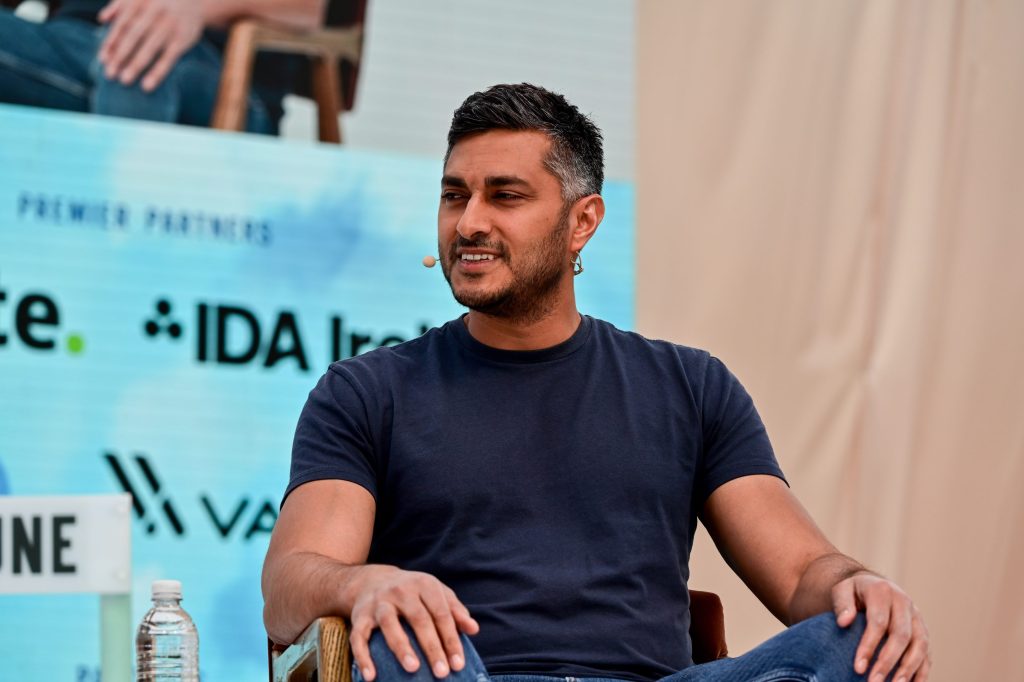
Sethi himself frames the structure in terms of durability. Speaking at the Consensus conference in Miami Beach in May 2026, he told CoinDesk that Kraken and its parent company Payward were "about 80% ready" to go public. The phrasing was characteristically measured, but the subtext was clear: readiness is not just about revenue growth or regulatory approvals. It is about demonstrating to public-market investors that the company's leadership is not dependent on any single individual's presence or temperament. A co-CEO structure, whatever its operational frictions, is also a statement about institutional resilience.
Kraken's evolution toward this model was itself shaped by founder dynamics. Jesse Powell, who built the exchange from a bedroom operation into one of the world's largest crypto trading platforms, had a reputation for combative, libertarian-inflected leadership. His public clashes with employees over workplace culture in 2022, and his eventual decision to step back from the CEO role, were widely read as a cautionary tale about unchecked founder authority. Ripley, who succeeded Powell, spent two years stabilising the company before Sethi was brought in. The co-CEO arrangement was not a merger of equals in the classic co-founder sense, but it was a deliberate architectural choice: a bet that distributing power would make the company harder to destabilise.
We want a durable company.Arjun Sethi, co-CEO of Kraken, speaking to Fox Business in April 2026
The word "durable" recurs in Sethi's public remarks, and it is worth pausing on. A durable company is not just one that survives market cycles. It is one that survives its own founders. Co-founder relationships are intimate in ways that corporate law struggles to capture. They begin with shared ambition and often end in divergent visions, unequal contributions, and unresolved questions about who owns what. The standard startup toolkit for managing this, four-year vesting schedules with a one-year cliff, standard board composition, the occasional mediation clause, is designed for the median case. It is not designed for the emotional and financial complexity that emerges when two people who once stayed up late arguing about product roadmaps now disagree about whether the company should exist at all.
The crypto industry, for all its volatility, has produced a distinctive body of thinking about governance that extends beyond corporate structures into protocol design. BeInCrypto reported in January 2026 that Ethereum co-founder Vitalik Buterin had proposed crypto-driven mechanisms for political reform in the context of the Russia-Ukraine war. The specifics of the proposal were less striking than the underlying instinct: a belief that governance problems are, at root, design problems, and that properly specified mechanisms can align incentives even among parties with conflicting interests. Buterin's Ethereum itself is a case study in founder dynamics: multiple co-founders departed or were pushed out in the project's early years, leaving Buterin as the sole enduring figure. The protocol survived. The governance model, decentralised by design, was the insurance policy.
Whether a co-CEO structure can serve the same function inside a single corporate entity is an open question. Kraken's experiment has not been frictionless. In May 2026, the company laid off 150 staff, with CoinTelegraph reporting that the cuts were driven in part by increased use of AI and that they could potentially delay the IPO timeline. Payward's first-quarter revenue had climbed despite a broader crypto market slump, CoinDesk noted, with Sethi emphasising that the firm kept investing through market weakness. These are the ordinary stresses of a maturing company. The test of the co-CEO model is not whether stresses arise but whether the structure channels them toward resolution rather than rupture.
The venture capital industry has historically been sceptical of shared leadership. The canonical advice, repeated across Y Combinator dinners and seed-stage term sheet negotiations, is that startups need a single decision-maker. The logic is straightforward: speed matters, and co-CEO arrangements slow decisions down. But the counter-argument, accumulating in the wreckage of founder disputes from OpenAI to Stability AI to a thousand quieter implosions that never make the headlines, is that speed without stability is just velocity toward a cliff. A co-founder agreement that specifies equity, vesting, and board seats is a document. A governance structure that distributes genuine authority, that builds in the necessity of negotiation, is a practice.
The CNBC recap of Altman's testimony on May 12 captured a telling exchange. Under questioning, Altman testified that he had never promised Musk that OpenAI would remain a nonprofit. The claim went to the heart of the dispute: two founders with radically different accounts of what they had agreed to at the start, and no single document that settled the matter. Musk had largely drafted OpenAI's mission statement himself, according to early exhibits reviewed by The Verge, yet that mission was ambiguous enough to sustain a decade of litigation. A more precisely specified governance structure, negotiated when the relationship was warm rather than litigated after it had frozen, might have prevented the courtroom from ever becoming necessary.
What makes Kraken's experiment worth watching is not that it has solved the problem. It has not. The co-CEO structure is young, the IPO is pending, and the pressures of public-market scrutiny will test it in ways that private-company autonomy cannot. What makes it worth watching is that it takes the problem of founder conflict seriously enough to build architecture around it, rather than relying on goodwill and hoping for the best. That architecture includes not just the dual leadership model but a broader corporate structure: Payward, the parent entity, has pursued an OCC charter to become a federal crypto bank, CoinDesk reported, and has acquired Reap Technologies for $600 million to expand its payments infrastructure. Each of these moves adds institutional scaffolding that makes the company less dependent on any single leader's judgment.
The Musk v. Altman jury deliberated for less than 120 minutes before delivering a verdict that settled the legal question but left the deeper issue untouched. The core question of the case, as The Conversation observed, remains unanswered: what does it mean for a company to stay true to its founding mission, and who gets to decide? That question is not unique to OpenAI. It lives inside every startup whose founders have not built a structure capable of outlasting their own agreement, or their own disagreement. The co-founder relationship is the one contract in a startup that everyone assumes will hold, and almost nobody designs for failure. When it breaks, the cost is not just legal fees and press cycles. The cost is the thing the founders set out to build in the first place.
Sethi, on stage at Consensus, returned to the word one more time. Durable. A durable company. He was talking about Kraken's balance sheet, its regulatory posture, its acquisition pipeline. But the word hung in the air with a broader resonance, one that the jurors in Oakland would have recognised. Durability is not a financial metric. It is a structural property. And the structures that produce it have to be built long before anyone thinks they will be needed.
Read next
