Retail Investors Rewire the LP Base: VC's 2026 Fundraising Reset
AngelList's $500-minimum fund, Robinhood's NYSE-listed VC vehicle, and Restive's bank-backed Fund III closure signal a structural rewiring of the venture capital LP base that will reverberate through every cap table.
 peak.capital
In this article
Five hundred dollars. That is the minimum investment AngelList set for USVC, a registered, non-traded venture fund it launched on April 22, allowing any U.S. adult with a brokerage account to buy into a diversified portfolio of private technology companies. The number is less than a round-trip ticket from San Francisco to New York, and it signals something larger than a single product launch: the accredited-investor gate that has defined venture capital's limited-partner base for four decades is being dismantled from multiple directions at once.
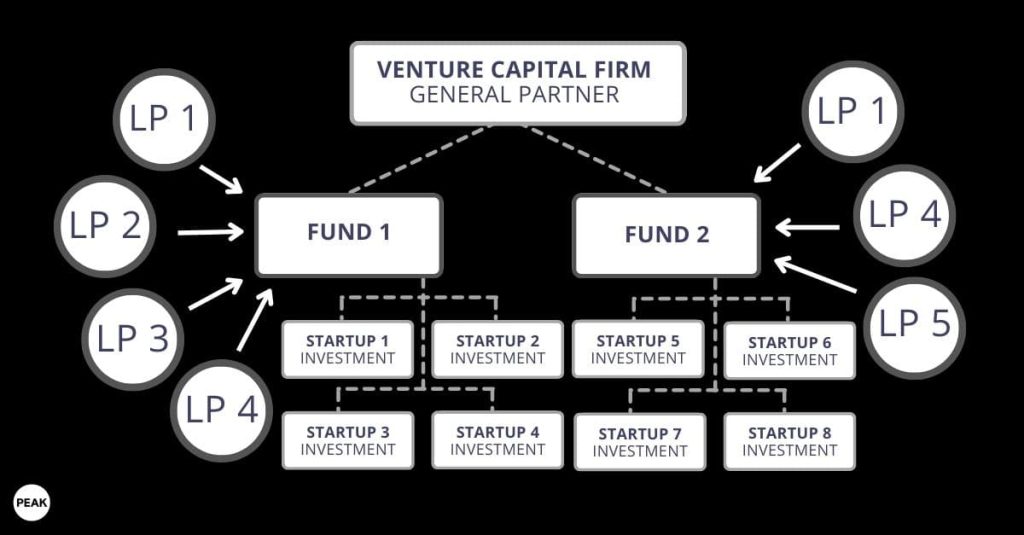
AngelList's move arrived in the same three-week window that saw Robinhood's venture fund list on the New York Stock Exchange and Restive Ventures close its third fund by replacing traditional endowment LPs with banks and financial institutions, The Wall Street Journal reported in early May. Taken together, the three events describe a venture-capital fundraising cycle that is being re-plumbed at the source. Who writes the checks into venture funds is changing, and the change is structural, not cyclical.
The USVC fund, Crowdfund Insider reported, is structured as a registered fund under the Investment Company Act of 1940, which means it files regular disclosures with the SEC and carries none of the accredited-investor restrictions that have historically limited venture exposure to the wealthiest two percent of U.S. households. The vehicle invests across AngelList's deal flow, drawing on early-stage and growth-stage companies sourced through the platform's syndicate network. The regulatory wrapper, a 1940 Act fund rather than a traditional 3(c)(1) or 3(c)(7) private fund, is the mechanism that makes the $500 minimum legally possible.
Three weeks earlier, Robinhood Ventures Fund I began trading on the NYSE under the ticker RVI. The fund, structured as a publicly traded closed-end vehicle, raised capital through an IPO that TechCrunch reported attracted more than 150,000 retail investors. Unlike AngelList's USVC, which operates as a continuously offered registered fund, Robinhood's vehicle is exchange-traded, meaning its shares can be bought and sold through any brokerage app during market hours. That liquidity wrapper is a material structural difference: it gives retail LPs an exit path that does not depend on the fund's distributions.
The fund moved quickly to deploy capital. In March, Seeking Alpha reported that RVI had closed investments in Stripe and ElevenLabs, purchasing nearly $20 million of ElevenLabs Series D Preferred Stock in a primary transaction. In April, the fund disclosed a $75 million purchase of OpenAI Series G Preferred Stock, Forbes reported, in a round that valued the AI company at more than $850 billion. The fund also holds positions in Databricks and Oura, Robinhood CEO Vlad Tenev told TechCrunch, assembling a portfolio that looks like a late-stage index of the most heavily capitalized private technology companies.
The market's reception of RVI shares has been instructive. The fund priced its IPO at $25 per share but opened trading at $22, a 12 percent discount to the issue price that multiple outlets reported in mid-April. Closed-end funds often trade at discounts to net asset value, but an immediate 12 percent gap suggests the retail market is still learning how to price venture exposure. For the LPs inside traditional venture funds, the discount is a data point worth tracking: it is one of the first public-market signals on what a diversified late-stage venture portfolio is worth when marked every trading day rather than once a quarter by a GP's valuation committee.
The Institutional Pivot
While AngelList and Robinhood are opening venture capital's LP base at the bottom of the wealth pyramid, the institutional layer is being re-sorted too. On May 6, Restive Ventures announced the $45 million close of its third fund, which will back early-stage financial-services startups building with artificial intelligence. The San Francisco firm, led by partners who previously invested at firms including Nyca Partners and QED Investors, had initially targeted a close in late 2025. It took longer than expected, and the composition of the LP base shifted along the way.
The Wall Street Journal, in its May 6 article on the close, reported that Restive leaned more heavily on banks and financial firms to fill what had become a funding gap as traditional limited partners, including endowments and family offices, pulled back or reduced allocations. The Journal described a significant change in the firm's LP base. The shift is not unique to Restive. Across the venture landscape, the endowments and pension funds that anchored fund formation for the past two decades are re-underwriting their venture allocations after a prolonged period of low distributions to paid-in capital.
For emerging managers, the implications are concrete. Banks and financial institutions negotiate harder on fees and governance than university endowments typically do. They ask for management-fee step-downs after the investment period, tighter key-person clauses, and more frequent LP advisory committee meetings. Side letters guaranteeing co-investment rights, common in bank-LP negotiations, can complicate a fund's deployment pace by diverting capacity from the main fund. The Restive close is a case study in what it costs, in terms of fund economics, to fill an LP gap with institutional capital rather than the patient, brand-anchoring endowment money that used to be plentiful.
The LP reset arrives against a backdrop of concentration that has reshaped the venture industry itself. Forbes reported in March, drawing on TrueBridge Capital's annual state of venture report, that AI companies captured a disproportionate share of venture dollars in 2025, median pre-money valuations rose across all stages, and the IPO window showed signs of reopening after two years of near-total closure. But the recovery in liquidity has been uneven. The firms that raised the largest funds, the multi-stage platforms with billions under management, have been the primary beneficiaries of both LP inflows and exit activity. Everyone else is competing for a smaller pool of attention from a smaller pool of allocators.
Alexey Posternak, Chief Financial and Investment Officer at INTEMA.AI, wrote in a Forbes Finance Council post in April that venture capital in 2026 is characterized by more money chasing fewer deals, with capital concentrating in a shrinking number of AI-centric companies at the top of the valuation stack. Posternak observed that the middle of the market, the Series A and B companies that are not yet category-defining but are too expensive to be seed-stage bets, is getting crushed. His framing describes the deal-level corollary of the LP-level dynamic: concentration at the top, retail filling the bottom, and a thinning middle.
The squeeze on mid-sized funds has practical consequences for fund formation. A $150 million fund raised from endowments in 2021 might have closed in six months. The same fund targeting the same LPs in 2026 faces a twelve-to-eighteen-month process, assuming it closes at all. LPs are demanding evidence of distributed returns before re-upping, and the 2021-2022 vintage has not yet delivered them. This is the mechanical explanation for why Restive, and other emerging managers of its size, are turning to financial institutions: the traditional LP constituencies are on the sidelines waiting for proof that the last fund cycle actually worked.
If the institutional side is contracting, the retail side is expanding fast enough to reshape the conversation. AngelList's $500 minimum and Robinhood's 150,000 shareholders are not anomalies; they are early iterations of a regulatory and technological infrastructure that is making venture capital a consumer product. The SEC's expansion of the accredited-investor definition, combined with the rise of registered fund structures like interval funds and non-traded closed-end funds, has created a pathway that did not exist five years ago. The question for GPs is whether retail capital is sticky. A mutual-fund investor who sees a 12 percent discount to NAV in the first week of trading may not have the same patience as a university endowment that signed a ten-year commitment.
The convergence of retail and institutional capital is also producing new hybrid structures beyond the venture industry's traditional boundaries. In March, Hybrid Advisors and Faithstone Capital Partners announced a joint venture, Hybrid Faithstone, targeting a $3 billion fund platform that would blend alternative assets, including private equity and venture, with traditional wealth-management distribution. The structure is not venture capital in the classic sense; it is a platform play. But the $3 billion target, and the explicit aim to distribute private-market exposure through advisor networks, underscores how broadly the LP-base conversation has expanded beyond the cathedral-like world of endowment annual meetings and consultant gatekeepers.
What the public announcements of these new vehicles leave out is as revealing as what they include. AngelList's USVC filing discloses a management fee but does not advertise the carry structure. Robinhood's RVI prospectus details the fund's investment policy but is less forthcoming about how the manager resolves conflicts when a portfolio company's next round is oversubscribed and allocation requires a choice between the fund's interests and the GP's relationship capital. The Restive close announcement, like most fund-close press releases, does not mention the specific governance concessions made to bank LPs. These omissions are standard. They are also the entire game for anyone trying to understand whether the democratization of the LP base is producing better alignment or just a wider distribution of the same information asymmetries.
The career risk in this cycle is concentrated among emerging managers raising funds between $25 million and $150 million. If they cannot pivot their LP strategy to include the new institutional buyers, banks, insurers, and sovereign-wealth-adjacent allocators who are filling the gap left by endowments, they will not close. If they do close on those terms, they will be managing funds with more demanding governance, shorter patience, and less brand cover for the inevitable markdowns that accompany any venture portfolio in its middle years. The partners who signed side letters granting bank LPs enhanced withdrawal rights in exchange for a close are the ones who will have to explain those rights to the founders sitting across the table when the next round prices below the last.
The checkpoint to watch is the third quarter of 2026. By September, Robinhood's RVI will have reported at least one full quarter of NAV, giving the market a data point on how retail investors react to venture markdowns in a public vehicle. AngelList's USVC will have accumulated enough subscription flow to indicate whether the $500 minimum is converting savers into LPs at scale. And Restive will have begun deploying Fund III, providing an early signal on whether AI-native financial-services startups can absorb $45 million of new capital at valuations that leave room for the next round. The venture fund cycle is being rewired at the LP layer. The results will show up in the cap tables.
Read next