Secondary Markets Devour Venture Capital's Exit Playbook
With Anthropic warning investors off unauthorized share platforms and Polymarket letting retail traders bet on private startups, venture capital's traditional IPO exit path is fracturing from the outside in.
 CBS News / Getty Images
In this article
On May 12, Anthropic updated a support page on its website with language that would have been unimaginable from a venture-backed company five years ago. "Any sale or transfer of Anthropic stock, or any interest in Anthropic stock, offered by these firms is void and will not be recognized on our books and records," the company wrote, as TechCrunch reported that same day. The warning named no specific platforms, but it did not need to: by the spring of 2026, dozens of secondary trading venues, prediction markets, and private-share funds had begun offering retail and institutional investors a piece of companies that had not yet filed an S-1. Anthropic, valued near $965 billion in private markets ahead of its confidential IPO filing, had become the most prominent company to tell the secondary market to back off.
The warning was not just legal hygiene. It was a signal that the traditional venture capital exit, a sequence that runs from incorporation to tender offer to IPO, was being disintermediated by a constellation of platforms that no longer wait for companies to announce a listing date. The rise of a deep, liquid secondary market for private shares has become the most consequential structural change in startup finance since the invention of the SAFE note, and the companies at the center of it are not happy about it. Founders and their lead investors spent two decades building governance structures designed to control who could own shares, when they could sell them, and what information they could access. The secondary market is dismantling those controls, one gray-market trade at a time.
The spring of 2026 has made the tension acute because it is also the season of the mega-IPO. SpaceX completed the largest public offering in history, raising $75 billion and beginning its first full trading week in mid-June, as Crypto Briefing reported. OpenAI confidentially filed for a US IPO shortly afterward, Reuters confirmed, following Anthropic's own confidential filing with the SEC. Between them, the three companies represent roughly three trillion dollars in combined private-market valuation. The pipeline has no precedent in scale or concentration, and the secondary market has been pricing those shares for months, effectively running a parallel, unregulated IPO process in the open.
The liquidity question that once bedeviled only employees sitting on paper millions is now a full-blown market-structure problem. Private company stock has historically been locked up by right of first refusal clauses, transfer restrictions, and board-approval requirements, all designed to keep cap tables orderly and prevent a company from accidentally triggering public-reporting obligations under the Securities Exchange Act of 1934, which kicks in at 2,000 shareholders of record. Secondary platforms circumvent these controls by selling economic interests structured as derivatives or forward contracts, rather than actual shares. The buyer never appears on the cap table. The company, at least in theory, never has to know.
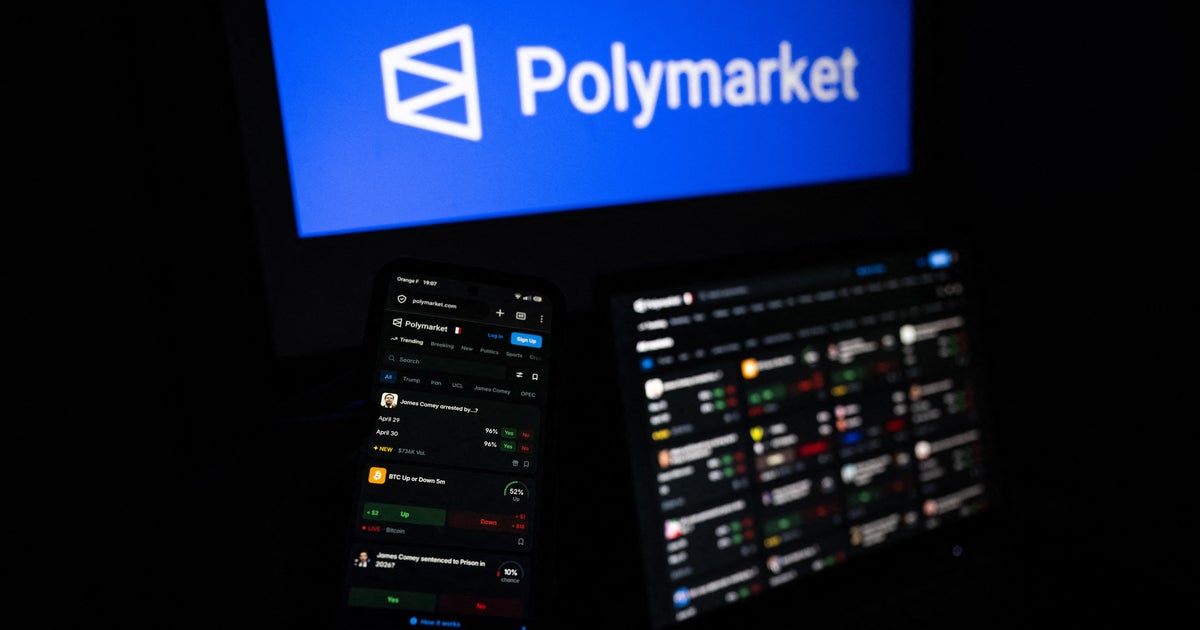
Then in May, Polymarket went further. The prediction-market platform partnered with Nasdaq Private Market, a secondary trading venue that provides data on non-public companies, to launch contracts tied to private-company milestones, as CNBC reported. The contracts let retail traders bet on valuations, IPO timing, and secondary-market activity for names like OpenAI and Anthropic. Suddenly, not only were private shares trading off-book; the trajectory of private companies had become a public speculative asset class, open to anyone with a funded Polymarket account and a thesis about when Dario Amodei might ring the opening bell.
For the first time, anyone can engage with the outcomes driving value at the world's most consequential private companies., Shayne Coplan, founder and CEO of Polymarket, in a statement to <a href="https://www.cbsnews.com/news/polymarket-prediction-market-private-company-performance-kalshi/">CBS News</a>
Coplan's framing is accurate and discomfiting in equal measure. The democratization narrative, that a retail trader in Des Moines should be able to express a view on Anthropic the same way a Sand Hill Road partner can, is hard to argue against in the abstract. What it elides is the information asymmetry at the heart of the trade. The Sand Hill Road partner sits on a board, receives monthly financials, and can call the CEO. The retail trader on Polymarket is trading on crumbs: a leaked revenue figure, a fundraising rumor, a filing that hits EDGAR. Nasdaq Private Market's vice president of data, Rodolfo Sanchez, told CBS News the trades would provide a "real-time signal" for investors. What he did not say is whose signal, and on what basis.
The gap between the two kinds of access is the gap between the venture capital industry as it existed and the venture capital industry as it is becoming. For years, the defining skill of a top-tier venture firm was not picking winners but getting allocation, the ability to write a check into a round that was oversubscribed before it opened. The secondary market is now performing a version of that allocation function, badly, for everyone else. It is a leaky valve on a pressurized system, and the pressure is building because companies are staying private so long that the standard four-year vesting schedule with a one-year cliff has become a cruel joke for early employees.
Consider the numbers inside one prominent vehicle. The Private Shares Fund, a $1.16 billion closed-end fund that buys late-stage private company stock, held $224 million in SpaceX alone as of March 31, 2026, accounting for 19.3 percent of net assets, InvestmentNews reported. That is a striking concentration for a diversified fund, and it reflects something that no one in the venture industry wants to say aloud: a handful of names now dominate the private-market opportunity set so completely that calling a fund diversified is a hedge against the truth. If you wanted private-company exposure over the last three years and you were not an LP in a Sequoia or an Andreessen Horowitz fund, you bought SpaceX, and maybe Anthropic if you could find it.
The old exit is dead, but nobody agrees on what replaced it
The standard venture narrative, the one taught in business-school case studies and repeated at demo days, held that a startup exists to be sold or to go public. The IPO was the dream outcome, the acquisition the acceptable one, and everything else was a failure. That binary broke apart slowly and then all at once. The IPO has become less reliable as a wealth-creation event for anyone other than the lead underwriters. Companies stay private for fifteen years, run multiple tender offers for employees, and treat the public markets as a late-stage liquidity option rather than a destination. "With the IPO losing its reliability, venture-backed companies are redefining what it means to reach a successful outcome," Entrepreneur observed in a June analysis of the shifting exit landscape.
What fills the gap is an ecosystem of tender offers, secondary block trades, structured derivative products, and now prediction markets, none of which were designed to replace the IPO but all of which are collectively doing so. The tender offer, once a rare accommodation to early employees who had been waiting a decade for liquidity, has become a regular governance event at companies like SpaceX and Stripe. The block trade, where a large institutional holder sells a chunk of private stock to another institution through a broker, now accounts for a meaningful share of secondary volume, though precise figures are hard to come by because almost none of it is publicly reported. These transactions happen in the dark, priced by phone call, and are visible only to the participants.
The AI mega-startups that now dominate the Midas List rankings have accelerated the trend by concentrating venture returns in a tiny number of names. Forbes reported in late May that OpenAI, SpaceX, and Anthropic were reshaping the venture landscape by absorbing hundreds of billions in capital and creating historic paper fortunes. But paper fortunes are not liquid fortunes, and the employees and early backers who hold the paper are increasingly unwilling to wait for a traditional exit to convert one into the other. The secondary market exists because the primary exit mechanism is too slow for the people who built the companies, and the companies are too large to be acquired by anyone other than a sovereign wealth fund.
The Anthropic warning notice, read as a governance document rather than a legal one, reveals exactly what the company fears: fragmentation of its shareholder base before it has a chance to shape the narrative of its own public debut. When shares trade on secondary platforms, the company loses control over who holds them and at what cost basis. An investor who bought Anthropic exposure on a secondary platform at a valuation of $800 billion has a very different set of expectations from an investor who participated in the Series F at $400 billion. The latter is patient capital; the former wants the IPO to print, and soon. A fragmented, misaligned shareholder base is the last thing a company wants as it prepares to file an S-1.
For employees, the calculus is even more precarious. A software engineer who joined Anthropic in 2022 received options with a strike price that likely reflected a valuation in the low tens of billions. Those options are now deep in the money on paper, but exercising them requires cash to pay the strike price and to cover the alternative minimum tax liability on the spread, which can run into the millions of dollars before a single share has been sold. The secondary market offers a way out, but at a discount to the last primary round, and often subject to the company's right of first refusal. Employees who sell on an unauthorized platform risk having the transaction voided entirely, per Anthropic's warning, which means they could lose the shares, the cash, and the tax bill all at once.
The platform that wants to price everything
Polymarket's entry into private-company trading is not a sideshow. It is the logical endpoint of a decade-long trend toward the financialization of private markets, and it brings with it a kind of transparency that the venture industry has spent its entire history avoiding. When a prediction market prices the probability of an Anthropic IPO before year-end at 72 percent, as opposed to 68 percent last week, that number becomes a signal that feeds back into secondary-market pricing, which feeds back into the terms of the next primary round. The tail is wagging the dog, and the dog is a multi-hundred-billion-dollar company that has not yet cleared its S-1 with the SEC.
The regulator's gaze is beginning to shift, though slowly. The Securities and Exchange Commission has not yet issued clear guidance on whether prediction-market contracts tied to private-company milestones constitute security-based swaps, which would bring them under the SEC's jurisdiction. The Commodity Futures Trading Commission, which oversees certain prediction markets, has been largely hands-off with Polymarket, but the addition of Nasdaq Private Market as a data partner changes the regulatory optics. Nasdaq Private Market is an SEC-registered broker-dealer and alternative trading system. Its involvement gives the private-company prediction market a veneer of institutional legitimacy that earlier, purely crypto-native efforts lacked.
The larger question, the one that will define the next five years of venture capital, is whether the secondary market is a safety valve or an accelerant. As a safety valve, it provides liquidity to employees and early investors who would otherwise be locked up indefinitely, reducing the pressure on companies to go public before they are ready. As an accelerant, it creates a shadow price for every major private company, invites speculative capital that does not behave like venture capital, and forces companies to manage a public-market narrative long before they have public-market disclosures. The difference between the two depends almost entirely on whether the company at the center of the storm can control the terms of engagement.
SpaceX, for its part, has already crossed the threshold. Its June IPO, the largest in history, turned secondary-market speculation into public-market fact, and the first full week of trading gave investors a real price-discovery mechanism for the first time. Anthropic and OpenAI are next in the queue, and the secondary market has been front-running their debuts with an intensity that no amount of website warnings is likely to deter. The exit, as a concept, has not died. It has fragmented into a dozen different doors, some of them well-lit, some of them in the back of the building, and the people who built the companies are walking through whichever one opens first. The venture capital industry spent twenty years perfecting the art of keeping shares locked up. The market just picked the lock.
Read next
