Live facial recognition expands nationwide after High Court ruling
The High Court ruling opens the door for 13 UK police forces to deploy live facial recognition, but biometrics commissioners warn the legal patchwork leaves accuracy claims unverified—and the public without statutory recourse.
 bing
bing
In this article
Shaun Thompson, a youth worker who spends his days in London's public spaces — high streets, transport hubs, the places where the Metropolitan Police parks surveillance vans equipped with live facial recognition cameras — was stopped by officers in 2023 because the system flagged his face as matching someone on a watchlist. The match was wrong. Thompson had not consented to be scanned. He had not been told his biometric data was being processed in real time by an algorithm. In April 2026, Thompson and Silkie Carlo of the campaign group Big Brother Watch asked the High Court to rule that the Met's use of live facial recognition was unlawful. The court said no.
The ruling that changed the map
On 21 April 2026, the UK High Court dismissed the legal challenge in full, finding that the Metropolitan Police's deployment of live facial recognition (LFR) across London did not breach the Human Rights Act, data protection law, or the Equality Act. The ruling was decisive enough that within hours, the government announced the technology would be rolled out nationwide. According to Reuters, the court held that the Met's policy provided a lawful framework, and the Home Office declared it would now support wider adoption across forces in England and Wales. By May, 13 forces had deployed LFR; in the first four months of 2026 alone, the Met scanned more than 1.7 million faces.
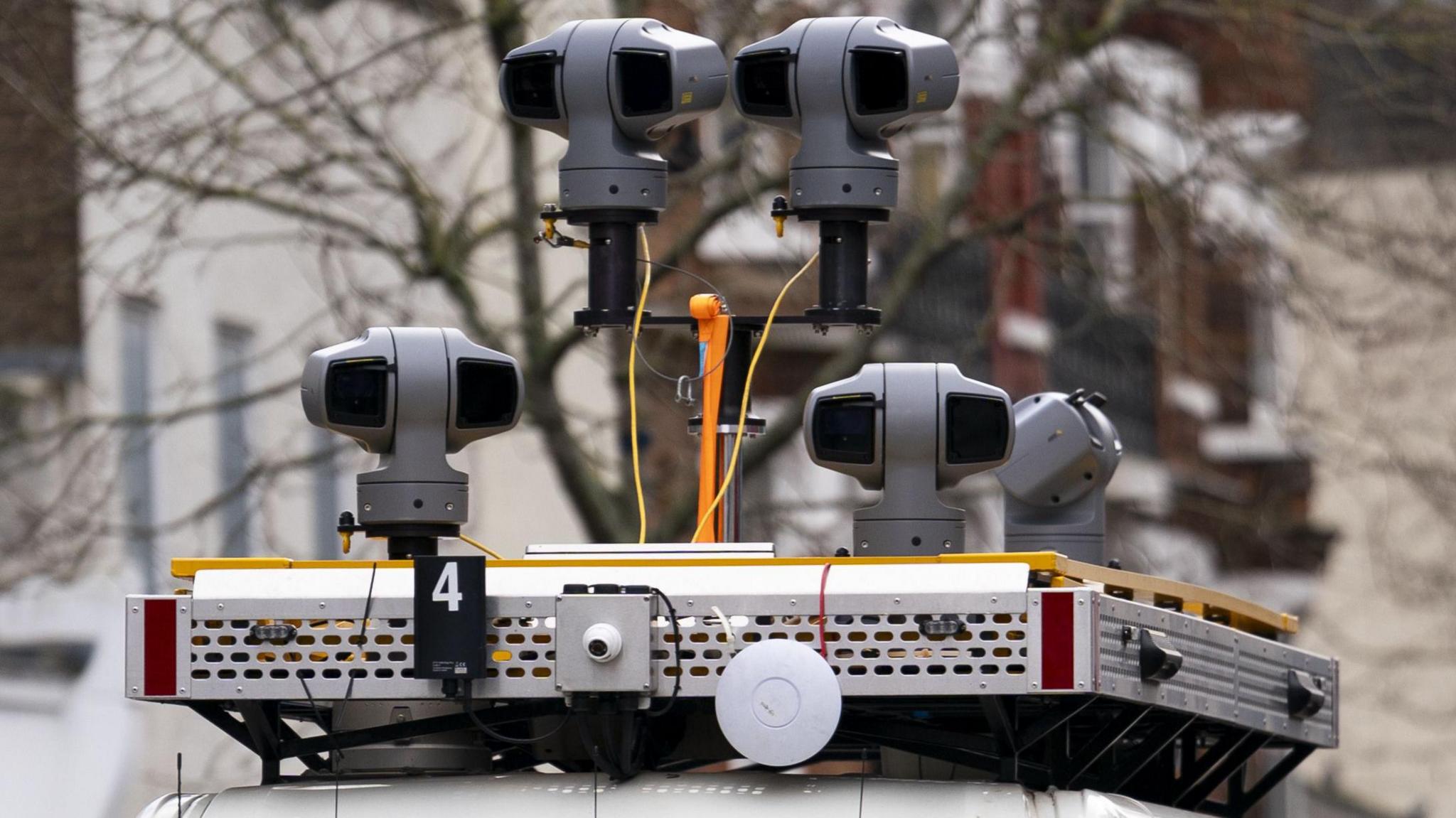
The data flow is straightforward — and that is the problem. Cameras mounted on police vans capture faces in crowded public areas. The feed runs against a predetermined watchlist, typically a few hundred wanted individuals, compiled by the police. A match triggers a police intervention. But the system sweeps in everyone who passes the camera — not just the people on the list. The biometric templates of the unscanned majority are supposed to be deleted, but oversight of that deletion process remains opaque. Four vendors supply the core matching software to different forces; the Met uses technology from NEC, while other forces contract with providers including Facewatch and Reveal Media. No two forces use exactly the same accuracy thresholds, the same watchlist criteria, or the same deployment policy. This fragmentation is not an accident of procurement — it is the direct result of a legislative vacuum.
The UK's approach to biometric surveillance prefers flexibility over certainty and shows why, in my view, we need more of the latter. Litigation is probably the most expensive, and certainly the least predictable way of making policy.— Fraser Sampson, former UK Biometrics and Surveillance Camera Commissioner, writing in Biometric Update, 3 May 2026
Sampson's column, published days before the two current UK Biometrics Commissioners released a joint report, used a word that now appears everywhere in the regulatory conversation: patchwork. Dr. Brian Plastow, the Scottish Biometrics Commissioner, told Biometric Update that facial recognition is "nowhere near as effective as the police claim it is" and that police in England and Wales are "really just marking their own homework" when they report accuracy rates. Prof. William Webster, commissioner for England and Wales, told The Guardian that the "horse had gone before the cart" — that legislation was lagging behind the real-world deployment of live FRT. Together, the two commissioners have called for a Biometric Surveillance Act, a single primary statute that would set binding rules on accuracy thresholds, audit rights, transparency obligations, and deletion timelines.
Police in England and Wales are really just marking their own homework on LFR accuracy.
Scotland holds the line — for now
Scotland has not yet deployed live facial recognition. Police Scotland does not expect to produce a detailed business case until 2027, and any deployment would require a bespoke code of practice and a public consultation. Dr. Plastow's office in Edinburgh has become the most visible institutional counterweight to the rollout south of the border, consistently questioning the effectiveness data that English and Welsh forces cite. The contrast matters because it demonstrates that the UK's biometric surveillance regime is being built not through Parliament but through police procurement decisions, court rulings, and press releases — a sequence of events that does not produce statutory certainty, no matter how many judicial reviews the Met wins.
The companies that did not respond to requests for comment for this article include NEC, Facewatch, and Reveal Media. FOIA requests regarding the specific accuracy rates achieved by each force's LFR system during the 1.7 million scans recorded in early 2026 have been submitted to the Metropolitan Police and 12 other forces; responses are pending. The Information Commissioner's Office confirmed it is monitoring the rollout but has not opened a formal investigation.
- The Met's LFR policy and deployment records: available via the Metropolitan Police FOI portal at met.police.uk/foi
- The joint Biometrics Commissioners' report: published on the UK Government website at gov.uk/government/organisations/biometrics-commissioner
- Complaints about police use of biometric data: file with the Information Commissioner's Office at ico.org.uk/make-a-complaint
- The full High Court judgment: searchable via the National Archives for case reference CO/2024/0423
- Fraser Sampson's column: "Certainty vs flexibility – does the UK need a Biometric Surveillance Act?" at biometricupdate.com
A High Court victory is not a legislative mandate. It tells police they are not breaking the law as it stands today. It does not answer whether the law as it stands today is adequate. On that question, the two people Parliament appointed to guard biometrics in the UK have already answered: it is not.