30-Week Severance Packages Become the New WARN-Notice Loophole
Salesforce’s 30-week severance packages, amid swelling AI budgets, reveal a structural shift in how tech companies use payouts to bypass WARN Act notice rules.
In this article
Salesforce began notifying employees on Monday, June 8, 2026, that 86 positions were being eliminated across its Agentforce, MuleSoft, and Marketing Cloud units. The company offered affected U.S. workers a standard severance package that included 30 weeks of pay, six months of health coverage, and outplacement services, Business Insider reported on June 9. The same week, the U.S. Bureau of Labor Statistics released data showing tech employers cut 38,242 jobs in May alone, the sector's heaviest single-month reduction in nearly two years. Those two numbers, 30 weeks of pay and 38,000 job cuts in 31 days, sit at the center of a labor-market dynamic the existing regulatory framework was not designed to address.
American tech companies eliminated more than 142,000 jobs in the first five months of 2026, a 33 percent increase over the same period last year, TechTimes reported in late May, citing workforce data aggregators. By the first week of June, the year-to-date total had climbed to 149,935 job eliminations across 363 events, according to TrueUp's continuously updated tracker, running at roughly 974 losses per day and 44 percent above 2025's already elevated pace. The same employers are posting record revenues and, in many cases, routing the headcount savings directly into AI infrastructure spending projected to reach $700 billion across the industry.
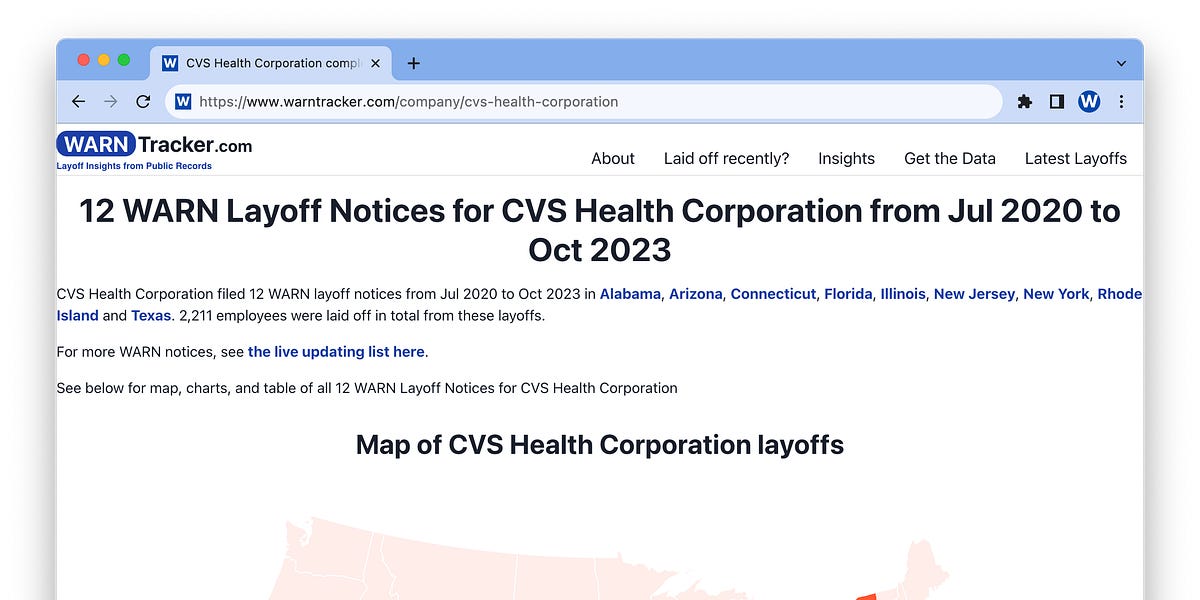
The structural puzzle is not that layoffs are happening. It is that the mechanisms governing how those layoffs are communicated, timed, and compensated are doing something new, something the 1988 Worker Adjustment and Retraining Notification Act never anticipated. The WARN Act requires employers with 100 or more workers to provide 60 calendar days of advance notice before a plant closing or mass layoff. In practice, tech companies routinely bypass the advance-notice requirement by paying workers for 60 days in lieu of notice, effectively converting the WARN obligation into a cash transaction. Salesforce's 30-week package takes that conversion several multiples further.
The Salesforce package as a microcosm
The 30-week severance figure is not a random number. For an engineer earning $180,000 in base salary, 30 weeks represents roughly $104,000 in direct pay continuation, plus the implicit value of six months of health coverage and outplacement services. The 86 affected workers in the June round were concentrated in Agentforce, the company's flagship AI platform, and MuleSoft and Marketing Cloud, both revenue-generating business lines. Salesforce did not frame the cuts as performance-related; it described them as a reallocation of resources toward AI priorities, Quartz reported, citing Business Insider's initial reporting. The company's stock closed at $170.92 on June 10, down 35 percent year to date.
What the severance package actually buys Salesforce is worth examining in explicit terms. Thirty weeks of pay continuation means the company faces no WARN Act litigation risk, because it is providing more than four times the required notice period in cash. It buys a release of claims that will survive judicial scrutiny, because a severance multiple above six months is difficult to challenge as unconscionable. It buys reputational cover among the engineering workforce the company still needs to retain and recruit, because a 30-week runway is meaningfully more generous than the 12-to-16-week packages that became standard during the 2023-2024 layoff cycles. And it buys time: the affected workers will not enter the labor market in a concentrated block that might draw local media attention or trigger state-level WARN reporting in a way that clusters with other employers' filings.
That last point matters more than it sounds. The WARN-notice system in the United States is disaggregated across 50 state-level databases, each with its own filing thresholds, disclosure formats, and publication timelines. The Ohio Department of Job and Family Services issued multiple WARN notices in April 2026 affecting more than 1,800 workers, The Cincinnati Enquirer reported via the state's public WARN database. In May, two additional Ohio employers filed notices affecting more than 200 workers, MSN reported, citing the same state database. But those filings capture plant closures and manufacturing reductions. A tech company eliminating 86 high-salary roles in San Francisco or Seattle, and spreading the departures across multiple weeks of paid non-working status, rarely triggers the same reporting threshold in any single state.
The notice-period mismatch and what it conceals
The WARN Act was written for an economy in which a factory closing meant 500 people showing up to locked gates on the same morning. It was not written for a world in which a profitable software company with $38 billion in annual revenue cuts fewer than 100 positions at a time, across multiple business units and multiple calendar weeks, and packages the departures inside a severance envelope generous enough to make the absence of advance notice feel like a negotiated benefit rather than a statutory violation. This is not a loophole in the legal sense. It is a category mismatch. The WARN Act was designed to cover mass layoffs and plant closings. What the tech industry is executing in 2026 is something closer to continuous workforce rebalancing, small enough per event to fall below federal WARN thresholds, large enough in aggregate to reshape the engineering labor market.
The numbers underscore the mismatch. The 149,935 tech job eliminations tracked through early June 2026 occurred across 363 discrete events, which yields an average of roughly 413 positions per event. That average is dragged upward by a handful of large-scale reductions. Meta confirmed in April it would cut 10 percent of its workforce, affecting approximately 8,000 employees, TechRepublic reported. Uber cut its HR organization in late May. At the other end, dozens of smaller cuts, like the Salesforce round, eliminate fewer than 100 positions at a time while offering severance packages that effectively pay workers to not work for periods longer than the WARN Act's entire notice window.
This is where the economics of the WARN-notice cycle become genuinely interesting. In a traditional plant closing, the 60-day notice period serves a dual purpose: it gives workers time to find new employment while still drawing paychecks, and it gives local workforce agencies time to mobilize retraining resources. The advance notice also creates a public record, filed with the state, that aggregates into visible labor-market data. When a company instead pays 30 weeks of severance without advance notice, the workers are better compensated but the public record is thinner. No WARN filing may appear at all if the number of affected employees at a single site falls below the threshold, which for federal purposes is 50 employees constituting at least one-third of the workforce at that site, or 500 employees regardless of proportion.
The 86 Salesforce cuts, distributed across multiple offices and business units, likely triggered no federal WARN obligation. The severance payments, meanwhile, do not appear as a line item in any public workforce database. They show up in the company's quarterly earnings as restructuring charges, aggregated and anonymized. The worker who receives 30 weeks of pay and a separation agreement is, from the standpoint of public labor-market data, simply no longer employed. The transaction between employer and employee has been privatized.
The broader landscape reinforces the pattern. U.S. employers issued the fewest mass layoff announcements of 2026 in May, tracking with strong overall employment numbers, USA TODAY reported on June 6, having tracked just 250 mass layoff events. But those WARN-reportable events represent a shrinking fraction of total separations in the tech sector, precisely because companies have learned to size their reductions below the reporting floor and compensate above the notice-period ceiling. The public data says layoffs are tapering. The industry data says 974 workers per day are exiting technology employers.
The funding flows tell the rest of the story. The same employers shedding workers are simultaneously committing unprecedented capital to AI infrastructure. Amazon rolled out its next-generation warehouse robots in early June, CNBC reported, even as it continued cutting corporate headcount. The $700 billion AI infrastructure figure cited by TechTimes is not evenly distributed across the industry, but it captures the direction of spending: toward compute, toward model training, toward automated systems that reduce the marginal cost of cognitive labor. Every severance dollar is a bet that the departing worker's function will be replaced by a cheaper combination of software and remaining staff, with the savings captured over quarters two through eight.
The severance multiple itself reveals how companies value the transaction. A 30-week package is generous by any historical standard, and it reflects a calculation that the cost of litigation, the cost of reputation damage among remaining engineers, and the cost of a concentrated exit that might trigger WARN reporting all exceed the carrying cost of an extra three to four months of pay. Companies are not being generous out of altruism. They are pricing the exit.
From a systems perspective, the current arrangement produces three losers, none of whom are the departing Salesforce engineers. The first is the public workforce infrastructure: state agencies that rely on WARN filings to anticipate demand for unemployment insurance and retraining services are flying partially blind when a growing share of separations occur through below-threshold events with privatized severance. The second is mid-career engineers at second-tier employers who receive eight weeks of severance rather than 30, because their companies lack the balance-sheet capacity to buy silence and cover at equivalent multiples. The labor market's pricing of exit is becoming bifurcated. The third is anyone trying to understand what is actually happening in tech employment from the public data alone.
The WARN Act has not been meaningfully amended since its passage nearly four decades ago. Its thresholds and definitions reflect an industrial-era understanding of employment as something that happens at fixed sites, in large concentrations, on predictable schedules. The tech industry has demonstrated that a sufficiently capitalized employer can operate almost entirely around those definitions, using severance as both compensation and camouflage. Whether that qualifies as a policy problem depends on what you think the WARN Act is supposed to accomplish: advance notice to workers, or transparency for the labor market as a whole. Salesforce's 30-week package arguably accomplishes the first. It does not accomplish the second.
The question worth watching over the remainder of 2026 is not whether the layoff totals will climb past 200,000. At the current daily rate of 974, that threshold arrives before Labor Day. The question is whether any state attorney general or federal agency begins to treat serial below-threshold reductions as what they are in economic substance, which is a single continuous workforce contraction conducted through a series of transactions designed to avoid triggering the reporting apparatus. The severance is the signal. When the multiple exceeds six months, the employer is not just being fair. It is paying for something the law was supposed to provide for free.
Read next