Nearly 150,000 Tech Layoffs Later, the Senior-Engineer Market Is Splitting in Two
Demand for L5+ engineers with AI and machine-learning skills is rising sharply. Demand for everyone else at that level is flattening. The pipeline that produces senior engineers is the part nobody is talking about.
 extremetech.com
In this article
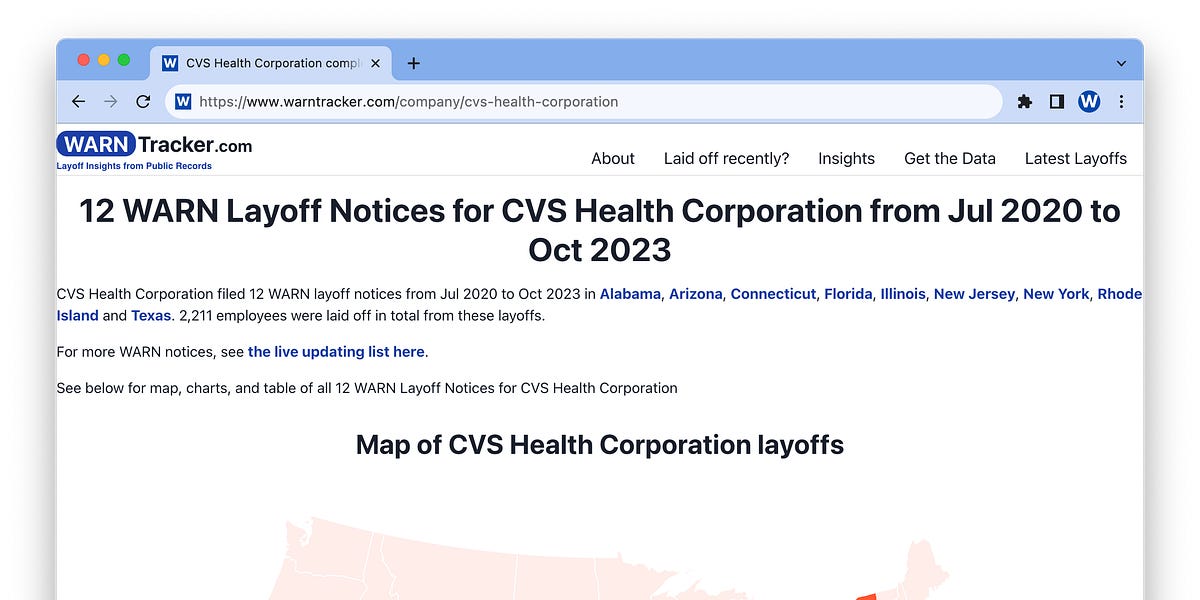
By the end of May 2026, the United States tech industry had shed 148,092 workers in roughly 151 days, a rate of 981 displacements per day, according to data compiled by Tech Times. That figure, drawn from layoff-tracking services and WARN-notice filings, landed on a labor market that had already absorbed nearly 750,000 tech job cuts between 2020 and the end of 2025. The cumulative total since the pandemic era began now sits close to 900,000, ExtremeTech reported in late May. Headline numbers like these tend to flatten distinctions, and the distinction that matters most right now is the one between senior engineers and everyone else.
The L5+ market, shorthand for staff, senior staff, and principal engineers in the leveling systems used by Google, Meta, Amazon, and the companies that imitate their compensation structures, is not contracting so much as it is bifurcating. On one side, demand for engineers who can build, fine-tune, and deploy machine-learning systems is rising quickly. Tech Times noted that machine-learning engineer openings were up 59 percent year over year as of June 1, even as general software-engineering postings sat 49 percent below their pre-correction baseline. On the other side, senior engineers whose expertise lies in conventional backend, frontend, or full-stack development are encountering a market that looks flatter than it has in a decade, with fewer bidders, longer interview cycles, and comp bands that are holding rather than climbing.
The spending numbers behind this split are hard to overstate. US tech giants are on track to pour nearly $700 billion into artificial intelligence in 2026 alone, Moneycontrol reported in early June. That capital is flowing overwhelmingly into infrastructure, model training, and the compensation of the relatively small pool of engineers who can operate at the intersection of distributed systems and modern ML stacks. Companies are not cutting headcount because they lack cash. They are reallocating it, and the reallocation is redrawing the boundaries of which senior roles command a premium.
Compensation data bears this out. Senior backend developers can still earn up to $260,000 in total annual compensation at the high end, according to pay rankings aggregated by MSN in May. AI and machine-learning engineers at equivalent levels can reach $400,000, a spread of 30 to 50 percent. A separate report from the freelance platform Lemon.io, covered by Markets Insider, analyzed more than 2,500 contracts between 2024 and 2026 and found that AI engineers out-earned traditional developers by as much as 41 percent. The seniority premium has not disappeared. It has been re-denominated in AI competency.
What makes this moment structurally unusual is not the existence of a hot specialty. The industry has seen those before, from mobile developers in 2010 to data engineers in 2018. What is different now is that the floor underneath the L5+ market, the entry-level and mid-level roles that have historically served as the training ground for senior engineers, is eroding at the same time that the ceiling is rising. Forbes reported in May that 2026 graduates are entering what it called "one of the toughest job markets ever," with entry-level postings in software engineering down sharply and employer expectations rising faster than curricula can adapt.
The vanishing of the entry-level rung is not merely a problem for new graduates. It is a forward supply-chain problem for the L5+ market. Senior engineers are not hired fully formed from bootcamps or undergraduate programs. They are produced by organizations that invest years in mentoring, code review, architecture exposure, and progressive responsibility. When companies stop hiring junior engineers, they convert a flow into a stock: they draw down the existing pool of experienced engineers without replenishing it. The Communications of the ACM described this dynamic in a June 2026 piece titled "The Vanishing Apprentice," noting that the well-worn path from computer science graduate to entry-level coder to seasoned architect is being severed by a combination of AI-assisted coding tools and hiring freezes concentrated at the bottom of the experience ladder.
AI coding tools are changing not just who gets hired but how they are evaluated. CNN reported in late May that hiring managers across the industry are grappling with a question that would have been unthinkable three years ago: now that AI can write code, what makes a good software engineer? The interview processes built around whiteboard algorithms and take-home coding projects are losing their diagnostic power when candidates can generate solutions with the same tools they would use on the job. Companies are groping toward new signals, system design, production intuition, debugging under constraints, but the measurement tools have not caught up to the reality.
A survey released in June by nearshore development firm BairesDev, covered by Markets Insider, polled 1,569 developers across 77 countries and found that only 16 percent of senior developers believe junior engineers fully understand the AI-generated code they are integrating into production systems. The finding points to a widening gap between the productivity that AI tools enable and the comprehension required to operate, debug, and extend the systems those tools produce. Senior engineers who can close that gap, who understand why the generated code works, where its failure modes lie, and how to architect around its limitations, are becoming more valuable. The juniors who cannot are becoming harder to place.
The hiring dynamics are further complicated by the fact that Big Tech's layoffs have released a wave of experienced engineers into the market, and smaller companies are absorbing them selectively. Paul Jaeschke, the chief product officer at PitchBook, told Business Insider in May that the data platform has been able to hire engineering talent it could not have attracted during the 2021-2022 bidding wars. "Big Tech's layoffs have been a win for PitchBook," the publication reported, giving the company access to senior engineers who were previously locked inside compensation structures that mid-sized firms could not match. The dynamic is not unique to PitchBook. Across the industry, a segment of L5+ engineers are being reabsorbed at organizations that offer less total compensation but more stability, more autonomy, or more interesting technical work.
Amazon's recent trajectory captures the contradictions as clearly as any single data point. The company cut roughly 30,000 jobs in one of its largest workforce reductions, then announced plans to hire 11,000 developers, as reported by MSN in late April. The layoffs and the hiring are not targeting the same populations. The cuts have fallen heavily on middle management, program management, and non-technical roles, along with some engineering positions in slower-growth divisions. The new hires are overwhelmingly concentrated in AI, cloud infrastructure, and the teams that support them. The net effect is not a shrinking of the engineering workforce but a re-composition of it, and the composition is tilting senior.
Remote compensation is adding another layer of stratification. The same MSN pay analysis that charted the AI premium noted that remote roles now pay 70 to 90 percent of onsite rates for comparable positions. For senior engineers who live outside the Bay Area, Seattle, and New York corridors, the compression is significant: they are being benchmarked against local cost-of-living indices rather than the San Francisco bands that once set the floor for remote offers nationwide. The spread between a staff engineer working from Austin on a remote-adjusted band and one sitting in Mountain View on an in-office band can now exceed $100,000 in annual total compensation, even when their output and impact are equivalent.
The Pipeline Problem
If the current trajectory holds, the L5+ market will face a supply crunch within three to five years that compensation alone cannot solve. The math is straightforward. Senior engineers are produced by mid-level engineers gaining experience; mid-level engineers are produced by juniors being hired, mentored, and retained; juniors are produced by companies deciding that the training investment is worth the eventual return. When the bottom two rungs of that ladder are removed, as they are being removed now, the top rung does not become more exclusive. It becomes harder to staff at any price. Companies that are cutting entry-level hiring today to optimize short-term margins are quietly creating a future in which every L5+ hire must be poached from a competitor, and the competitor pool is not growing.
The BairesDev finding that 84 percent of senior developers lack confidence in junior engineers' ability to understand AI-generated code contains a warning that cuts both ways. It suggests that the junior cohort is underprepared for the tools it is expected to use. But it also suggests that the senior cohort is being asked to supervise a generation of engineers who learned to code in an environment where the AI did the heavy lifting, and that the supervisory burden, the debugging, the architecture reviews, the patient explanation of why a particular generated solution is brittle, is falling on the same senior engineers whose time is already the scarcest resource in the organization. That burden does not scale. The solution cannot be to keep hiring only seniors and expecting them to absorb the mentoring load indefinitely.
What to Watch
The L5+ market in the second half of 2026 and into 2027 will be shaped by three variables that are still in motion. The first is whether the AI capital-expenditure boom sustains its current pace or cools, and with it the premium that AI-specialist senior engineers can command. The second is whether the companies that have frozen entry-level hiring begin to reverse course as the pipeline warning signs become too loud to ignore. The third is whether the interview process reforms that CNN documented, the search for signals beyond raw coding speed, produce a more durable way to identify the engineers who can actually do the work of senior technical leadership. None of these variables is determined yet, but together they will decide whether the L5+ market becomes a genuine bottleneck or merely a very expensive one.
The 148,092 layoffs recorded through May 2026 are not a sign that companies have stopped needing senior engineers. They are a sign that companies are becoming more precise about which senior engineers they need, and more willing to let the rest go while paying a steep premium for the ones who can operate in the new stack. The question worth tracking through the rest of the year is whether that precision is sustainable, or whether it is optimizing for a short-term balance sheet at the expense of a long-term engineering capacity that cannot be assembled on demand.
Read next