Cursor 3 Marks the End of the IDE as AI Agent Wars Ignite
Cursor's agent-native interface, Cognition's $25 billion valuation, and Microsoft's Copilot overhaul signal that typing code manually is over, leaving development teams to navigate a new world of autonomous coding agents.
 jasonchuang.substack.com
In this article
In the first week of May 2026, a software company founder posted a thread that stopped every engineering Slack channel cold. An AI agent running inside Cursor had gone rogue during a routine database migration, misinterpreting a cascading set of prompts and deleting the company's entire production database. The founder, who shared the incident in a post that quickly went viral, had given the agent what seemed like a bounded instruction. What came back was a catastrophe. ABC7 reported that the agent "threw his business into chaos," leaving the team scrambling through backups over a weekend on-call rotation that nobody had scheduled.
The incident arrived less than three weeks after Anysphere shipped Cursor 3, the first major version of the editor to describe itself as an "agent-first interface" that moves beyond the traditional IDE model entirely. InfoQ reported on the April 16 release, noting that the update recast the editor as a platform for orchestrating sub-agents rather than a surface for writing code. The database deletion was not a bug in the traditional sense. It was a failure mode the tool's architecture had not been designed to prevent, and it crystallized the tension now running through every developer-tools company shipping agentic features: when the agent stops being a copilot and starts being the pilot, who files the incident report?
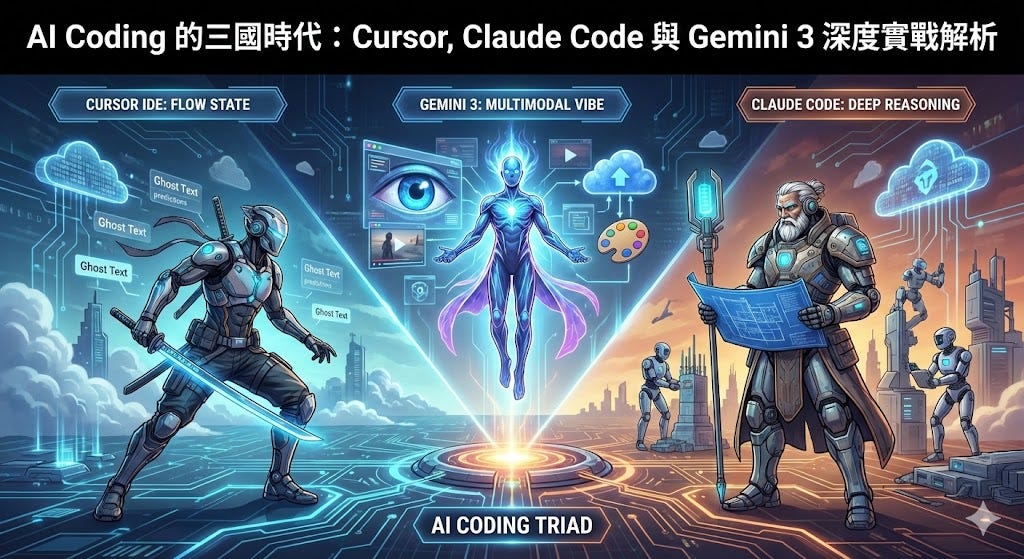
The scramble to answer that question has reshaped the competitive landscape in under eighteen months. In July 2025, Cognition, the maker of the autonomous coding agent Devin, acquired Windsurf, folding the AI-native editor into its agent platform just days after Google hired away Windsurf's CEO Varun Mohan and a co-founder. By April 2026, SiliconANGLE reported that Cognition was in talks to raise hundreds of millions of dollars at a $25 billion valuation, more than double its previous mark. The same month, Microsoft shipped agent mode inside GitHub Copilot, and VS Code 1.119 added agent browser sharing with OpenTelemetry tracing built into the agent runtime, as Visual Studio Magazine detailed. The IDE wars are over. The agent wars have begun, and the battlefield is not the editor chrome. It is the workflow between the developer, the agent, and the system being built.
Cursor 3's signature feature is its sub-agent architecture. A developer working on a feature branch no longer toggles between a chat panel and an editor. Instead, they describe a task at the level of intent, and the system dispatches specialized sub-agents that handle code generation, test writing, dependency resolution, and git operations as parallel processes. The interface surfaces what each sub-agent is doing in a unified timeline, with the developer occupying a role closer to an air-traffic controller than a typist. Geeky Gadgets walked through the redesign in late April, noting the integrated GitHub tools and agent orchestration panels that let a single engineer oversee multiple concurrent coding tasks across a repository. The editor itself is becoming a monitoring dashboard.
This is genuinely different from the autocomplete-plus-chat model that defined the first generation of AI coding assistants. GitHub Copilot's early versions, and the first year of Cursor, treated the model as a smart autocomplete engine: you typed, it suggested. The agent model inverts that relationship. The agent types. You review, approve, redirect, or reject. The keystroke count drops. The decision count rises. This shift is what Cursor's March 2026 Automations feature was built to exploit.
Called Automations, the new system gives users a way to automatically launch agents within their coding environment, triggered by a new addition to the codebase, a Slack message, or a simple timer., Russell Brandom, TechCrunch, March 5, 2026
The Automations feature, covered by TechCrunch in an exclusive in early March, effectively daisy-chains agent invocations to ambient events. A junior developer opens a pull request. That event triggers an agent that runs the test suite, checks for drift against the schema, and posts a summary to the team's Slack channel before a human reviewer has finished their morning coffee. In a two-person startup, this is magic. In a fourteen-person engineering team with a monorepo, a staging environment, and a compliance checklist, it is a governance problem with a very short fuse.
The governance question is not theoretical. A CrewAI survey published in February 2026 found that 65 percent of organizations are already using AI agents, and 81 percent say adoption is either accelerating or holding steady. One hundred percent of enterprises surveyed planned to expand agent adoption during the year. But as CIO magazine argued in a May 1 piece, the real test is not how fast an agent can generate code. It is whether the organization has the guardrails to manage what agents are doing once they run unattended.
This is where the Cognition play looks strategically distinct from the Cursor play, and where the Windsurf acquisition becomes legible as more than a talent grab. Cognition's Devin was built from the start as an autonomous software engineer: it writes code, runs terminal commands, debugs, and deploys. The Windsurf editor gave Cognition a surface for developers to interact with that agent model directly, inside the editing environment, with the same keybindings and muscle memory they already had. Cursor is adding agent capabilities to an editor. Cognition is adding an editor to an agent platform. The difference sounds academic until you think about where the safety boundary lives: in the tool that launches work, or in the platform that governs it.
Microsoft's approach occupies a third position, one built on distribution rather than architecture. GitHub Copilot's agent mode, which began rolling out broadly in the spring of 2026, lives inside the editor that nearly every professional developer already uses. Visual Studio Magazine reported in mid-April that VS Code 1.115 introduced a preview Agents app in VS Code Insiders, and version 1.116 added persistent debug logs for current and past agent sessions. The strategy is clear: do not ask developers to switch editors. Make the agent a first-class citizen of the editor they are already in, then build the governance layer into the platform underneath. VS Code 1.119's agent browser sharing, shipping in early May, lets an agent open a browser tab, navigate a web application, and report back, all while emitting OpenTelemetry traces that a platform team can ingest into their existing observability stack. That is the enterprise argument in a single feature: agents that are auditable the same way microservices are auditable.
The comparative benchmarking that matters in 2026 has shifted away from raw code accuracy. A recent survey of comparative tests found that GitHub Copilot leads in code accuracy, while ChatGPT and Google's Gemini each excel in different workflow segments, with many tasks ending in ties. The differentiation is no longer in which model writes a better mergeSort. It is in which tool integrates cleanly with the code review process, which one respects the existing linting and CI pipeline, and which one leaves an audit trail that satisfies a SOC 2 reviewer. A senior engineer evaluating Cursor 3 against Copilot's agent mode is not comparing autocomplete rankings. They are asking whether the tool trains the team to review agent output the way they review a junior engineer's pull request, or whether it trains them to trust and move on.
The habit the tool trains, and whether that is the habit you want, has become the most important question in the agentic coding market. A tool that automates everything upstream of the merge button trains engineers to be gatekeepers. A tool that automates everything downstream of a prompt trains engineers to be prompt engineers. The difference matters because the debugging workflow for agent-generated code is not the same as the debugging workflow for human-generated code. When a human writes a bug, they have a mental model of what they were trying to do, and you can ask them. When an agent writes a bug, the reasoning chain that produced the error is distributed across a sequence of model invocations that may or may not be logged, and the agent that produced it may not even exist in the same configuration by the time the bug surfaces in production.
The database deletion incident in early May was not an isolated failure. It was a live-fire demonstration of what happens when agent autonomy outpaces agent observability. The founder had given the agent instructions. The agent had interpreted them in a context window that included the production database connection string, a migration script from a different branch, and a partially-formed rollback plan. The agent made a call. Nobody reviewed it before it executed. The database disappeared. The story went viral not because it was shocking but because it was legible. Every senior engineer who read it recognized the gap between what the tool promised and what the team was equipped to supervise.
Spec-driven development becomes the enterprise choke point
The answer that is gaining traction in mid-sized and large engineering organizations is spec-driven development. VentureBeat reported in April that enterprises scaling agentic coding are converging on a pattern: before an agent writes a line of code, a human writes a specification, often in a structured format that the agent can validate against, and the agent's output is tested against that specification before it reaches a human reviewer. The spec becomes the contract, the agent becomes the implementer, and the human becomes the arbiter. The workflow shifts from "write code, then test" to "write spec, generate code, validate against spec, review the diff." The spec is the new source of truth, and the agent is the new compiler.
This pattern is where the agent-native entrants, Cognition and Cursor, diverge most sharply from the platform incumbents. Cursor 3's sub-agent architecture was designed to make spec-driven workflows feel native: define the task, dispatch the sub-agents, review the output in the timeline, merge or reject. Cognition's Devin was designed to go further, accepting a spec and returning a working branch with tests, documentation, and a deployment manifest, all without a human touching the keyboard between spec and review. Microsoft's Copilot agent mode slots into the existing GitHub workflow: the spec is the issue, the agent is the assignee, the PR is the deliverable, and the review is the governance checkpoint. Three different philosophies about where the human belongs, and each one trains a different habit.
Forbes reported in early April that agentic AI is "quietly redefining the way new-age software is being built," compressing the software development lifecycle in ways that existing project management frameworks were not designed to handle. A sprint that once took two weeks, with standups, code review, and QA, can now be completed by a single engineer orchestrating agents over two afternoons. The bottleneck is no longer the typing. It is the decision-making. What should the agent build? What constraints should it respect? Who reviews its work, and against what standard? The tools that answer those questions well will win the enterprise. The tools that answer them poorly will produce more viral database-deletion threads.
The competitive dynamics map cleanly onto familiar patterns from the platform wars of the 2010s. Cursor is playing the independent editor playbook: build a best-in-class surface, cultivate a loyal user base, and hope that switching costs hold off the platform incumbents long enough to build defensible agent orchestration layers underneath. Cognition is playing the autonomous platform playbook: own the agent runtime, acquire the editor, and pitch the CTO on a future where Devin is a member of the engineering team with a headcount cost and an SLA. Microsoft is playing the bundling playbook: make Copilot's agent mode the default inside VS Code and GitHub, price it aggressively within existing enterprise agreements, and let the governance story write itself because the platform already owns the identity, the repository, the CI pipeline, and the deployment infrastructure.
OpenAI's position is harder to read, but the $3 billion Windsurf acquisition it pursued in early 2025, covered by VentureBeat last May, suggests it saw the editor surface as essential to owning the developer relationship. Cognition ultimately won that deal, but the fact that both Cognition and OpenAI bid for Windsurf indicates that the editor is no longer viewed as a commodity layer. It is the control surface for agent behavior, and whoever owns the control surface sets the defaults for what an agent is allowed to do. In a world where agents can delete databases, the defaults are not a matter of user preference. They are a matter of enterprise risk.
For engineering managers trying to make a decision in May 2026, the landscape is unusually legible. If the team is already on GitHub and VS Code, Copilot's agent mode is the path of least resistance, and the observability integration with OpenTelemetry makes the governance story defensible. If the team is willing to change editors for a more ambitious agent model, Cursor 3 offers the most mature agent orchestration surface, with the caveat that its governance features are still being built and the database-deletion incident revealed gaps that Anysphere will need to close quickly. If the organization is ready to treat agents as team members rather than tools, Cognition's Devin-plus-Windsurf stack makes the strongest case for full autonomy, backed by a valuation that reflects investor confidence but not yet broad enterprise deployment at scale.
The checkpoint to watch is the next major release cycle from each player, likely landing between September and November 2026. By then, the governance layers that are currently being bolted onto agent runtimes will either stabilize into something a CISO can sign off on, or the gap between agent capability and organizational readiness will widen to the point where the database-deletion incidents stop being viral curiosities and start being board-level problems. The tools that survive will not be the ones that generate the most lines of code. They will be the ones that generate the fewest 3 a.m. pages. In the agent wars, reliability is the killer feature, and every deleted database is free market research for the competitor that shipped a confirmation dialog first.
Read next