DC Circuit Appeal Weighs Data-Sharing Remedies Without Chrome Breakup
Google's opening brief asks the DC Circuit to reverse the monopoly finding and data-sharing mandates, while the DOJ and 38 states cross-appeal for divestiture and other stronger remedies.
 alamy.com
In this article
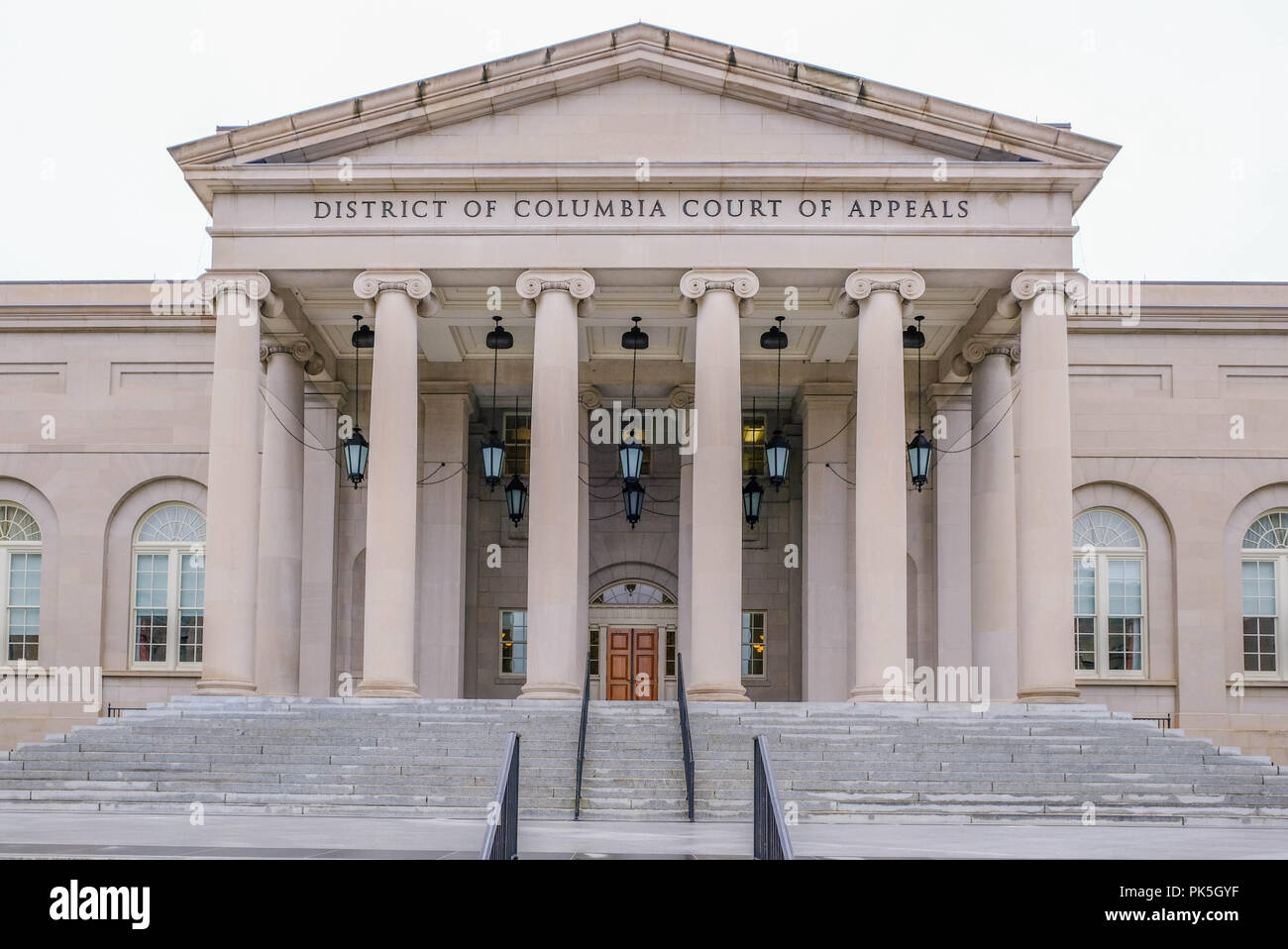
On May 22, 2026, Google filed its opening appellate brief at the United States Court of Appeals for the DC Circuit, asking a three-judge panel to reverse Judge Amit P. Mehta's August 2024 ruling that the company illegally monopolized markets for general search services and general search text advertising. The brief, docketed as United States v. Google LLC, No. 24-5284, challenges both the liability determination and the remedy order, which since late 2025 has required Google to share click-and-query data with rival search engines under the supervision of a five-member Technical Committee. The filing kicks off what will be the most consequential antitrust appeal since United States v. Microsoft Corp. reached the same courthouse a quarter-century ago.
The procedural posture is unusually layered. Google is appealing the entirety of the judgment, including the data-sharing mandates that are already operational. At the same time, the Department of Justice, joined by 38 state attorneys general, filed a cross-appeal seeking remedies the district court declined to impose, most prominently the forced divestiture of the Chrome browser. The result is a rare appellate proceeding in which both sides are asking the DC Circuit to find that the district court erred, albeit in opposite directions and for opposite reasons. Oral argument has not yet been scheduled, according to MacRumors, meaning a hearing is unlikely before the final quarter of 2026.
The liability fight turns on a question that has divided antitrust scholars since the district court's 277-page opinion: whether Google's payments to Apple and other device manufacturers to secure default search placement constitute competition on the merits or exclusionary conduct under Section 2 of the Sherman Act. Google's brief, as The New York Times reported, argues that Apple chose Google as its default search engine after evaluating alternatives and concluded Google offered the best product. The company characterizes the revenue-sharing agreements as ordinary distribution contracts that benefitted consumers by funding free operating systems and browsers.
Apple chose Google 'fair and square' after testing the alternatives., Google's opening appellate brief, as characterized by MacRumors
On the remedy side, the appeal presents a doctrinal question that antitrust practitioners have been tracking since Judge Mehta issued his remedial order. The district court declined to order a Chrome divestiture, accepting Google's argument that behavioral remedies, particularly mandatory data-sharing with competitors, could restore competition without a structural breakup. The DOJ's cross-appeal contests that finding, arguing that data-sharing alone cannot replicate the competitive conditions that would exist absent Google's default-placement contracts. The TechTimes analysis of the filing notes that the DC Circuit could uphold the liability ruling while modifying the remedy package in either direction, a procedural possibility that makes the appellate outcome unusually unpredictable.
The Technical Committee that Judge Mehta empaneled to oversee data-sharing has become a flashpoint in its own right. The five-member body is charged with setting license terms, privacy safeguards, and eligibility criteria for rival search engines seeking access to Google's click-and-query data. As MacRumors reported in its coverage of the appeal, the Committee has not yet outlined those terms or criteria, leaving potential competitors without clarity on what data they can access or under what conditions. Google's brief argues that this uncertainty demonstrates the unworkability of the remedy; the DOJ's cross-appeal treats it as evidence that behavioral remedies need structural backstops.
The DC Circuit occupies a singular position in the American antitrust appellate map. It hears a disproportionate share of challenges to federal agency actions, and its judges have developed deeper antitrust expertise than any other circuit save perhaps the Second. Three of its active judges served in senior antitrust roles at the DOJ or FTC before their appointments. For Google, this is both a risk and an opportunity: the court will not be easily persuaded by broad policy arguments disconnected from the Sherman Act's statutory text, but it is also more likely than a generalist panel to engage seriously with the economic evidence both sides submitted at trial.
Parallel Appeals Reshape the Antitrust Docket
The Google appeal is not arriving in isolation. The Federal Trade Commission is pressing its own monopoly case against Meta Platforms, and that case is now on appeal after a district court dismissed the FTC's complaint. In January 2026, the FTC announced it would appeal that dismissal, and in late May, TechTimes reported that 29 states and the District of Columbia filed an amicus brief backing the Commission's position, arguing that the district court applied an overly narrow definition of the relevant market for personal social networking services. The Meta appeal, which seeks the divestiture of Instagram and WhatsApp, is proceeding in the same DC Circuit that will hear Google, creating the prospect that a single court will shape the structural remedy doctrine for the entire platform economy.
The FTC's Meta case carries a different procedural history from the Google matter, and that difference matters for appellate strategy. The district court dismissed the FTC's first complaint in 2021, and the Commission refiled with a more detailed pleading. When the court dismissed again, the FTC appealed. The question before the DC Circuit is whether the Commission pleaded enough factual matter, taken as true at the motion-to-dismiss stage, to state a plausible claim. This is a lower bar than Google faces on appeal from a full trial on the merits. If the DC Circuit reverses the dismissal, the case returns for discovery and trial, a timeline that would push any final resolution well past 2028.
At the same time, a separate Meta antitrust action is proceeding at the Ninth Circuit. In June 2026, MediaPost reported that a proposed class of Facebook users asked the Ninth Circuit to reinstate monopoly claims that a district court had dismissed, arguing that Meta illegally maintained monopoly power over "personal social network services" by acquiring Instagram and WhatsApp. The Ninth Circuit's treatment of that appeal, which involves private plaintiffs rather than a government enforcer, will run parallel to the DC Circuit's FTC appeal, raising the possibility of divergent standards on the same underlying conduct.
The Apple-Epic Games dispute, now approaching its sixth year of litigation, has traveled the furthest up the appellate ladder. On June 25, 2026, the Supreme Court was scheduled to vote on whether to grant certiorari in Apple's challenge to a Ninth Circuit contempt finding that barred the company from collecting commissions on purchases made through external links in iOS apps. TechTimes reported that Apple's petition cites a circuit split on the standard for holding a party in contempt of an antitrust injunction, arguing that the Ninth Circuit applies a more lenient standard than the Second, Fifth, and DC Circuits. The Supreme Court's decision on whether to take the case, expected by early July 2026, will signal whether the justices see the circuit split as genuine enough to warrant their attention.
The Swedish court ruling against Google in the Klarna-PriceRunner case, reported by MarketBeat via Yahoo Finance in late June 2026, adds a transatlantic dimension to the appellate story. A Swedish court ordered Alphabet to pay $1.97 billion to PriceRunner, Klarna's comparison-shopping unit, for anticompetitive conduct in the shopping-search market. The ruling, which Google has said it will appeal, echoes the European Commission's 2017 Google Shopping decision but applies a damages remedy under national competition law. The interplay between European damage actions and US structural remedy proceedings is a factor that appellate panels, particularly at the DC Circuit, take note of, even if foreign judgments carry no precedential weight in US courts.
Across these cases, a single question of appellate doctrine recurs: what is the correct standard of review for a district court's findings in a bench trial under Section 2 of the Sherman Act? Liability findings are reviewed for clear error on factual questions and de novo on legal conclusions. The line between the two is contested in Google's brief, which argues that Judge Mehta's market definition relied on a legal error about the role of user switching costs. The DOJ counters that market definition is fundamentally a factual inquiry reviewed for clear error and that the district court's findings are amply supported by the trial record. How the DC Circuit draws that line will affect not just Google but every Section 2 case currently in the pipeline.
The remedy question carries its own standard-of-review complexities. District courts have broad discretion to fashion equitable relief in antitrust cases, and appellate courts typically review remedial orders for abuse of discretion. The DOJ's cross-appeal, however, frames the denial of Chrome divestiture as a legal error: the argument is that once the court found Google had used exclusionary default contracts to maintain its monopoly, structural relief was legally required to restore competitive conditions. This framing is designed to trigger de novo review. Google's response treats the district court's choice of behavioral over structural remedies as a textbook exercise of equitable discretion entitled to deference.
Timing matters as much as doctrine. The Google case was filed in October 2020, tried in September and November 2023, and decided in August 2024. Remedies were litigated through 2025. If the DC Circuit hears argument in late 2026, a decision would likely arrive in mid-2027. Either side could then petition for en banc rehearing or Supreme Court review. The earliest a final, unappealable judgment could land is 2028 or 2029. By then, the search market will have evolved through two more cycles of AI integration, and the data-sharing remedy, if it survives, will have been operating for three years, generating its own record for any subsequent enforcement proceeding.
For the enforcement agencies, the appellate calendar creates a strategic deadline. The presidential election of November 2028 could bring an administration with different antitrust priorities. Cases that have not reached final judgment by then are vulnerable to shifts in enforcement posture, as the DOJ and FTC have discretion to modify their litigation positions. The Google cross-appeal, which asks for stronger remedies than the district court ordered, is particularly exposed: a new administration could withdraw the cross-appeal, leaving only Google's defense of the existing remedy package before the appellate court.
The DC Circuit's docket for the 2026-2027 term will be the most concentrated antitrust sitting in the court's history. Beyond Google and Meta, the court will hear challenges to the FTC's rulemaking on noncompete clauses, a private action against Amazon over pricing algorithms, and a set of pharmaceutical patent-settlement appeals that test the boundaries of the Actavis framework. The judges who draw these cases, and the extent to which their opinions cite one another across different statutory regimes, will define the federal judiciary's antitrust jurisprudence for the next decade.
The swing-judge question matters here as it always does in ideologically divided circuits. The DC Circuit's active bench splits roughly evenly between Democratic and Republican appointees, with several judges known for idiosyncratic antitrust views that do not map neatly onto party affiliation. Senior judges, who sit by designation on a significant share of the court's panels, add further unpredictability. The composition of the three-judge panel assigned to United States v. Google will not be known until shortly before oral argument, but the identity of the judge who writes the opinion, and whether it draws a concurrence or dissent, will shape the Supreme Court's willingness to grant certiorari.
The next checkpoint on the calendar is the DOJ's responsive brief in the Google cross-appeal, due in the fall of 2026, followed by oral argument scheduling. The Supreme Court's certiorari decision in the Apple-Epic contempt dispute, expected imminently following the June 25 conference, will provide the first signal of how the Roberts Court views the antitrust appellate pipeline. For now, the DC Circuit holds the platform-monopoly question in its hands, and the briefs are only the opening move.