86 days until the EU AI Act binds. Here is what is still being argued about in the implementing acts.
The Act becomes fully applicable on August 2, 2026. The implementing-act drafts circulating in committee this week are the documents that decide what compliance actually means.
 fpf.org
In this article
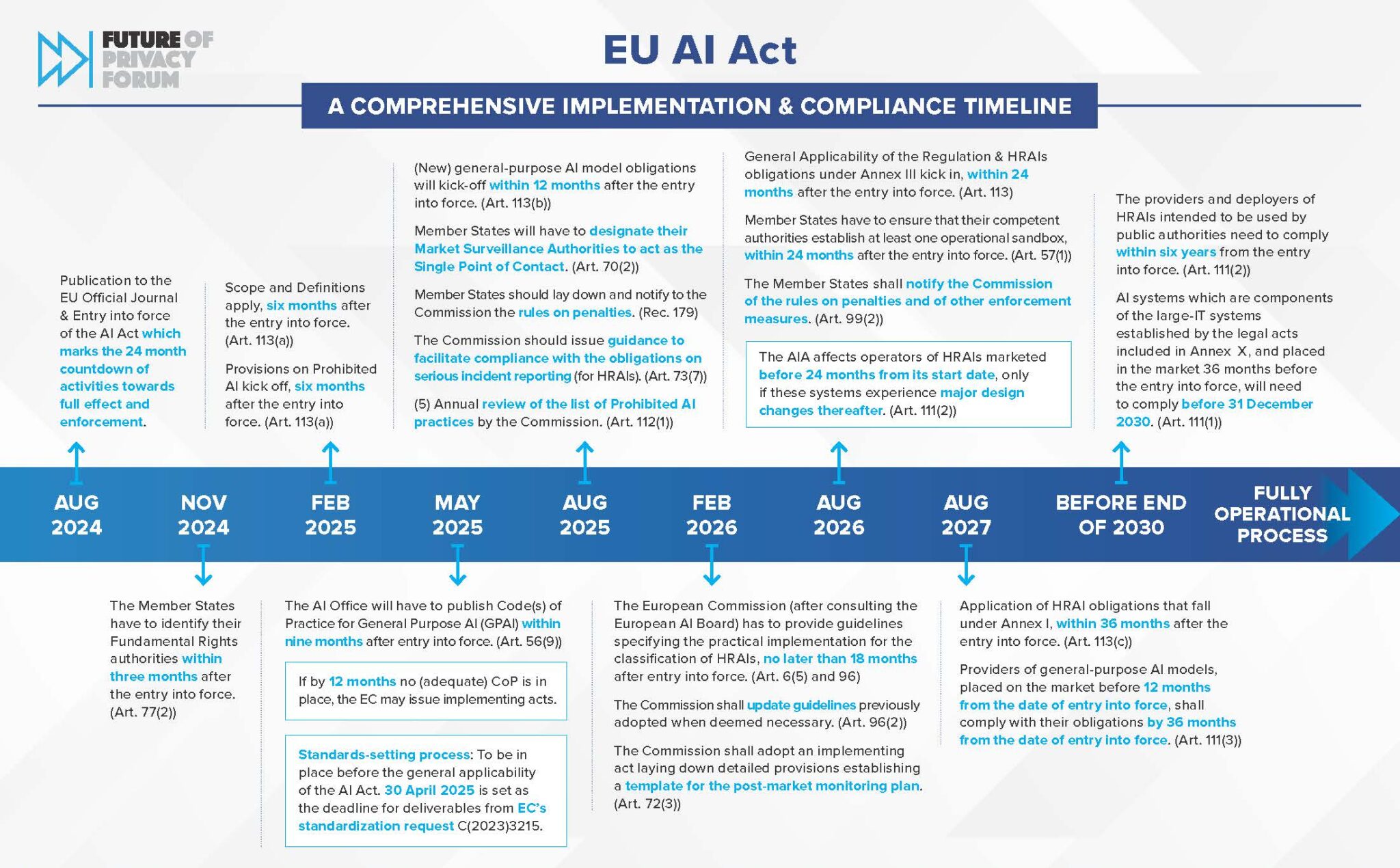
86 days from this column. On August 2, 2026, the Artificial Intelligence Act (Regulation (EU) 2024/1689) becomes fully applicable; the General-Purpose AI Model rules have been applicable since August 2, 2025, but the high-risk-system rules and the prohibited-system enforcement powers come on with the August date. The implementing acts — the secondary instruments that translate the Regulation's articles into operative compliance steps — are the documents that decide what August 2 actually means in practice. Three are circulating in the IMCO (Internal Market and Consumer Protection) and JURI (Legal Affairs) committees this week.
I will refer to the AI Office (the AIO; the unit within DG CNECT, Commission, established under Article 64 of the Regulation) by its acronym throughout. The AIO is the body that issues most of the implementing detail; the Member State authorities — which include the data protection authority (DPA) of each Member State, plus, in many cases, a national competent authority designated under Article 70 — share enforcement powers.
The three drafts in committee
First, the implementing act on the form and content of the technical documentation that GPAI providers must publish under Article 53(1)(a). The current draft (IA-1, version of April 28) requires a 47-field technical documentation set, of which seven are new since the December 2025 draft. The seven additions cover post-deployment evaluation cadence, downstream-deployment audit requirements, and the format of the systemic-risk disclosures that providers of GPAI models with systemic risk must publish under Article 55. MEP Brando Benifei (S&D, IMCO rapporteur) has supported a longer transition window for the seven new fields; the AIO has resisted, citing the August 2 binding date.
Second, the implementing act on the transparency obligations of high-risk-system deployers under Article 50. The current draft (IA-2, version of May 5) is the document where the disclosure language for AI-generated content has been negotiated; the language has gone through four versions in committee and the Wednesday vote of IMCO will determine which one moves to plenary.
Third, the implementing act on the Member-State-level designation of competent authorities under Article 70. This one matters because the answer to "who do I talk to in Italy" is currently formally unknown; ten Member States have formally designated their competent authorities and seventeen have not.
What still might change
Two procedural windows remain. The IMCO vote on IA-2 (Wednesday, May 14) and the JURI vote on IA-1 (Tuesday, May 27). After May 27 the drafts will move into the comitology procedure and the substantive scope will be effectively fixed. Anything you would like changed substantively must be communicated through the Member State permanent representations or via direct submission to the AIO consultation portal (open until May 22 at 23:59 CEST). The next procedural step on the calendar: IMCO vote, May 14.