IBM's $11B Confluent Deal Reshapes Streaming Platforms
An 18-month consolidation wave, from WarpStream to IBM's blockbuster Confluent acquisition, has redefined the boundaries between Apache Kafka, its challengers, and the object stores that power modern streaming data infrastructure.
 confluent.io
In this article
On December 8, 2025, IBM announced it would acquire Confluent, the company built around Apache Kafka, for $31 per share in an all-cash deal valued at roughly $11 billion. The number was striking. Confluent had gone public in 2021 at a valuation near $9 billion, spent years navigating the post-pandemic correction, and landed, in the end, inside a 114-year-old enterprise technology conglomerate. The deal was described by Diginomica as "recognition that enterprise AI needs a real-time data backbone." That phrase, stripped of its press-release optimism, carried a sharper implication: the streaming platform market, a category that did not quite exist fifteen years earlier, had become infrastructure too important to leave to startups.
The IBM-Confluent transaction capped an eighteen-month period of consolidation that reshaped the competitive landscape around Apache Kafka and its protocol. In September 2024, Confluent had acquired WarpStream, a small Chicago-based startup that built a Kafka-compatible streaming engine on top of object storage rather than local disks, TechCrunch reported. The WarpStream deal was modest in dollar terms. Architecturally, it was the most revealing acquisition Confluent had made since its founding. It signaled that the center of gravity in streaming infrastructure was drifting away from the broker-and-disk model that had defined Kafka for a decade and toward a disaggregated architecture where durability lives in S3 and compute scales separately.
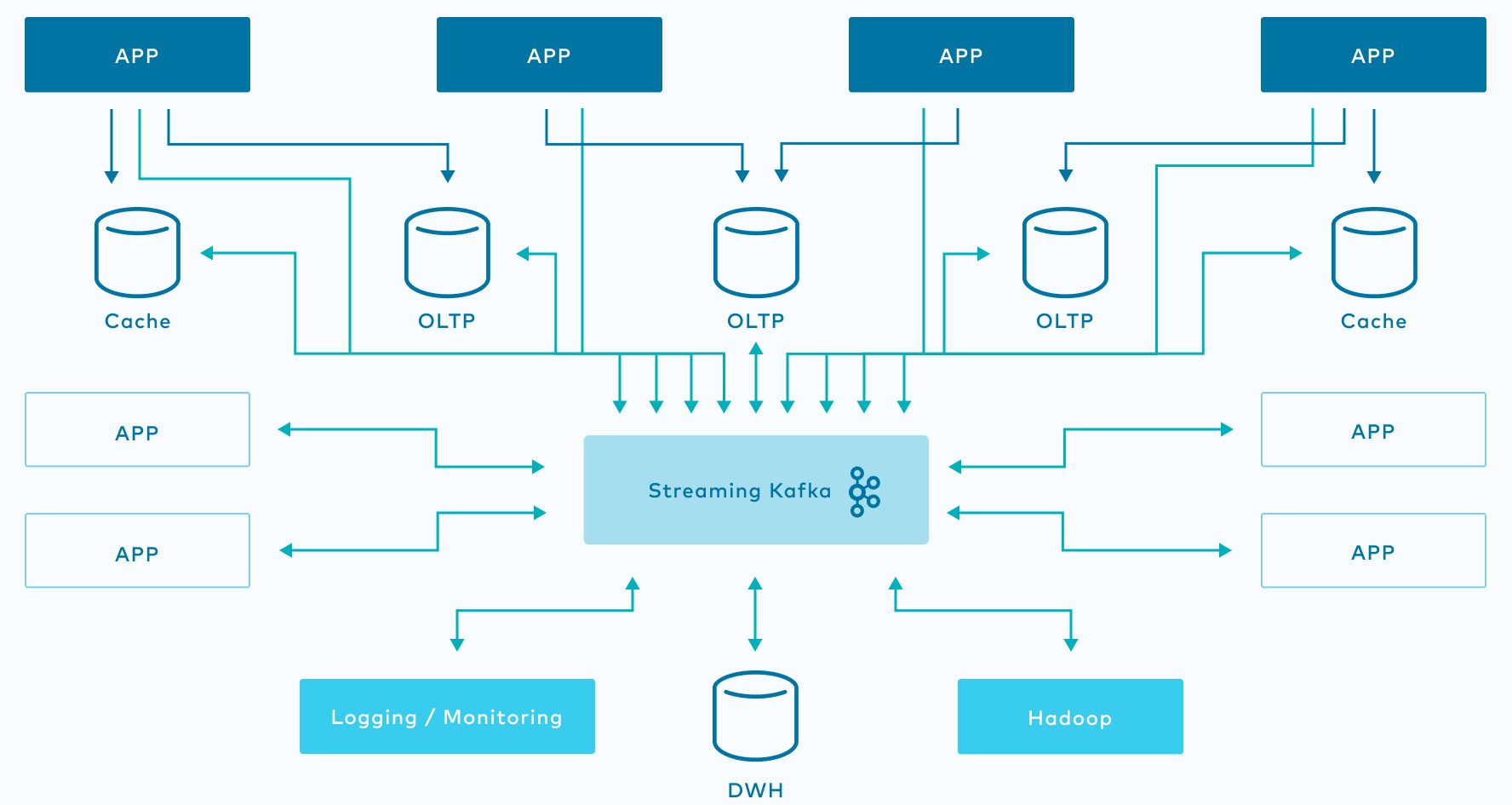
To understand why that shift matters, it helps to revisit what Apache Kafka actually is, beneath the jargon. Kafka is a distributed commit log. Producers append records to named topics. Consumers read from those topics at their own pace, maintaining their own offsets. Brokers store the records on local disks and replicate them across machines for fault tolerance. The protocol that governs all of this, the Kafka wire protocol, is the real product. Confluent's commercial moat has always been, in part, that it employs the largest concentration of Kafka committers and controls the project's direction, a dynamic that has generated friction with cloud providers who ship Kafka-compatible services without contributing back to the upstream project.
The original Kafka architecture was designed at LinkedIn around 2010 for a world of racked servers with directly attached disks. Engineers tuned brokers for sequential I/O, leaned on the operating system page cache, and accepted that scaling a cluster meant managing stateful machines with carefully balanced partition assignments. That model works. It works at enormous scale. It also carries operational costs that become punishing as clusters grow: rebalancing partitions after a broker failure can take minutes or hours, disk failures require manual intervention, and the tight coupling of storage and compute means you pay for both even when your throughput is idle.
WarpStream attacked that coupling directly. Founded by Richard Artoul and Ryan Worl, two engineers who had previously worked on distributed systems at Datadog and other shops, the company built a streaming engine that spoke the Kafka wire protocol but stored all data in object storage, specifically S3 and S3-compatible stores. There were no local disks to manage, no brokers to rebalance. TechCrunch reported that Confluent planned to position the acquired technology as "Confluent WarpStream," a tier sitting between the fully managed Confluent Cloud and the self-managed Confluent Platform. The tier would appeal to teams that wanted the operational simplicity of a managed service but needed to run inside their own cloud accounts for compliance or cost reasons.
The WarpStream acquisition did not happen in a vacuum. The Apache Kafka project itself had been moving, slowly, toward a similar disaggregation. In version 3.6.0, released in October 2023, Kafka introduced tiered storage, a feature that allows brokers to offload older segments to remote object storage while keeping recent data on local disks. Uber's engineering team had been a primary driver of the feature, InfoQ reported in August 2024, detailing how the ride-hailing company used tiered storage to reduce the cost of retaining streaming data for compliance and analytical workloads. The feature was a compromise: it preserved the broker model but let operators shrink their local disk footprint. WarpStream's architecture was more radical, treating object storage as the primary durability layer from the start.
The tension between these two approaches, broker-native and object-store-native, has become the central architectural debate in the streaming market. It maps imperfectly but recognizably onto a broader industry pattern. Databases went through the same disaggregation cycle a decade earlier, with Amazon Aurora separating compute from storage in 2014 and Snowflake building a cloud-native data warehouse on object storage around the same time. Streaming platforms are now repeating that arc, compressed into a shorter window.
Redpanda and the C++ alternative
Not every Kafka competitor bets on object storage. Redpanda, founded by Alex Gallego in 2019, took a different path to the same goal of reducing operational complexity. The company rewrote the Kafka wire protocol in C++, eliminating the Java Virtual Machine from the runtime entirely. The result was a drop-in replacement for Kafka that claimed lower tail latencies, faster partition recovery, and a smaller operational surface because every Redpanda node is a single binary with no external dependencies. Redpanda kept the broker-and-disk architecture intact. Its bet was that the JVM, not the coupling of compute and storage, was the primary source of Kafka's operational pain.
Redpanda raised a $100 million Series C in 2022 and has continued to ship features, including a managed cloud service. The company's public positioning emphasizes simplicity. A Redpanda cluster, in its design documents, does not require ZooKeeper, does not require a separate schema registry, and runs the same binary whether deployed as a single node on a laptop or as a multi-region production cluster. The engineering trade-off is straightforward: by abandoning the JVM ecosystem, Redpanda gains performance predictability and loses compatibility with the enormous library of Kafka Connect connectors, Kafka Streams applications, and KSQL-based processing pipelines that constitute the Kafka ecosystem's gravitational pull.
The JVM-versus-native debate in streaming infrastructure is older than Redpanda. Apache Pulsar, originally developed at Yahoo and now a top-level Apache project, also runs on the JVM but separates serving from storage in a way that predates Kafka's tiered storage work. Pulsar's creators went on to found StreamNative, which in April 2026 announced a new architectural paradigm called Lakestream and a product called Ursa For Kafka, Database Trends and Applications reported. Ursa For Kafka is a native Kafka-protocol engine built on top of lakehouse storage, another entry in the object-store-native camp. The announcement framed the convergence of streaming and lakehouse architectures as inevitable, a claim that sounds more plausible after the IBM-Confluent deal than it did two years earlier.
What changed is not just the technology. The buyer profile for streaming infrastructure has shifted. When Kafka was adopted in the 2010s, the canonical use case was application telemetry: clickstreams, logs, sensor data. The streaming platform was plumbing. The rise of large language models and AI agents has turned streaming into a strategic asset. VentureBeat reported in October 2025 that enterprise AI agents face "a fundamental timing problem" because they cannot easily act on critical business events in real time. The article's headline captured the thesis: "The missing data link in enterprise AI: Why agents need streaming context, not just better prompts." An AI agent that can generate a perfect response to a customer query is less useful than one that knows the customer's shipment was delayed thirty seconds ago.
This is the context in which IBM's $11 billion bid makes sense. IBM has spent the past several years repositioning itself around hybrid cloud and AI, anchored by its Red Hat acquisition in 2019. Confluent gives IBM a data-in-motion layer that sits between transactional systems and AI workloads. SDxCentral reported the deal as "all about getting generative AI data into the financial stream," noting the $31-per-share price. The article highlighted that IBM plans to integrate Confluent's technology across its software portfolio, including watsonx, its AI and data platform.
The acquisition also raises questions about Confluent's relationship with the broader Kafka ecosystem. Confluent has historically walked a careful line between stewarding the open-source project and monetizing proprietary features, including its Kora engine that powers Confluent Cloud. IBM's ownership introduces a new variable. Will the Apache Kafka project, which remains governed by the Apache Software Foundation, see its contributor base narrow if IBM-Confluent becomes the dominant corporate backer? Or will IBM's resources accelerate feature development in ways that benefit the entire ecosystem? The track record of large-company stewardship of open-source infrastructure is mixed, and the database industry in particular has seen acquisitions lead to both flourishing and fragmentation.
The deal was recognition that enterprise AI needs a real-time data backbone.Diginomica, on the IBM-Confluent acquisition, December 2025
The streaming market now divides along at least three axes. The first is the broker architecture: traditional stateful brokers versus object-store-native designs. The second is the runtime: JVM, C++, or something else. The third is the commercial model: fully managed cloud services, bring-your-own-cloud deployments, and self-managed software. Confluent, with its original cloud, the WarpStream tier, and the on-premises Platform, now spans all three deployment models under one corporate roof. Redpanda competes on the self-managed and managed-cloud axes with a C++ runtime. StreamNative's Ursa For Kafka competes on the object-store-native axis. Amazon MSK and other cloud provider managed services exert price pressure from below.
There is also a quieter competitive shift happening at the storage layer. Vast Data, the high-performance storage company, added a Kafka-compatible event streaming service to its DataStore platform in February 2025, SiliconANGLE reported. The announcement was part of a broader push to make DataStore a unified platform for block, file, object, and now streaming workloads. The implication is that streaming, as a category, may be absorbed into the storage layer over time, the way queuing and pub-sub features were gradually absorbed into cloud databases and object stores. If every object store eventually speaks the Kafka protocol natively, the standalone streaming platform becomes harder to justify on architectural grounds.
What the next two years will test
The IBM-Confluent integration will be the dominant story to watch. Mergers of this scale take years to play out. Confluent's engineering culture, shaped by founders Jay Kreps, Neha Narkhede, and Jun Rao, all LinkedIn alumni who built Kafka in the first place, will need to mesh with IBM's processes. The Confluent Cloud customer base includes many companies that chose Confluent partly because it was not a hyperscaler or a legacy vendor. Whether those customers stay, migrate to alternatives like Redpanda or Amazon MSK, or accept IBM's stewardship will determine whether the $11 billion price was a ceiling or a floor for the category.
The other variable is whether the object-store-native architectures, WarpStream and Ursa For Kafka among them, actually deliver on their latency promises at scale. The reason Kafka kept data on local disks in the first place was performance. Reading from S3 adds tens of milliseconds of latency per operation. WarpStream's approach compensates with aggressive batching and prefetching, but the design makes trade-offs that only become visible under failure modes: an availability-zone outage, a S3 throttling event, a sudden spike in consumer lag. The benchmark results that matter are not the throughput numbers on a clean cluster. They are the recovery times after a partition split goes wrong, the p99 latency during a rebalance, the behavior when the object store's eventual consistency model collides with a streaming application that assumed strict ordering.
For engineering teams evaluating the current landscape, the decision tree starts with a question that is less technical than it appears: which operational burden are you willing to carry, and which are you willing to pay someone else to carry? A self-managed Kafka cluster gives you control over configuration, security, and cost, at the price of staffing a team that understands partition leadership elections and disk failure modes. Confluent Cloud removes most of that burden but locks you into a specific vendor's implementation and pricing model. The WarpStream tier removes the disk-management burden while letting you stay in your own cloud account. Redpanda removes the JVM tuning burden but asks you to trust a younger codebase and a smaller ecosystem. None of these choices is cost-free, and the right answer depends more on the team's existing operational expertise than on any benchmark graph.
One development that would reshape the market further is native Kafka protocol support in the major object stores. AWS, Azure, and Google Cloud each offer managed Kafka services today. None has yet announced an object storage service that directly speaks the Kafka wire protocol, eliminating the need for a separate streaming tier entirely. If that changes, the streaming platform market as it exists today becomes a feature of the cloud storage layer. If it does not change, the disaggregated architectures championed by WarpStream, StreamNative, and, increasingly, the Apache Kafka project itself will define the next decade of streaming infrastructure. Either way, the era in which running a streaming platform meant babysitting a cluster of stateful Java processes with directly attached disks is drawing to a close. The IBM-Confluent deal is the market putting a price on that transition.
Read next
