Phones Have Nothing Left to Say: MWC 2026 Modular Concept Wins
MWC 2026 crowned a modular concept phone its star attraction, revealing more about the stagnant state of phones and tablets than any spec sheet could.
 androidauthority.com
In this article
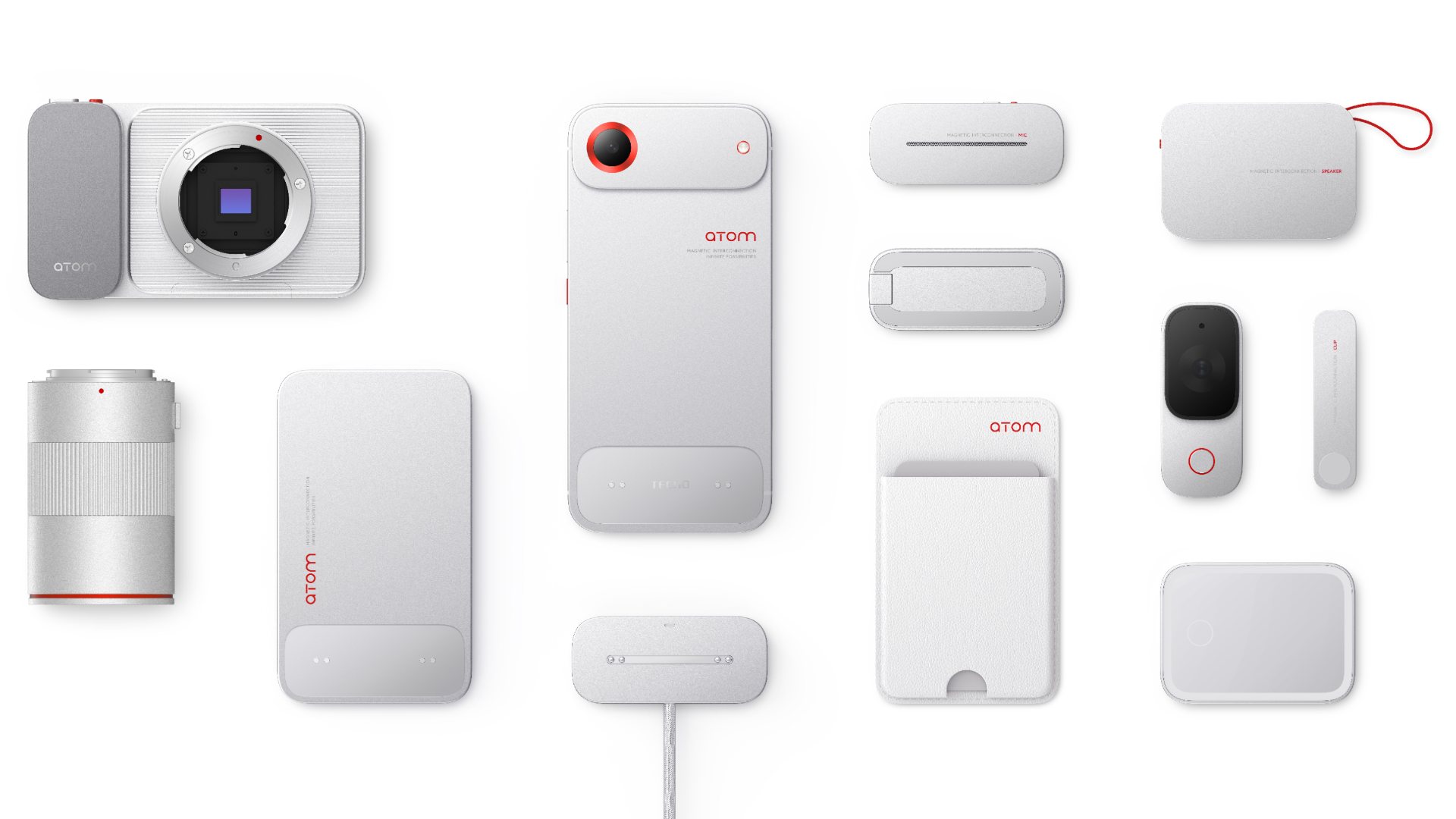
Thirty phones tested in two days. That was the tally from TechRadar's MWC 2026 floor team, and after sorting through every slab, foldable, and concept on the Fira Gran Via carpet, exactly zero of the production handsets represented a reason for anyone with a 2024 flagship to open their wallet. The phone that stole the show was not a phone you can buy. It was a 4.9-millimetre-thin modular concept from Tecno, a company that ships phones primarily in Africa and South Asia, that magnetically snaps onto battery packs and camera modules like a smartphone version of a Moto Mod resurrection nobody asked for in 2016. It won awards. It drew crowds. It will never reach a store shelf in any volume that matters.
This is not a review of a modular phone. It is a diagnosis of a category that has entered its end-of-history phase. The slab smartphone, the one with a glass sandwich body and a camera array arranged in a circle or a square depending on the quarter, has become the most refined consumer product in human history. It is also the least interesting. At MWC 2026, Android Police reported that Tecno's concept overshadowed every production flagship on the floor, including fresh entries from Lenovo and Xiaomi. A device that cannot be purchased beat devices that can. The same dynamic played out across the tablet category, where Omdia data showed global shipments inching up by 0.1 percent year on year in the first quarter of 2026, a rounding error dressed as growth.
The smartphone industry shipped approximately 33.4 million units in the US during Q1 2026, a 3 percent year-over-year decline, according to Omdia figures reported by Android Headlines. Weaker carrier upgrade programs, rising component costs, and the absence of a genuine must-have feature combined to keep people on their existing phones. The upgrade cycle in the United States now stretches well past three years. That is not a blip. That is the new normal for a mature market where the difference between a Galaxy S24 and a Galaxy S26, or an iPhone 16 and an iPhone 18, is a thinner titanium band and a processor benchmark that no photo-sharing app will ever saturate.
Tecno's modular phone is the most revealing product of 2026 precisely because it is not a product. It is a concept. At the company's MWC booth, the phone started as a 4.9-millimetre core device and snapped magnetically onto modules that added battery capacity, a telephoto lens, and gaming controls. Android Headlines described the system as “a slick magnetic system to snap on powerful” add-ons, reviving a modular dream that Google's Project Ara, Motorola's Moto Mods, and LG's G5 all tried and abandoned over the preceding decade. The difference in 2026 is not the execution. It is the desperation. An industry running out of ideas for the slab has returned to an idea that already failed three times.
The modular phone is the concept you show when incremental iteration is no longer enough to fill a trade-show keynote. Tecno deserves credit for the engineering: a 4.9-millimetre chassis with magnetic interconnects that actuate in under a second is genuinely impressive industrial design. But the module ecosystem requires a critical mass of third-party support, and module ecosystems are always supply-side fantasies. Nobody bought Moto Mods in numbers that justified continued investment. Nobody will buy Tecno Mods either. The company has not announced a ship date, a price, or a single commercial partner for the accessory rail. The modular phone is a Rorschach test: audiences see the phone they wish existed, and manufacturers see a press cycle that lets them avoid talking about how the phone they actually sell looks identical to the one they sold last year.
AI Is the New Spec Sheet
Google stepped into its Android Show in May 2026 with an answer to the hardware boredom problem, and that answer was software. Digital Trends reported that the event was front-loaded with Gemini Intelligence, a system-wide AI layer that performs multi-step tasks across apps, from booking restaurant reservations to filling out expense reports. Google also announced the Googlebook, a Chromebook-laptop hybrid nobody saw coming, and Android 17, which shipped to Pixel devices in June 2026. The message was unmistakable: the phone's next differentiation is not the camera bump. It is the inference engine running inside the chipset.
This is a rational pivot. When every flagship uses the same Sony IMX sensor and the same Samsung AMOLED panel sourced from the same supply chain, the only remaining moat is the software stack that runs on top. Google's Gemini Intelligence can reach into Gmail, Maps, and Calendar simultaneously, completing tasks that would require a human to switch between four apps. Apple's on-device Apple Intelligence, which rolled out across iOS 19 in stages, does the same with a privacy-first architecture that processes requests locally on the A19 Bionic's neural engine. Samsung's One UI 9, built on Android 17, layers Galaxy AI features across the entire device ecosystem. But the uncomfortable truth is that none of these AI features require new hardware. The Pixel 9 Pro runs Gemini Intelligence. So does the Pixel 8. So will the Pixel 7a, eventually, in a lighter configuration. The AI revolution is happening on the phones people already own.
That is a problem for the business model. The smartphone industry has depended for two decades on a simple compact: every two years, the new model does something the old model cannot. Cameras got better. Screens got brighter. Batteries got bigger. AI breaks that compact because the AI is delivered through over-the-air updates to existing silicon. MediaTek's Dimensity 8550, 9to5Google reported, is “a minor update in most ways” relative to its predecessor, with the headline feature being foundational support for Gemini Intelligence on affordable flagships. The silicon is good enough. The upgrade is not in the modem or the image signal processor. It is in the model weights, and those arrive through the Play Store.
The Tablet Is Already in the Drawer
If the smartphone is slowing down, the tablet is parked. Omdia's Q1 2026 figures, cited by TWICE, pegged global tablet shipments at 37 million units, up 0.1 percent year on year. The market is flat. It has been flat for years. Apple still dominates the category, with iPads outselling Android tablets by a margin that has barely shifted since 2019. The iPad itself has become a device whose most compelling upgrade story is the Magic Keyboard, a $349 accessory that turns a tablet into a worse laptop. The tablet's existential problem is unchanged: it is worse at productivity than a laptop and worse at portability than a phone. It survives as a media consumption device and a digital notepad for students, and those use cases do not demand an annual refresh.
Samsung's Galaxy Tab S11, released in early 2026, is the best Android tablet ever made. It has a 14.6-inch Dynamic AMOLED 2X display at 120 Hz, an IP68 rating, and an S Pen with 2.8-millisecond latency. It is also indistinguishable in daily use from the Galaxy Tab S10. The processor is faster on benchmarks. The anti-reflective coating is marginally improved. An owner of a Tab S9 who upgrades to the Tab S11 will notice the thinner bezel for approximately one afternoon and then never think about it again. The tablet category has followed the smartphone into the plateau, and unlike smartphones, tablets were never essential enough to sustain the plateau on habit alone. People replace their phones because batteries degrade and because carriers subsidize the upgrade. Tablets get neither the degradation urgency nor the carrier push. They fade into the drawer.
Mashable's 2026 tablet roundup tested seven devices across iPad, Samsung, and Lenovo and found the same dynamic at every price point: competent hardware with no reason to upgrade. The review praised the iPad Air 2026's M4 chip and the Lenovo Tab Extreme's OLED panel, then conceded that both devices cater to users who are upgrading from hardware that is four or more generations old. The value proposition collapses for anyone on a two-year cycle. That collapse is not a failure of engineering. It is a success of saturation. The tablet form factor achieved peak utility in 2022, and every device since has been a refinement of that peak. Refinements do not move units.
The foldable category promised to break the stagnation, and in terms of unit growth, it has. TechAeris reported in May 2026 that foldable shipments are accelerating, with Samsung commanding the category and Apple's long-rumored foldable iPhone adding what the publication called a “validation catalyst” that will expand the market further. The analysis predicted that foldables will be “the ultimate convergence device,” collapsing the phone-tablet boundary into a single piece of glass that unfolds. But the convergence argument has been made since the Galaxy Z Fold 1 in 2019, and foldables still account for a single-digit share of global smartphone shipments. They are growing fast off a small base, which is the kind of statistic that sounds promising in an investor deck and means nothing to someone standing in a carrier store holding a $1,800 phone that creases in the middle.
The crease is worth mentioning because it is the foldable's metaphor. The technology is remarkable. The experience is compromised. The Samsung Galaxy Z Fold 7, expected in July 2026, will reportedly reduce the crease to near-invisibility and bring the S Pen into the body. Every generation narrows the gap between the foldable and the slab. But the gap remains, and while it remains, the slab remains the default. The slab is boring and the slab wins. That is the smartphone market in 2026: a competition between a boring device that works perfectly and an exciting device that works well enough.
How-To Geek ran a piece in late 2025 titled “Stop waiting for the Galaxy S26: The OnePlus 15 is already here,” and the headline contains the entire modern smartphone-buying thesis. There is no reason to wait. The OnePlus 15 ships with the Snapdragon 8 Elite Gen 5, a 6,000 mAh silicon-carbon battery, and a 50-megapixel periscope zoom. It costs $899. The Galaxy S26, when it arrives, will ship with the same processor, a slightly smaller battery, and a Galaxy AI suite that Samsung will eventually roll back to the S25 anyway. The rational consumer does not wait six months for a phone that will be 3 percent better on Geekbench. The rational consumer buys the OnePlus 15 today, or keeps their S24 for another year, and neither decision requires a trade-show keynote to justify.
The smartphone industry has reached a point of peak stagnation., TechAeris, May 2026
That sentence opened a market forecast, but it reads like an epitaph. Stagnation is not the same as collapse. Apple sold more iPhones in Q1 2026 than in any prior first quarter, Counterpoint Research reported, finishing as the world's number one smartphone brand by shipments. The revenue side of the business is healthier than ever because average selling prices keep climbing. A smartphone in 2026 costs more than a laptop did in 2016. The industry has solved the volume problem by extracting more money from fewer buyers, and that strategy works until it does not. The risk is not that smartphones become unpopular. The risk is that they become appliances, replaced only when they break, purchased on price and brand inertia rather than novelty. The television industry already crossed that threshold. The personal computer industry crossed it a decade ago. Smartphones and tablets are halfway across the bridge.
The Yahoo Tech list of “10 tech items that are no longer worth your money in 2026” includes several product categories that would have been unthinkable just three years ago: mid-range tablets, smart displays, and entry-level fitness trackers. The list is not a buyer's guide. It is an obituary for an era when every gadget category could sustain annual iteration. The smartphone and the premium tablet survive the cull. But they survive as mature products, not as objects of desire. A mature product is purchased. An object of desire is anticipated. The difference is the line between growth and maintenance, and every data point from 2026 places phones and tablets on the wrong side of that line.
The ZDNET team at MWC 2026 named Lenovo, Xiaomi, and others among the best of the show. The list included a rollable laptop concept from Lenovo, a Xiaomi flagship with a variable-aperture lens, and Honor's latest ultra-thin foldable. Every product on the list was competent. Every product on the list was iterative. A rollable laptop screen is fascinating engineering. A variable aperture on a phone camera is a genuine photography tool. Neither is a reason to replace a device that is working. The best products of MWC 2026 were the best arguments for not upgrading in 2026. They demonstrated that the industry's engineering talent is undiminished. They also demonstrated that the diminishing returns curve has gone flat.
The Tecno modular phone is where the curve points next, and the destination is not a product. It is a gesture. The gesture says: we know the slab is finished. We know you are bored. Here is something that looks different, even if it will never ship. The gesture is honest in a way that the incremental slab is not. It admits that the category needs reinvention, not refinement, and it admits that reinvention is still years away from commercial viability. Until then, the phone in your pocket is good enough. The tablet on your nightstand is good enough. The industry that makes them knows it, and MWC 2026 was the moment the knowing stopped being a secret and became the show.
Read next
