The Cost-of-Capital Reset Has Arrived for Unprofitable Software
With the Federal Reserve holding interest rates steady under a new chair and Bank of America scrapping its dovish forecast, the discount-rate math that propped up cash-burning software is reversing, exposing unprofitable companies without a path to free cash flow.
In this article
On June 17, 2026, the Federal Reserve held the federal funds rate steady at its June meeting, the first monetary-policy decision under new Chair Kevin Warsh. The statement cited elevated inflation driven partly by higher energy prices from the war in Iran, Fox Business reported. The hold was widely anticipated. What mattered was the trajectory: as recently as December 2025, CME Group's FedWatch tool had priced in two quarter-point cuts for 2026, The Motley Fool noted. By mid-year those cuts had vanished from the futures curve. The era of declining rates, markets were concluding, is not returning on anyone's current timetable.
Within a week of the Fed decision, Bank of America scrapped its own softer rate forecast and published one of the sharpest revisions on Wall Street, TheStreet reported. The new call envisioned a far tougher path for monetary policy through the remainder of 2026. For equity markets broadly, higher-for-longer rates compress valuations by raising the discount rate applied to future cash flows. For software companies in particular, the effect is asymmetric: firms that generate free cash flow today see their intrinsic value fall moderately. Firms that are unprofitable, and whose entire investment case rests on earnings that may not materialise for three, five, or seven years, see their net-present-value math collapse.
Consider SoundHound AI, the voice-AI company that went public via SPAC in 2022. The stock is down roughly 30 percent year to date through late June 2026, The Motley Fool reported, with analysts citing a lack of profitability as the central investor concern. The company grew revenue 52 percent year over year in its most recent quarter, Seeking Alpha noted, a pace that in 2021 would have earned it a premium multiple and a chorus of buy ratings. In 2026, the same growth rate is met with a Strong Sell and a 12-month price target of $4.25 from the same quantitative rating system, which flagged valuation risk and operational concerns. The market has not stopped rewarding growth. It has stopped rewarding growth that lacks a visible line to positive free cash flow.
The same recalibration is visible at Cloudflare, whose shares plunged in May 2026 after the company announced it would cut 20 percent of its workforce, Yahoo Finance reported. Executives blamed artificial intelligence for automating roles previously filled by people, but the subtext was unmistakable: a company that had traded for years on its growth narrative was now being measured against a profit-and-loss statement, and the P&L needed work. Cloudflare's revenue continues to grow at a double-digit clip. The market's response to the layoffs, a sharp sell-off rather than a relief rally, suggests investors are no longer willing to underwrite headcount reductions as a proxy for profitability. They want to see the bottom line improve, and they want to see it soon.
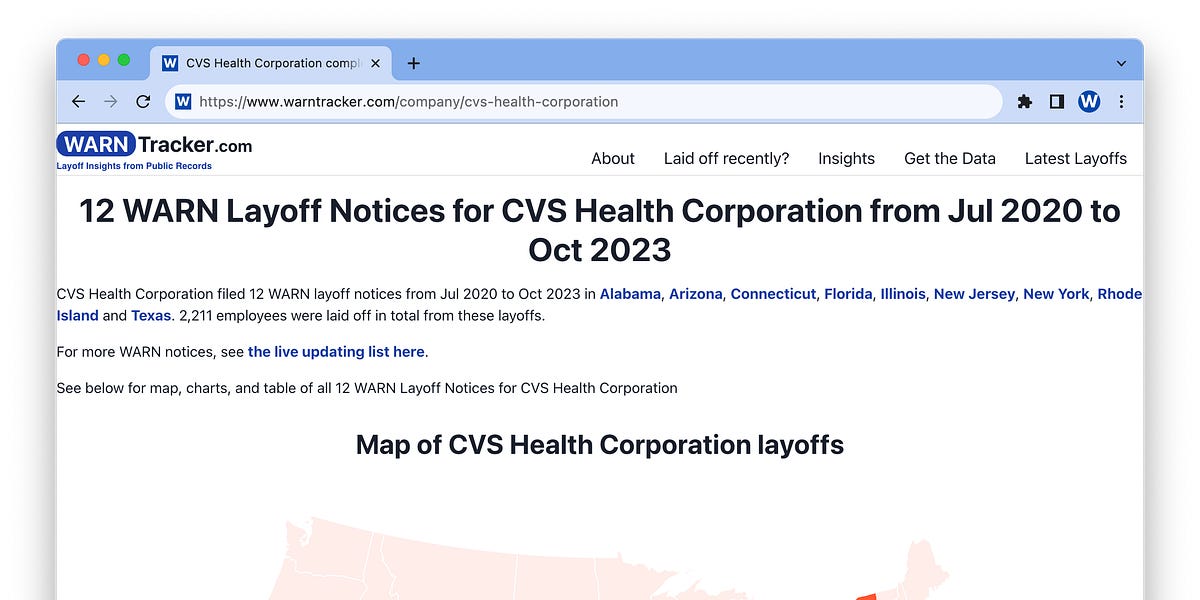
The layoff pattern extends well beyond any single name. A 2026 tech-layoffs tracker maintained by Yahoo Tech has catalogued tens of thousands of job cuts across Oracle, Meta, Microsoft, Samsung, and dozens of smaller firms through the first half of the year. Block, the fintech company formerly known as Square, announced AI-enabled layoffs affecting roughly 40 percent of its workforce in April 2026, Simply Wall St reported via Yahoo Finance. Freightos, the freight-tech platform, cut 15 percent of its staff in a bid to reach adjusted profitability by year-end, Sourcing Journal reported. What links these announcements is not a common industry or geography. It is a common balance-sheet imperative: the cost of capital has risen, and the market's patience for cash-burning growth has not.
The venture-capital market is telling the same story with different numbers. Global startup investment reached a record $510 billion in the first half of 2026, Crunchbase News reported, driven overwhelmingly by AI-related companies raising nine- and ten-figure rounds. Strip out the AI megadeals and the picture changes: early-stage founders in Canada raised 40 percent less capital in the first quarter of 2026 than they did a year earlier, RBCx data showed, even as their funding needs remained steady. The capital is flowing, but it is flowing selectively, toward companies that can articulate not just why they will win, but why they will win within the runway their current round provides.
The shift in venture-capital expectations is structural, not cyclical. Writing in Inc., Anis Uzzaman traced the arc: 2021 was defined by growth at all costs; 2024 was the self-described Year of Efficiency; and 2026 has consolidated around a new consensus in which the narrative has shifted toward profitability and sustainable business models, not just top-line growth. For software founders who came of age in the zero-interest-rate era, this is not a correction to be waited out. It is a regime change that alters what counts as a fundable business.
There is a counter-narrative, and it is worth taking seriously. Unprofitable stocks in the Russell 2000 index have surged roughly 60 percent since April 2025, BeInCrypto reported via Yahoo Finance, dramatically outperforming their profitable peers. On its surface, this looks like a refutation of the cost-of-capital thesis. If higher rates make unprofitable companies less valuable, why are unprofitable small-caps rallying? The answer is composition. The Russell 2000's unprofitable cohort is tilted toward early-stage biotech, speculative energy, and AI-adjacent names that benefit from the same exuberance driving the venture-capital megadeals. The rally is concentrated in sectors where investors are betting on a binary outcome, whether a drug approval or a technology breakthrough, rather than on the gradual compounding of software margins. Generic unprofitable SaaS, the kind that sells subscriptions to midsize businesses and burns 40 cents for every dollar of revenue, is not participating in the rally.
The broader equity market, meanwhile, is undergoing a rotation that rewards cash-flow generation. Value stocks have staged a strong rebound since early 2025, Seeking Alpha reported, after nearly two decades of chronic underperformance relative to growth. The durability of the rotation remains an open question, but the direction of travel is consistent with what the bond market has been signalling: when the risk-free rate is above 4 percent, an equity risk premium demands more than a story.
The Mathematics of the Reset
What makes unprofitable software uniquely sensitive to the cost of capital is not a matter of sentiment. It is embedded in the arithmetic of valuation. A discounted-cash-flow model values a company by projecting its future free cash flows and discounting them back to the present at a rate that reflects the time value of money plus a risk premium. When the risk-free rate rises from near zero to above 4 percent, the present value of a dollar of cash flow expected in year seven falls by roughly a quarter to a third, depending on the equity risk premium. For a company that is already generating cash, the damage is contained: most of its value is anchored in near-term flows, which are less sensitive to the discount rate. For a company that is not yet profitable, the entire valuation rests on those distant, heavily discounted cash flows. The arithmetic is unforgiving, and it does not care about the quality of the product.
The practical implication is that unprofitable software companies face a narrowing window. The cash runway, the number of months a company can operate before exhausting its reserves at the current burn rate, has become the single most important metric for public and private investors alike. In 2021, a company with 18 months of runway and 50 percent revenue growth could raise a new round at a higher valuation almost reflexively. In 2026, that same company faces a much steeper climb: existing investors may be unwilling to inject fresh capital at the old valuation, new investors will demand punitive terms, and the public markets are closed to companies that cannot demonstrate a credible path to profitability within their existing cash balance. The result is a forced march toward breakeven, visible in the layoff announcements and restructuring plans accumulating through the year.
CoreWeave, the AI-cloud infrastructure provider that went public in March 2025, illustrates how the cost-of-capital reset reaches even companies positioned at the centre of the AI investment cycle. The stock has endured a volatile ride since its debut, The Motley Fool reported in March 2026. Bears have focused on the company's financial structure, which Fortune detailed in November 2025: heavy leverage, capital-intensive expansion, and a path to sustained free cash flow that remains several quarters away at minimum. CoreWeave is not a software company in the traditional sense, but it is a useful parable. Even when the demand story is as strong as any in the market, AI infrastructure, the cost of the capital required to meet that demand can erode the equity value if the payback period stretches too far into a higher-rate future.
The adjustment mechanisms available to unprofitable software companies are limited and well-rehearsed. Layoffs reduce operating expenses but risk impairing product velocity. Price increases boost revenue per customer but invite churn in a market where switching costs are often lower than incumbents would like to believe. The sale of non-core assets can raise cash but signals distress. The one mechanism that reliably changes the calculus is consolidation: selling the company to a larger, profitable acquirer whose cost of capital is lower and whose distribution network can extract more revenue from the same product. That wave of M&A is likely to accelerate through the second half of 2026 as the gap widens between what unprofitable companies are worth as standalone entities and what they could be worth inside a well-capitalised parent.
What to Watch
Not every unprofitable software company is in the same position. The dividing line is not growth rate, market size, or technology quality. It is the distance to free-cash-flow breakeven measured against the cash on the balance sheet. A company growing at 30 percent with gross margins above 70 percent and a clear path to operating profitability within 24 months is in a fundamentally different position from one growing at 20 percent with 60 percent gross margins and no credible breakeven timeline. The former can still raise capital, attract strategic acquirers, or simply wait out the cycle. The latter faces a binary outcome: reach breakeven before the cash runs out, or cease to exist as an independent entity. The market is in the process of sorting these two groups, and the sorting is not subtle.
The September 2026 meeting of the Federal Open Market Committee is the next major checkpoint. If Warsh's Fed signals that a rate increase is on the table, a possibility that Bank of America's revised forecast now contemplates, TheStreet reported, the discount-rate math tightens further. Every quarter-point increase in the risk-free rate reduces the present value of a dollar of cash flow expected in 2030 by an additional margin, and the software companies that were already stretched will find themselves with even less room to manoeuvre. The bond market is offering a clear signal. The question the second half of 2026 will answer is how many software companies heeded it in time.
The cost-of-capital reset is not a storm that will pass. It is a restoration of the conditions under which capital allocation decisions are supposed to be made: with a genuine cost attached to money, a genuine risk premium demanded for uncertainty, and a genuine distinction between companies that generate cash and companies that only promise to. The software industry spent more than a decade learning to optimise for growth under the assumption that capital would always be abundant and cheap. It is now learning, in real time, what changes when that assumption no longer holds. Earnings season for the second quarter of 2026 begins in earnest in late July. The conference calls will be dense with talk of efficiency, restructuring, and paths to profitability. The numbers beneath the talk will tell the real story.
Read next