Xreal Aura Glasses Now Reservable, but Demo-to-Shelf Gap Persists
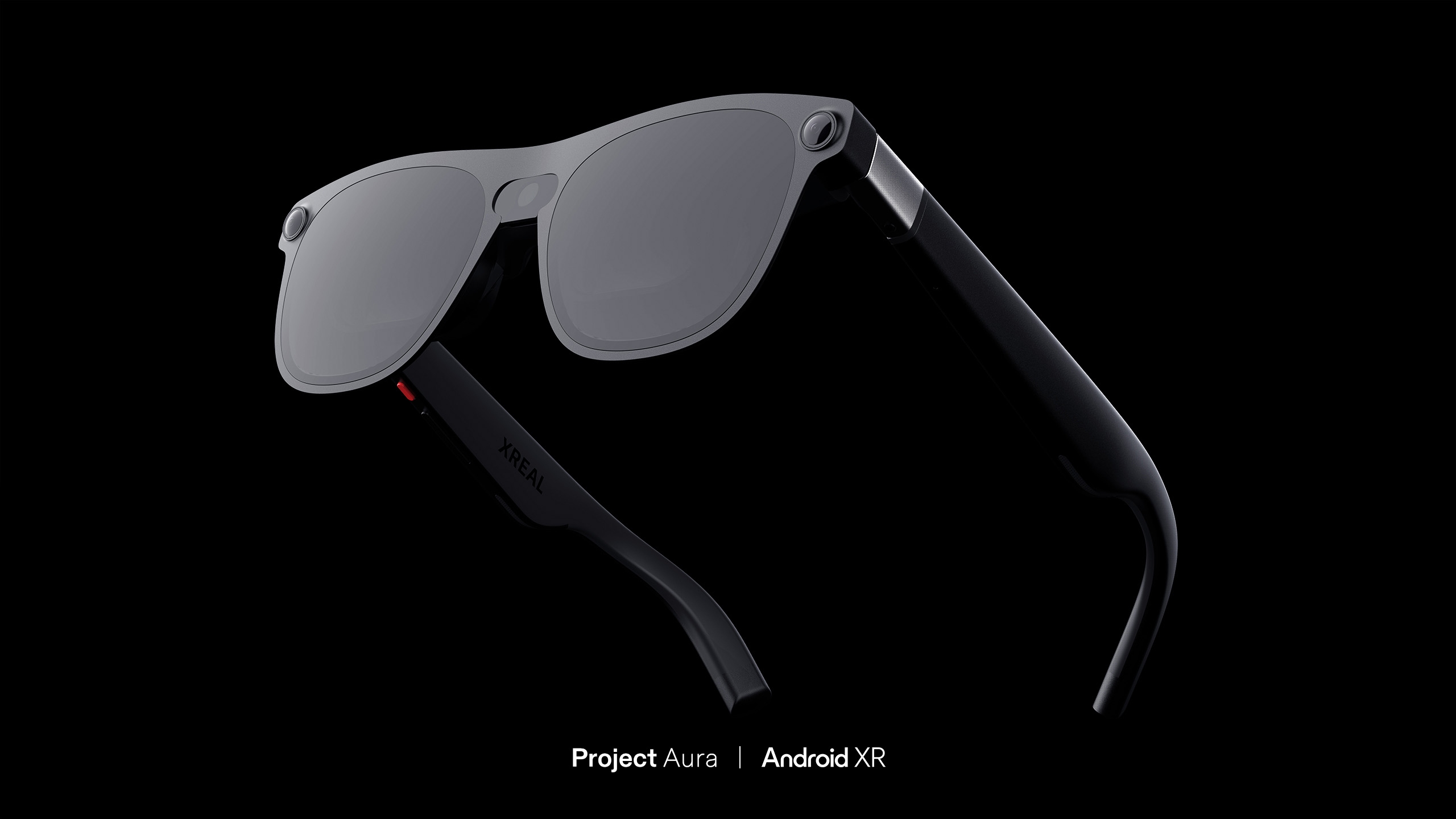
Xreal's Aura glasses, born from Google's Project Aura demo, are now open for reservations with a target price under $1,500 and a fall 2026 ship date, yet the demo-to-shelf gap remains the central narrative of consumer hardware in 2026.
 tomsguide.com
In this article
On June 10, 2026, Xreal opened reservations for Aura, the first pair of Android XR glasses to carry the Snapdragon Reality Elite chip and run Google's spatial computing platform without a tethered phone. The company said it would "try" to keep the price under $1,500. Shipments are expected in fall 2026. Six days later, Android Authority reported that Xreal was "still holding back a key detail," and the reservation page did not include a firm release date. The gap between those two sentences, between the demo and the thing you can buy, is where most consumer hardware lives in 2026.
The launch traces its lineage directly to December 2025, when Google staged a series of controlled demonstrations for Project Aura, the internal codename for what was then described as a three-part hardware push involving Xreal, Warby Parker, and Gentle Monster. At the time, CNET's Scott Stein called it Google "putting it all on glasses next year" after spending hours with early prototypes in a tightly managed demo environment. The hardware was real. The demos worked. But the distance between a demo room with perfect lighting, a dedicated engineering support team, and a curated software load, and a pair of glasses that ships to a buyer's apartment in ordinary fall weather, is not measured in months. It is measured in compromises.
The compromises on Aura are already visible to anyone reading the spec sheet alongside the marketing material. The glasses use the Snapdragon Reality Elite, a processor Qualcomm announced in early 2026 that has no shipping track record in consumer hands. The Android XR platform, unveiled at Google I/O 2025 and refreshed at I/O 2026, has been demonstrated exclusively on prototype hardware. And the price target, "try" to come in under $1,500, contains a verb that no product manager uses when the bill of materials is locked and the supply chain is humming. It is the language of a team that has not yet closed the books on what it costs to build the thing.
None of this means Aura will be bad. It means the product is still becoming a product. That distinction is the central axis around which the entire consumer hardware conversation turns in 2026, and it is worth understanding why it keeps happening, because the pattern is not new and it is not confined to smart glasses.
The Trade Show Economy and the Production Gap
Every January, CES fills the Las Vegas Convention Center with products that do not exist yet in any form a customer can purchase. Some never will. Yahoo Tech's CES 2026 roundup captured the familiar rhythm: a parade of clever, working prototypes, many of which carried release windows phrased as aspirations rather than dates. The show floor is a bazaar of engineering confidence and commercial uncertainty. A company can build three units that work perfectly in a booth with dedicated Wi-Fi, air conditioning, and an engineer on standby. Building three hundred thousand units that work on a bus is a different discipline entirely.
The television industry provided a particularly sharp illustration of this gap in the first half of 2026. RGB Mini LED backlighting, the technology that replaces white or blue LED backlights with individual red, green, and blue diodes for each zone, was everywhere at CES. TCL showed the RM9L, its first RGB Mini LED flagship. What Hi-Fi? called it "very impressive" in a hands-on session, noting the deep blacks and vivid color volume that the new backlight architecture enabled. Sony showed its own next-generation RGB LED prototype, a technology it had been slowly inching toward retail since an early reveal at IFA 2025, where TechRadar watched it compared side-by-side against QD-OLED and conventional mini-LED panels. Hisense had the UR9 on the floor. Samsung and LG both previewed RGB-backlit sets.
Six months later, the retail reality is more complicated. Hisense's UR9 reached reviewers. Popular Mechanics tested one in June 2026 and noted that its best feature was not the dazzling color gamut, it was the off-angle viewing, which held up better than expected for an LCD-based panel. Sony, meanwhile, had only progressed to "revealing more details" by April 2026, according to Forbes, with the Bravia 10 still months from a firm ship date. TCL's RM9L, the star of the CES booth, had not yet appeared on store shelves by mid-June. The demo units were real. The production pipeline was real. But the two were moving at different speeds.
Tom's Guide crystallized the consumer dilemma in May 2026 with a blunt headline: "3 reasons why you shouldn't buy an RGB LED TV in 2026." The arguments were pragmatic: first-generation RGB backlight implementations carry unproven longevity, the premium over mature QD-OLED alternatives is steep, and the content ecosystem has not yet caught up to the expanded color volume the hardware can theoretically display. The article was not arguing that the demos were fake. It was arguing that the gap between a demo and a daily driver was, in this case, wide enough to justify waiting.
The hardware was real. The demos worked. But the distance between a demo room with perfect lighting, a dedicated engineering support team, and a curated software load, and a pair of glasses that ships to a buyer's apartment in ordinary fall weather, is not measured in months. It is measured in compromises., Observation drawn from the 2025-2026 demo-to-ship cycle across multiple product categories
What Survives Contact with a Tuesday Morning
The question worth asking about any product that debuts in a controlled demo environment is not whether it works. In a demo room, almost everything works. The question is what fails when the lighting is not ideal, the Wi-Fi is congested, the user has not been trained by a product specialist, and there is no engineer in the next room. For smart glasses, the list of potential failure modes is long and particular. Outdoor visibility. Battery life under continuous camera and display load. Thermal management in a device sitting millimeters from the skin. Audio leakage that turns the wearer into an unwitting public speaker. The weight distribution after two hours on the nose bridge. None of these things appear in a thirty-minute supervised demo.
The accessibility dimensions of the demo-to-product gap rarely get discussed in launch coverage, but they matter enormously. A pair of smart glasses that relies on voice input excludes anyone who cannot speak clearly or consistently. Gesture controls that work for a twenty-five-year-old product manager may not work for someone with limited hand mobility or tremors. A display that assumes binocular vision leaves out a significant portion of the population. These are not edge cases; they are the conditions under which millions of people encounter technology every day. A demo unit in a quiet booth, demonstrated by an able-bodied engineer to an able-bodied journalist, answers none of these questions. Only shipping hardware in real homes does.
The history of consumer hardware is littered with products that aced the demo and failed the morning after. Humane's AI Pin generated enormous press off tightly controlled briefings in late 2023 and early 2024. Reviewers who received shipping units described a device that overheated, responded slowly, and struggled with basic tasks in daylight. Rabbit's R1 arrived with a similarly impressive stage demo and a similarly deflating retail reality. The pattern is consistent enough that it should be taught as a law: the quality of a controlled demonstration has near-zero correlation with the quality of a shipping product. The only signal that matters is a reviewer holding a retail unit purchased with their own money, in their own home, on an ordinary day.
Xreal has more experience than most companies in shipping wearable displays. Its Air series of tethered glasses has gone through multiple iterations, each improving on fit, brightness, and optical clarity. The company understands the supply chain for micro-OLED displays and the manufacturing tolerances required for birdbath optics. Aura is a more ambitious product, a standalone computer on the face rather than a display accessory, but the institutional knowledge of how to build eyewear that people can wear for more than an hour is real. That knowledge is also the most fragile thing in the handoff from prototype to mass production, because the tolerances that make a demo unit comfortable are the first to drift when a contract manufacturer starts running three shifts.
For televisions, the demo-to-shelf gap follows a different but equally familiar arc. A prototype panel built in a lab can hit brightness and color-gamut numbers that the production line cannot sustain across tens of thousands of units without panel lottery becoming a consumer complaint. The RGB Mini LED TVs shown at CES 2026 were, by all accounts, genuinely impressive. But the question that matters, whether the unit that arrives at a buyer's home matches the unit in the booth, will not be answerable until the sets are on shelves and in the hands of reviewers working outside the PR embargo cycle. The first Hisense UR9 review from Popular Mechanics is one data point. It will take dozens more, spread across multiple manufacturers and panel sizes, before a buyer can make a decision grounded in evidence rather than optimism.
There is a second-person dimension to all of this that product marketing almost never addresses. What is it like to be near someone wearing Android XR glasses? Do the outward-facing cameras trigger the same social friction that sank Google Glass a decade ago? Does the audio bleed at volumes the wearer finds comfortable? Is there an indicator light visible to bystanders when the cameras are active, and if so, is it bright enough to be seen in sunlight, or is it the kind of tiny LED that only registers in a dark room? These are not privacy-edge-case questions. They are the daily social fabric of wearing a computer on your face, and no amount of demo-room polish answers them.
Google and Xreal have been candid about the partnership structure. Xreal builds the hardware; Google provides Android XR and Gemini; Warby Parker and Gentle Monster contribute design and retail distribution for different style variants. On paper, it is a sensible division of labor. In practice, a three-way partnership multiplies the number of places where the demo-to-product gap can widen. A software update from Google can change the thermal profile of a pair of glasses that Xreal already manufactured. A design tweak from Gentle Monster can alter the antenna placement in ways that degrade wireless performance. A supply-chain delay at Warby Parker's lens supplier can push a shipment window from October to December. Each partner controls a piece of the experience. No single partner controls all of it.
The reservation system Xreal opened in June 2026 is, in effect, a stress test for consumer patience. A reservation is not a pre-order; no money changes hands beyond a refundable deposit, and the final price is not set. It is a signal to investors and supply-chain partners that demand exists. It buys the company time to finalize the bill of materials, lock manufacturing contracts, and negotiate component pricing. It is, in other words, a mechanism for narrowing the gap between the demo and the thing you can buy, but it narrows the gap by moving the demo closer to production, not by accelerating production to meet the demo.
For anyone trying to decide whether to reserve a pair of Aura glasses or wait for reviews of shipping units, the available evidence points in one direction. The RGB TV market in mid-2026 offers a parallel worth studying: the demo units are stunning, the early reviews are mixed, and the advice from experienced reviewers is to wait. The same calculus applies to a $1,500 pair of Android XR glasses with a processor that has never shipped in a consumer device, running a platform that has never been tested at scale, built by a partnership that has never delivered a product together. The demo was real. The reservation page is real. The thing you can buy and use on a Tuesday morning is still several compromises away.
Read next