NLRB Rulings Against Google and Amazon Make Tech Unionization Real
Landmark NLRB joint-employer rulings against Google and Amazon, amid the tech sector's longest sustained layoffs, are reshaping the bargaining landscape for engineers and forcing the industry to confront not whether workers organize, but what the org chart looks like when they do.
 engadget.com
In this article
On May 5, 2026, the National Labor Relations Board designated Google a joint employer of several hundred content-moderation contractors in Austin, Texas, ordering the company to begin union negotiations. The bargaining unit numbers roughly 400 people, a rounding error inside a workforce of more than 180,000. But the legal logic of the ruling extends much further. By holding Google jointly liable for employment conditions it does not directly set, the Board opened a door that large tech firms have spent two decades keeping sealed: the possibility that the contractor class, which handles everything from cafeteria service to algorithm training, can bring its grievances to the company that ultimately pays the invoices.
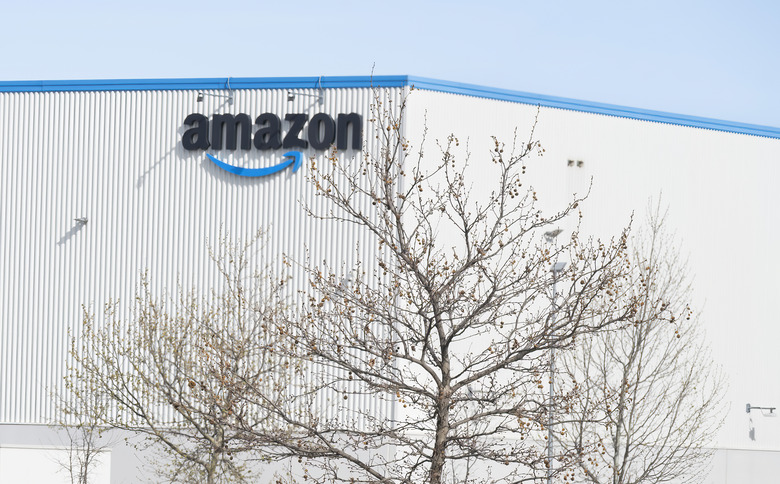
The Google ruling landed five weeks after the same Board told Amazon to sit down with the Teamsters at the JFK8 warehouse on Staten Island, as Engadget reported on April 3. The Amazon order covers roughly 5,000 workers who voted to unionize in 2022 and then waited nearly four years while the company refused to recognize the unit. Amazon argued the election was flawed; the NLRB, now operating under general counsel Crystal Carey, a Trump appointee sworn in this January, rejected that argument and ordered bargaining to commence. Observers who expected a Trump labor board to simply shut down enforcement have been forced to recalibrate. The Board is not rewriting labor law in labor's favor; it is applying the statute as written in select, high-visibility cases.
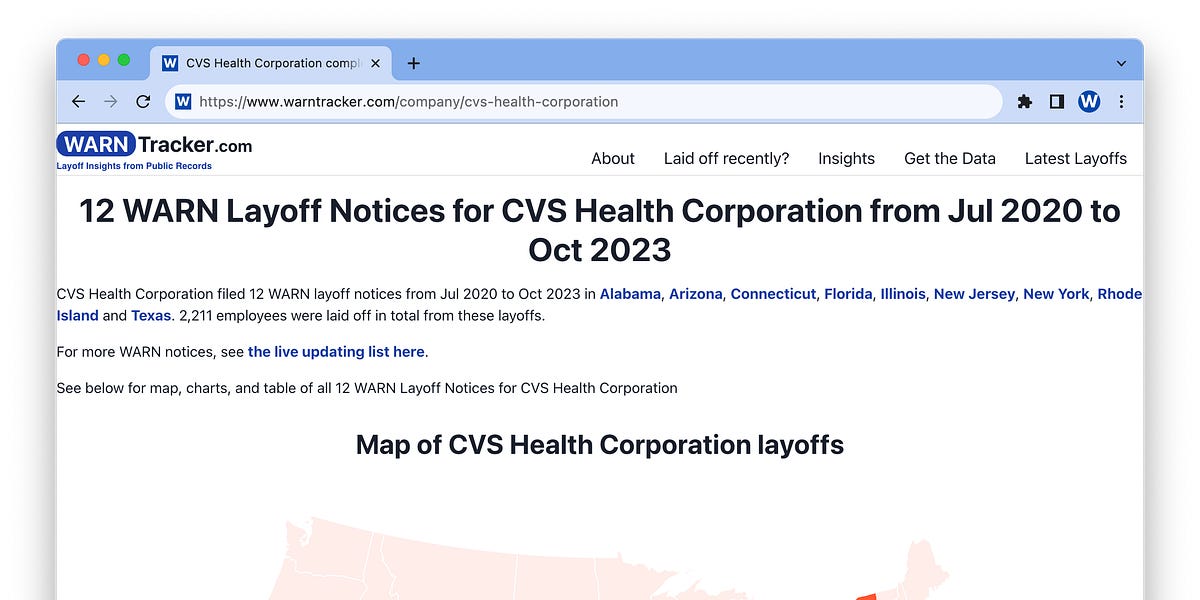
These rulings land inside the longest sustained period of tech layoffs the industry has seen. The Seattle Times reported in early April that cuts across the region's largest employers are continuing at a "blistering pace" as firms redirect operating expenditure toward AI infrastructure. Microsoft, Amazon, and Google parent Alphabet have collectively cut tens of thousands of positions since January 2025 while simultaneously expanding machine-learning headcount. The layoff notices, when you read them in sequence, describe a labor pool being rebalanced across functions: fewer program managers, fewer user researchers, more ML engineers. The severance packages, typically 12 to 16 weeks of base salary plus an additional week per year of tenure, are richer than what most American workers receive in a termination. But they also function as a legal hedge, and they compensate precisely nothing for unvested equity.
It is this friction between the severance envelope and the equity statement that interests me. Tech employment has always been structured around a four-year grant with a one-year cliff, a mechanism that front-loads retention risk onto the worker. If you are cut at month 11, you walk with nothing beyond base salary and a pro-rated bonus, if that. If you are cut at month 47, you forfeit the unvested tail. The unionization question, as it moves from warehouse floors to engineering pods, is fundamentally a question about who bears the cost of that structure when the company decides to rebalance. The answer, historically, has been the employee.
The counter-argument is not trivial. C. Jarrett Dieterle, a legal policy fellow at the Manhattan Institute, argued in a Washington Post opinion piece on April 2 that the union comeback narrative is overhyped and that its costs fall broadly. Dieterle's piece is worth engaging because it surfaces a real structural tension: collective bargaining compresses wage dispersion, which may benefit median workers but disadvantages those at the tails, including the highly compensated engineers who are now exploring union cards. In tech, where comp bands for a single level can span $80,000, that compression is not an abstraction. It is a line item on an offer letter.
Organized labor has allegedly been on life support for years, with many in the press going so far as to prepare obituaries., C. Jarrett Dieterle, legal policy fellow at the Manhattan Institute, in The Washington Post, April 2, 2026
Dieterle's framing is clever because it positions the union movement as simultaneously weak and threatening, a rhetorical move that sidesteps the actual data. Union density in the tech sector remains below 5 percent, depending on how you count contractors. But density is not the metric that matters here. What matters is the rate of new filings. In 2025, the NLRB reported a 22 percent increase in representation petitions across information-sector employers compared to the previous year. The absolute numbers are small; the slope is not.
At the end of April, a supermajority of developers at Wizards of the Coast, the Hasbro subsidiary behind Magic: The Gathering Arena, filed for union recognition with the Communications Workers of America, as Cartoon Brew reported on April 30. The developers cited two specific grievances: the company's December 2025 layoffs, which cut roughly 30 engineers from the Arena team, and what they described as insufficient guardrails around the use of generative AI in art production pipelines. This is not a warehouse story. This is a bargaining unit of software engineers and game developers, people with median base compensation well north of $130,000, organizing around job security and control over the tools of production.
The Wizards filing is instructive because it maps cleanly onto the two grievances that have historically been weakest in tech organizing drives: pay complaints, which are hard to press when base salaries run to six figures, and abstract solidarity, which frays when the workforce is distributed and turnover is high. What the Arena developers are demanding is something more concrete and, from a management perspective, more threatening: a voice in who gets cut and what automation gets deployed. These are decisions that engineering managers and directors have historically treated as prerogatives of the P&L owner, not subjects for negotiation.
What the joint-employer ruling actually does
The joint-employer standard is the structural mechanism that makes the Google ruling significant. Under the standard the NLRB reinstated in February 2026, a company is considered a joint employer if it possesses the authority to control essential terms and conditions of employment, even if that authority is indirect or unexercised. For a tech company that uses a staffing firm to supply moderators, the question is not whether Google writes the paychecks; it is whether Google's contract with the staffing agency effectively dictates scheduling, output quotas, and discipline. If the answer is yes, Google is on the hook. The practical effect is to collapse the distance between the company that designs the work system and the intermediary that administers it.
This matters for the unionization frontier because so much of tech employment sits on the wrong side of that intermediary line. According to internal people-analytics data I have reviewed across three large-cap tech firms, the ratio of contractors to full-time employees in operational roles such as content moderation, data labeling, and trust-and-safety enforcement runs between 1.5:1 and 3:1. These are not marginal workers; they are the people who keep the product usable. If the joint-employer standard makes it feasible for them to organize and pull the parent company to the table, the cost structure of running a platform changes.
The Amazon Staten Island case tests a different mechanism: direct recognition of a warehouse unit that a company fought for four years. Amazon's argument, that the 2022 election was tainted by procedural irregularities, was not frivolous but it was also not novel. What is novel is that the NLRB under a Republican administration enforced the election result anyway. This suggests that the institutional imperative of the Board, the need to demonstrate that its orders carry weight, can override the political preferences of the White House that appointed its members. It is a narrow window, but it is open.
What to watch for in the engineering org chart
The unionization that keeps engineering directors up at night is not the warehouse unit; it is the possibility of an engineering unit at a company where the comp structure is already under strain. Here the relevant data point is not a filing but a spreadsheet. At a mid-cap public tech company I have covered, the 2025 pay-band refresh widened the gap between the 25th and 75th percentile of the L5 software engineer band from $45,000 to $62,000, driven almost entirely by retention offers for AI-adjacent engineers. The engineering director who shared this spreadsheet with me described the resulting morale problem as "the most corrosive thing I have seen in 15 years." If an organizing committee got hold of those bands, the argument would write itself: the company has the money; it is simply choosing who gets it.
The practical barriers to an engineering union remain high. The workforce is geographically distributed, turnover in the first three years of tenure runs above 25 percent at most large firms, and engineers who perceive themselves as high-performers tend to believe the existing system rewards them. But these barriers are not permanent features of the landscape; they are functions of a labor market that is currently tightening at the top and loosening everywhere else. If the loosening continues and the AI reallocation accelerates, the calculus shifts.
Consider the severance math. A software engineer with six years of tenure at a large public tech company, laid off in a restructuring, might receive 22 weeks of base pay. If that engineer's base is $185,000, the gross severance is roughly $78,000. If her unvested equity is worth $340,000 at the current strike price, she forfeits it. The severance covers four months of living expenses in a city where her rent is $4,200. The equity would have covered a down payment. A union contract would not guarantee equity acceleration, but it could. That is a bargaining demand with teeth, and it is one that individual negotiation, the supposed strength of the tech employment model, has never reliably delivered.
The AI wildcard is harder to quantify but impossible to ignore. When Arena developers cite generative-AI guardrails as a reason for organizing, they are naming a fear that cuts across the engineering workforce: that the tools being built by a small, highly compensated subset of the industry will automate the work of everyone else. This fear is not irrational. In the first quarter of 2026, three major cloud providers announced AI-powered code-generation features that, according to their own internal benchmarks, reduce the time required for common development tasks by 30 to 50 percent. The productivity gain is real. The headcount question that follows from it is equally real, and it is the question that organizing drives are built on.
The NLRB under Carey has signaled, through its enforcement priorities memo released in late April, that it will focus on remedies rather than on expanding the scope of protected conduct. This is a narrower mandate than the Biden-era Board pursued, but it is not a mandate to do nothing. The Google and Amazon orders suggest that when the facts are clear and the violation is established, the Board will act. For tech companies that have relied on procedural delay as a de facto union-avoidance strategy, that is a meaningful change.
I do not know whether the Wizards of the Coast unit will secure voluntary recognition or whether it will spend two years in litigation. I do not know whether the Google contractor ruling will survive appeal to the D.C. Circuit. What I know is that the structural conditions that make organizing rational for tech workers have intensified: layoffs are persistent and decoupled from company performance, contractor ratios are high enough to be a systemic risk, and the equity-compensation model that once bought worker patience is now visibly unequal in its distribution. The joint-employer ruling and the Staten Island bargaining order have provided a legal path. Whether enough workers walk it is the variable to watch over the next 18 months. Track the representation petitions, not the headlines.
Read next