Tech Labor Organizing Goes Underground as NLRB Elections Drop 30%
The NLRB oversaw 30 percent fewer elections in 2025, but tech workers are bypassing the ballot box altogether, turning to contract campaigns, walkouts, and a quiet redefinition of collective bargaining.
 gizmodo.com
In this article
In 2025, the number of private-sector union elections overseen by the National Labor Relations Board fell by 30 percent, according to a February 2026 analysis from the Center for American Progress. That is not a rounding error. It is the sharpest single-year decline in NLRB-supervised elections in more than a decade, and it arrived alongside a federal appeals court decision, handed down in March 2026, that vacated the board's Cemex framework, the legal mechanism that had made it possible, for a brief window, for workers to win union recognition without a formal election at all. For anyone tracking labor organizing in the technology industry, the two data points land like a matched pair: the procedural floor is dropping out just as the organizing playbook was beginning to adapt to it.
The technology sector has never been an easy place to unionize. The work is high-comp, the turnover is fast, and the employer-side law firms, Perkins Coie, Littler, Morgan Lewis, have spent years refining the counter-organizing playbook for an engineering workforce that tends to see itself as individually negotiated talent rather than collectively situated labor. But something did shift between 2020 and 2024. The Kickstarter union won a contract. The Alphabet Workers Union, affiliated with the Communications Workers of America, built a membership of more than 1,400 at Google without ever filing for an NLRB election, operating instead as a minority union that pressures the company through walkouts, petitions, and public campaigns rather than through the bargaining table. NYT Tech Guild walked out for a week in November 2024. These were not marginal experiments. They were proof points, tentative ones, that tech workers could organize under the right conditions.
Then the conditions changed. The Trump administration's second term brought a rapid remaking of the NLRB. General Counsel Jennifer Abruzzo, who had pushed the board toward an aggressively pro-organizing interpretation of the National Labor Relations Act, was replaced. The board's Democratic majority evaporated. In March 2026, as Reuters reported, the U.S. Court of Appeals for the Fifth Circuit vacated the Cemex ruling, which had required employers who committed unfair labor practices during an organizing campaign to recognize the union outright rather than forcing an election. The court called it beyond the board's authority. The new Republican-majority board is widely expected to let the decision stand. The effect is to shift the burden of proof back onto organizers, at precisely the moment when tech workers were testing whether the law, rather than raw leverage, could be the mechanism for recognition.
But the story that the 30 percent decline tells is incomplete if you read it only as a contraction. In technology, the unionization frontier is moving not through NLRB election petitions but through other channels: contract campaigns at companies where workers already have a foothold, sectoral bargaining experiments in Europe that set precedents for global workforces, and something more diffuse, a gradual re-norming of what it means for an engineer to say "we" rather than "I" when negotiating the terms of their labor. The data from the Center for American Progress captures election petitions. It does not capture the Slack channels, the Signal groups, the offsite conversations where organizing actually begins.
C. Jarrett Dieterle, writing in The Washington Post in early April 2026, argued that the union resurgence of the Biden years came at a cost, to consumers, to employers, to economic dynamism. He is a fellow at the Manhattan Institute, and his framing is what you would expect from that perch: unions as friction, collective bargaining as a tax on efficiency. But the argument elides something particular about tech. The friction that tech workers are trying to organize around is not primarily wage compression, comp bands in big tech remain, even after the 2023-2024 correction, among the highest in the private sector, but control: over layoff criteria, over return-to-office mandates, over the use of their own work in AI systems they did not consent to build. When an L5 engineer at Google earning $350,000 in total comp walks a picket line, the grievance is not poverty. It is power.
This is what makes the technology labor story structurally distinct from the manufacturing or service-sector organizing that labor law was built for. The Wagner Act, passed in 1935, imagines a workplace where workers share a physical site, a common employer, and a clear line of sight between their labor and the product. An engineering organization at a company like Meta or Amazon barely fits that model. Teams are distributed across time zones. Contractors and full-time employees sit side by side but have different legal employers, and therefore different rights under the NLRA. The product itself is abstract: a recommendation algorithm, an ad auction, a large language model. The line between "professional judgment" and "labor" blurs further when the worker is also the shareholder, via equity compensation. All of this makes the standard NLRB election an awkward fit for tech workplaces. And it explains why so much of the sector's organizing energy has flowed around the election process rather than through it.
The Alphabet Workers Union is the clearest example of the model. Formed in 2021 and affiliated with CWA Local 9009, AWU has never petitioned for an NLRB election. It cannot, under current law, because it includes contractors, vendors, and temporary workers alongside full-time Google employees, a mixed bargaining unit the NLRB would not certify. Instead, AWU operates as a direct-action organization: it pressures management through public campaigns, supports individual workers in disputes, and uses its membership numbers, roughly 1,400 at its peak, as a signal of discontent rather than a legal claim to exclusive representation. The model has limits. Without a contract, AWU cannot negotiate wages or benefits. It cannot call a legally protected strike. What it can do is shape the internal politics of the company in ways that a traditional union, waiting years for an election and then years more for a first contract, often cannot.
The NYT Tech Guild took a different route. It won an NLRB election in 2022, becoming one of the largest bargaining units of tech workers in the country, with more than 600 members including software engineers, data analysts, and product managers. Then it spent two years negotiating a first contract. In November 2024, the guild struck for a week, a walkout that drew national attention in part because it coincided with the presidential election. The guild returned to work without a deal. By early 2025, the two sides had reached a tentative agreement, though the ratification process exposed internal fractures: some members argued the contract did not go far enough on AI protections and just-cause employment provisions. The lesson for other tech workers considering the NLRB route is sobering. Winning an election is step one of about fifty, and steps two through fifty are fought in the slow, grinding terrain of the bargaining table, where delay is the employer's most effective weapon.
What the Reorg Actually Changes
The Trump administration's NLRB restructuring did more than change personnel. It changed the incentives. Under the Abruzzo board, an employer who fired a pro-union worker or refused to bargain faced the prospect of a Gissel bargaining order, or, after Cemex, an outright recognition order, from a board that viewed such remedies as routine. Under the new board, those remedies are effectively off the table. Employers in tech, where margins are high and legal budgets are effectively unlimited, now face a much lower expected cost for alleged unfair labor practices during an organizing drive. Bloomberg Law's unionization data, cited by the law firm Akerman LLP in a February 2026 client alert, showed that union election filings dropped sharply in 2025 even before the Cemex ruling was vacated. Economic uncertainty played a role, the firm noted, but so did "shifting federal oversight." The combination is potent: a labor board that is less likely to penalize employer misconduct, and an organizing workforce that has watched the board's posture shift in real time.
Yet the Akerman alert carried a warning for its employer-side readership: "Employers shouldn't let their guard down." The reason is that union organizing in the 2020s does not track neatly with NLRB petition counts. The Communications Workers of America, which backs both AWU and the broader CODE-CWA initiative aimed at tech and game workers, has publicly shifted resources toward what it calls "non-majority" organizing, building worker organizations that do not seek exclusive representation but can still apply coordinated pressure. At Microsoft, the 2022 labor neutrality agreement with CWA, which covered workers at the company's game studios including ZeniMax, created a template for recognition without an adversarial election. In January 2025, approximately 600 quality assurance workers at ZeniMax voted to unionize under that agreement. The election was a formality; the real work had been done through the neutrality framework.
The ZeniMax example points to something important about the unionization frontier in tech: it is advancing not at the flagship companies, not at Google proper, not at Apple's Cupertino campus, not at Amazon's Seattle headquarters, but at the edges. Game studios. Warehouses. Retail stores. The workers who succeed in winning recognition are often those whose work is most legible to traditional labor law: they share a physical site, they have a defined line manager, their work product is discrete and measurable. Quality assurance testers. Data center technicians. Delivery drivers. The further you move from the engineering core, the more the Wagner Act framework makes sense. The closer you get to the engineers, the more the framework frays.
Apple's retail stores provide a parallel case. Workers at the Apple Store in Towson, Maryland, voted to unionize in June 2022, becoming the first unionized Apple retail location in the United States. A second store, in Oklahoma City, followed in October 2022. But progress since has been halting. Contract negotiations in Towson have stretched past two years. Apple has contested the Oklahoma City election results. The pattern is familiar from the Starbucks campaigns: win an election, face a grindingly slow bargaining process, watch momentum stall. For tech workers watching from the engineering side of the company, the retail union drives are both inspiration and cautionary tale. They prove that organizing is possible inside one of the most profitable companies in history. They also prove that winning an election and winning a contract are separated by years of institutional friction.
Then there is the AI variable. It is the newest and most unpredictable input into the tech labor organizing equation, and it cuts two ways. On one side, AI gives employers a powerful efficiency narrative: fewer engineers needed per unit of output, smaller headcount, less labor leverage. If the tooling improves fast enough, the argument goes, the bargaining power of the individual engineer erodes. On the other side, AI is also the thing that engineers at the largest labs are increasingly organizing around. At OpenAI, in mid-2024, a group of researchers publicly called for a right to warn about safety risks, a demand that is, at its core, a demand for a voice in how their labor is deployed. At Google DeepMind, a similar dynamic has played out more quietly. The frontier labs are small, elite, and almost entirely un-unionized. But they are also the places where the gap between what an engineer is asked to build and what they believe should exist is widest. That gap is an organizing opportunity. Whether it converts into durable worker power depends on whether the organizers can find a legal form that fits.
The NLRB election model assumes a factory floor. Tech workplaces are not factories. The law is twenty years behind the labor market it is supposed to regulate., Sarah Lechner, labor attorney, Rothner, Segall & Greenstone
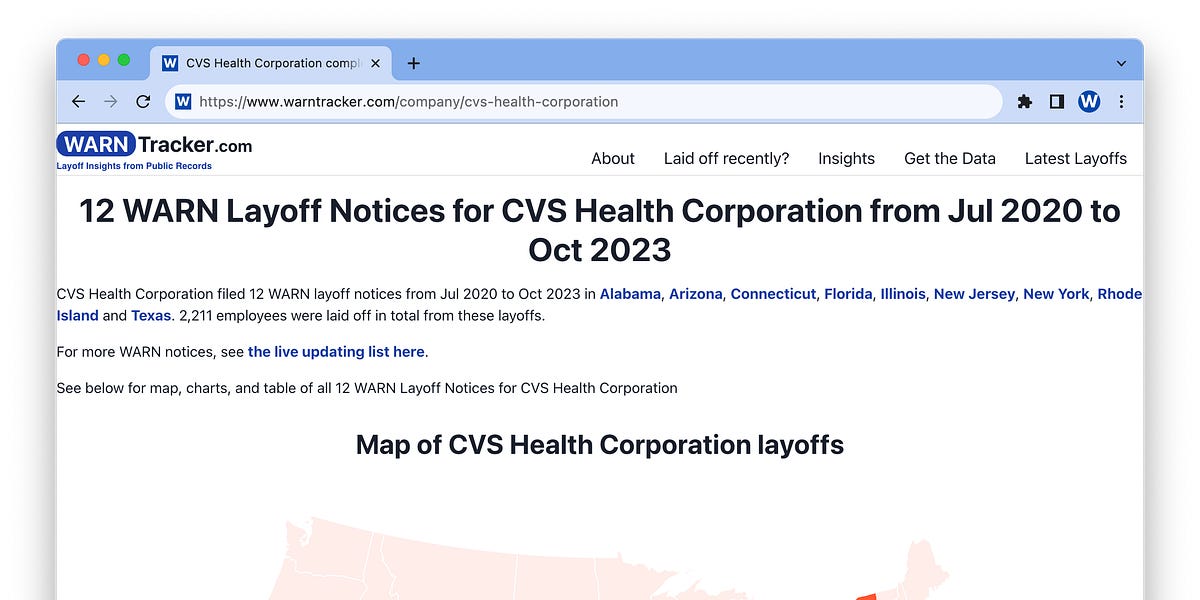
Lechner's point is structural. It is also the reason that many of the most consequential labor actions in tech over the past three years have happened outside the NLRB framework entirely. The 2023-2024 wave of tech layoffs, more than 260,000 jobs cut across the sector, by my tally from WARN notices and company filings, produced a parallel wave of worker self-organization that rarely took the form of a union drive. Instead, laid-off workers pooled severance information in public spreadsheets, compared non-disparagement clauses across companies, and in several cases filed coordinated legal claims challenging the validity of separation agreements. At Twitter, now X, more than 2,000 former employees pursued arbitration claims after the 2022 layoffs. This was not collective bargaining in the legal sense. But it was collective action, and it won settlements. The model was information-sharing plus legal pressure, rather than certification plus contract. It is a form of worker power that the NLRB does not measure and that the law barely recognizes.
The Cemex ruling's demise makes this extra-legal organizing more important and more fragile at the same time. More important because the formal route to recognition is now harder. More fragile because without the threat of a board order, employers face a weaker incentive to settle disputes before they escalate. For engineers, the math looks roughly like this: the expected value of an NLRB election campaign, accounting for the probability of winning, the probability of reaching a first contract, and the time cost measured in years, has fallen. The expected value of an information-sharing campaign, a walkout, or a public pressure effort has not. The rational organizer in tech, in 2026, will shift resources accordingly.
The Washington Post piece by Dieterle gestures at this shift but interprets it as evidence that unions have overreached, that the "comeback" was a blip inflated by Biden-era NLRB activism and that the market is now correcting. There is a version of this argument that is true: the 2021-2024 surge in union petitions was partly a function of a favorable regulatory climate, and when the climate changed, the petitions fell. But the argument mistakes a change in form for a change in underlying sentiment. Workers do not stop wanting a say in their working conditions because the NLRB general counsel changes. They find other ways to get it.
Which brings the question back to the workplace structures I track most closely: leveling charts, comp bands, hiring funnels. One hypothesis I have heard from engineering managers at three different large-cap tech companies is that the quietest driver of union sentiment among engineers is not pay or benefits but leveling, specifically, the growing opacity around how promotion decisions are made as companies flatten their org charts. When an L5 engineer cannot explain why they have been passed over for L6, and their manager cannot explain it either because the calibration committee operates behind closed doors, the engineer starts looking for a mechanism that can force transparency. A union contract is, among other things, a transparency mechanism. You may not get the promotion, but you get to see the rubric. For a certain kind of engineer, that matters more than the money.
The checkpoint to watch, then, is not the NLRB petition count for the next two quarters. It is the contract campaign at a company you have not heard of yet, a mid-tier gaming studio, a data-labeling vendor, an AI safety team at a frontier lab. It is the first time an engineer files an unfair labor practice charge not over a firing but over the deployment of a model. And it is the leveling appeals process at a company that is not yet unionized but has started to operate as though it could be. The unionization frontier in tech is not where the elections are. It is where the engineers are looking at the ladder and asking who built it, who controls it, and whether it can be rebuilt. That question does not need an NLRB petition to be asked. And it is being asked, in one form or another, in a Slack channel near you.
Read next