Consumer Humanoid Robots Finally Have Prices, From $4,000 to $20,000
From $4,000 AliExpress listings to a $20,000 home helper shipping from Hayward, consumer humanoid robots are finally moving from trade-show demos to home delivery, though their real-world durability remains unproven.
 bgr.com
On April 9, 2026, Chinese robotics firm Unitree Robotics listed its most affordable humanoid robot, the sport-ready R1, for sale on AliExpress with a sticker price of $4,000. That same week, eWeek reported that Norwegian-American startup 1X Technologies had set a $20,000 target for its Neo humanoid, aimed at U.S. homes before the end of the year. Two price points, two continents, one unmistakable signal: the consumer humanoid robot has stopped being a conference-hall curio and started being a product with a checkout button. Whether the checkout button leads to anything functional is the story of the next eighteen months.
The numbers are stacking up fast. 1X Technologies opened a 58,000-square-foot vertically integrated factory in Hayward, California, in late April, with over 200 employees and footage showing Neo robots assisting in their own assembly, the Los Angeles Times reported. The company told the paper it plans to build 10,000 robots in the coming year and scale to 100,000 by the end of 2027. Tesla, meanwhile, told investors in April that it would begin producing its Optimus V3 humanoid at its Fremont factory this summer, repurposing the Model S and X production lines for the task. Allan Wang, Tesla's vice president in China, called Gigafactory Shanghai the "golden key" to mass-producing Optimus, according to a report carried by MSN.
What distinguishes the first half of 2026 from every other year in humanoid robotics is not the demos. Those have been polished for a decade. It is the emergence of a shipping pipeline that runs from factory floor to residential front door, with actual assembly lines, actual inventory targets, and actual price tags denominated in something other than "if you have to ask." At the Global Sources Hong Kong Shows Phase II, which opened April 18 at AsiaWorld-Expo, a dedicated Humanoid Robot Zone made its debut, according to a PRNewswire release carried by Morningstar. The trade-show circuit, long the habitat of the vaporware robot, now has to make room for machines that ship.
Unitree's $4,000 R1 is the price-floor disrupter. The Chinese firm, already known among robotics hobbyists for its quadruped Go2, listed the R1 on AliExpress with a shipping promise that turns the humanoid from capital equipment into a consumer-electronics SKU. At that price, the R1 costs less than a high-end MacBook Pro. The R1 is described as "sport-ready," a term Unitree has not defined in detail but which appears to mean the robot can walk, jog, and perform basic dynamic-balance maneuvers. In practice, this likely means a machine built around Unitree's proprietary joint actuators and onboard perception stack, stripped of the industrial tool-changing and heavy-payload capabilities that define the company's more expensive G1 platform.
The G1, which Forbes called a platform that is "rewriting robotics economics" in late April, sits at a higher tier. It is being positioned less as a consumer device and more as a development platform for industrial integrators, researchers, and logistics operators. The G1 can carry payloads of up to 16 kilograms, runs on an open-source software stack, and ships with a simulation environment for training manipulation policies. The economics are striking: a capable bipedal platform for roughly the cost of a small industrial robot arm five years ago. That compression is what has investors paying attention.
If Unitree is attacking from the bottom of the price curve, 1X Technologies is trying to define the middle. The Neo, priced at $20,000, is designed from the ground up for domestic environments. It stands 1.65 meters tall, weighs 30 kilograms, and is covered in soft fabric rather than exposed metal, a deliberate choice to reduce what the company calls the "creepy factor." The Neo uses tendon-driven actuation rather than high-torque rotary motors, which gives its movements a smoother, less machine-like quality and makes it inherently safer around humans. In the company's factory video, Neo robots are seen picking components from bins, placing them onto subassemblies, and wheeling carts between workstations. These are not isolated demos. They are part of a live production line.
The factory itself is the story within the story. 1X's Hayward facility, described by Hoodline as a plant where robots build robots, represents a bet that the path to consumer viability runs through vertical integration. By owning the entire production stack, 1X can iterate on design and manufacturing simultaneously. The company's target of 100,000 units by the end of 2027 is ambitious by any standard: no humanoid robot has ever shipped in six-figure volumes. For context, the entire global industrial robot market in 2025 was roughly 600,000 units annually, and those were almost entirely single-arm manipulators bolted to factory floors, not bipedal machines designed to navigate living rooms.
The Demo-to-Tuesday-Morning Problem
The challenge facing every company in this space is not whether a humanoid can be made to work in a demo room. It is whether the machine survives the transition to a home with uneven flooring, children's toys on the carpet, Wi-Fi dead zones behind the refrigerator, and owners who will not read the manual. This is the demo-to-Tuesday-morning problem, and it has killed more consumer hardware categories than anyone can count. Humanoid robots face it in an especially acute form because their failure modes are not a frozen app or a dropped Bluetooth connection. They are a 30-kilogram machine falling onto a toddler or tumbling down a flight of stairs.
Safety standards for consumer humanoids do not yet exist in any jurisdiction. The International Organization for Standardization has published ISO 13482 for personal-care robots, but that standard was written before bipedal humanoids with general-purpose manipulation capabilities were within reach of the consumer market. A physical therapist consulted for this kind of deployment would likely flag the absence of clear stop-force limits, pinch-point protections, and fail-safe behaviors for when the robot loses balance. None of the companies shipping or preparing to ship a consumer humanoid has published third-party safety certification data. The marketing videos show robots folding laundry and unloading dishwashers. They do not show what happens when the robot encounters a loose rug.
Ergonomics and accessibility are equally absent from the public conversation. A humanoid robot that assumes a user can reach a wall-mounted charging dock, navigate a companion app on a smartphone screen, or troubleshoot a joint calibration error from a terminal prompt is a robot designed for a narrow slice of the population. The input methods on current platforms are overwhelmingly app-based, with voice control as a secondary layer that works well in quiet demo rooms and less well in homes with background noise, regional accents, or speech disabilities. Physical controls, tactile interfaces, and adaptive mounting options are not part of the shipping product specifications for any of the major consumer-targeted humanoids.
Then there is the second-person experience, the question of what it is like to be near someone using one of these machines. A humanoid robot in a neighbor's home is not a smartphone. It moves through shared spaces. It carries cameras. In the case of the 1X Neo, Hoodline reported that the robot's "Expert Mode" allows human operators to see through its cameras to assist with difficult tasks, which means a remote worker can, by design, peer into a customer's living room. 1X has stated that this mode is opt-in and designed for troubleshooting, but the privacy implications of a remotely operable camera platform walking through a private home are not theoretical. They are architectural.
Open Source and the Hobbyist Counter-Weight
Not every humanoid robot in 2026 is built by a venture-backed company with a factory and a marketing department. Menlo Research's Asimov v1, detailed by i-SCOOP in early May, is an open-source humanoid platform designed for builders rather than consumers. The Asimov v1 ships as a DIY kit with publicly available hardware schematics, a bill of materials, and a Nvidia Isaac Sim-compatible simulation model. The robot uses 3D-printed structural components where possible, off-the-shelf actuators, and an open software stack. It costs roughly $2,500 in parts and requires significant assembly and programming skill. It is not a product in the consumer sense at all. It is a counter-argument: that the path to a useful home humanoid runs through community tinkering, not corporate roadmaps.
The Asimov v1 matters because it draws a line between shipping-product humanoids and the open-source ecosystem that will eventually pressure-test their claims. When a company says its robot can fold laundry, the open-source community can try to replicate that capability on cheaper hardware and publish the results. When a company says its robot is safe around children, hobbyists can test edge cases the marketing video did not cover. The Asimov v1 is nowhere near as capable as the Neo or the G1, but it does not need to be. Its value is as a transparency mechanism, a way for the broader robotics community to understand what the commercial platforms are actually doing under the hood.
A humanoid robot goes on sale worldwide like a gadget, signaling a shift in how robotics is built, sold, and used., Vozpópuli, April 2026, on the Unitree R1 AliExpress listing
The Unitree R1 listing on AliExpress, as noted by Spanish outlet Vozpópuli, is genuinely unprecedented. Even industrial robot arms have historically been sold through integrator networks, not e-commerce platforms. A consumer clicking "Add to Cart" on a bipedal humanoid, with estimated delivery times and a return policy, marks a category transition that usually takes a decade compressed into roughly eighteen months. Whether the R1 that arrives in the box is the same machine as the one in the promotional video is the question that will define Unitree's reputation among the first wave of buyers.
Tesla's Optimus occupies an awkward space in this landscape. Elon Musk told investors on the company's Q1 2026 earnings call that Optimus could become Tesla's "biggest product ever," the Columbus Dispatch reported. But the Optimus V3 has not yet shipped to external customers. Production is scheduled to begin this summer in Fremont, with the robots aimed at repetitive real-world tasks, likely starting inside Tesla's own factories. Tesla's approach mirrors its electric-vehicle playbook: build the robot for internal use first, prove it in a controlled environment, then expand to external buyers. The company has not published a consumer price, though the MSN piece on the Optimus update noted that Musk has teased a sticker "less than the price of a new car." A new car in the U.S. averaged roughly $48,000 in 2025, which puts Optimus in 1X Neo territory if and when it reaches the open market.
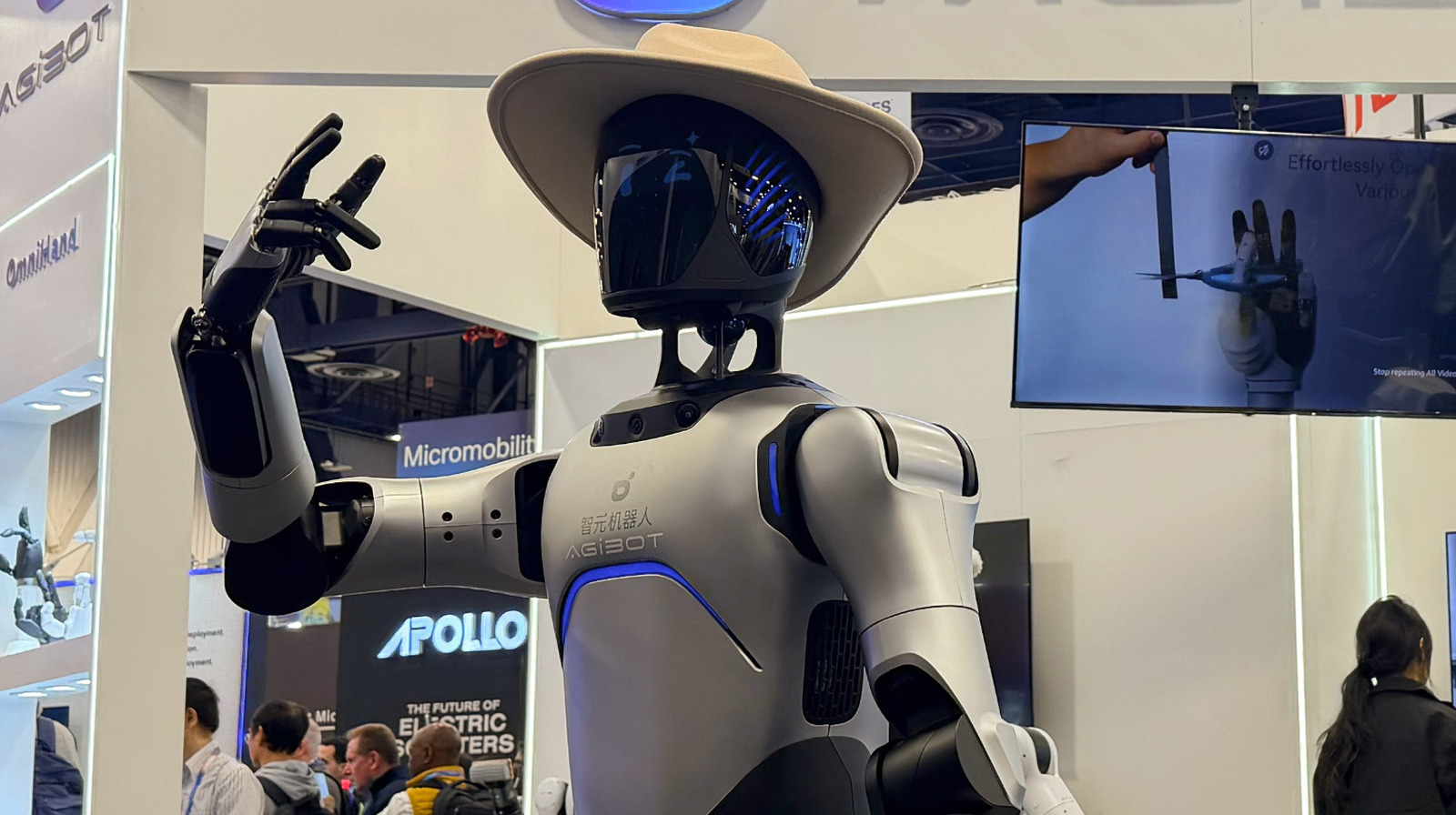
The industrial side of the humanoid market is further along, and that matters for consumers because it funds the R&D. Innovation & Tech Today noted in late April that CES 2026 was dominated by autonomy, advanced sensing, and AI, with humanoid robots moving from concept to factory-floor deployment. Agibot, a Chinese firm, placed its R2 wheeled humanoid on a live tablet production line, Forbes reported in what it called a world first. UniX AI claimed in a Reuters press release the first real-world home deployment of a mass-produced humanoid, the Panther, though independent verification of that claim remains thin.
What none of the shipping timelines answer is whether a consumer actually wants a general-purpose humanoid in their home, as opposed to a collection of single-purpose devices that do specific things reliably. A robot vacuum is not exciting on a trade-show stage, but it cleans floors every day without falling over. A dishwasher does one thing and has a hundred years of safety engineering behind it. A $20,000 humanoid that can, in theory, load the dishwasher and fold the laundry and walk the dog is competing with appliances that cost a fraction as much and fail in predictable, contained ways. The value proposition of the general-purpose humanoid rests entirely on versatility, and versatility in robotics has historically meant mediocre performance across a wide range of tasks rather than excellence at any one of them.
The second half of 2026 will provide the first real data. If 1X ships Neo units to paying customers and those customers post unscripted videos of the robot functioning in real homes, the category will have cleared a bar no humanoid has ever cleared. If Tesla's Optimus V3 production line in Fremont produces robots that stay upright and complete tasks without remote human intervention, the skeptics will have to revisit their timelines. If the Unitree R1 arrives on doorsteps and works as advertised for $4,000, the price floor will have dropped to a point where hobbyist adoption alone could sustain a developer ecosystem. And if none of these things happen, the trade-show circuit will still have plenty of polished demos to display in January.
Read next