Modular Data Centers Rewrite Compute Infrastructure Rules
Factory-built server enclosures, from shipping-container racks to 1,000-megawatt campuses, are slashing build times and shifting how data centers meet rising AI demand.
 modular.org
In this article
A developer who bought 270 acres in East Fishkill, New York, originally planned to build warehouses on the site. By May 2026, that plan had been scrapped. In its place, according to The Journal News, the developer was exploring a 1,000-megawatt datacentre campus, a facility that would draw as much electricity as a small city. The Dutchess County proposal is not an outlier. It is a signal, one of dozens now rippling through county zoning boards and utility commission dockets across the United States, that the geography of compute is being redrawn by a technology most people still picture as a concrete tilt-wall shed with a diesel generator out back.
That picture is increasingly obsolete. Over the past eighteen months, the datacentre industry has undergone a structural shift toward modular and prefabricated construction methods that compress build schedules, bypass constrained labour markets, and, critically, allow operators to place compute capacity where the power grid can actually deliver it today rather than where the grid might be upgraded five years from now. The trend is broad enough to have moved earnings at some of the largest mechanical and electrical contractors in the country. Seeking Alpha reported in April that Comfort Systems USA, a contractor whose datacentre exposure has transformed its financial profile, closed the first quarter of 2026 with a backlog of $12.5 billion and same-store revenue growth of 51 percent. Chief executive Brian Lane called it a "fantastic quarter" and guided for mid-to-high 20 percent same-store growth for the full year.
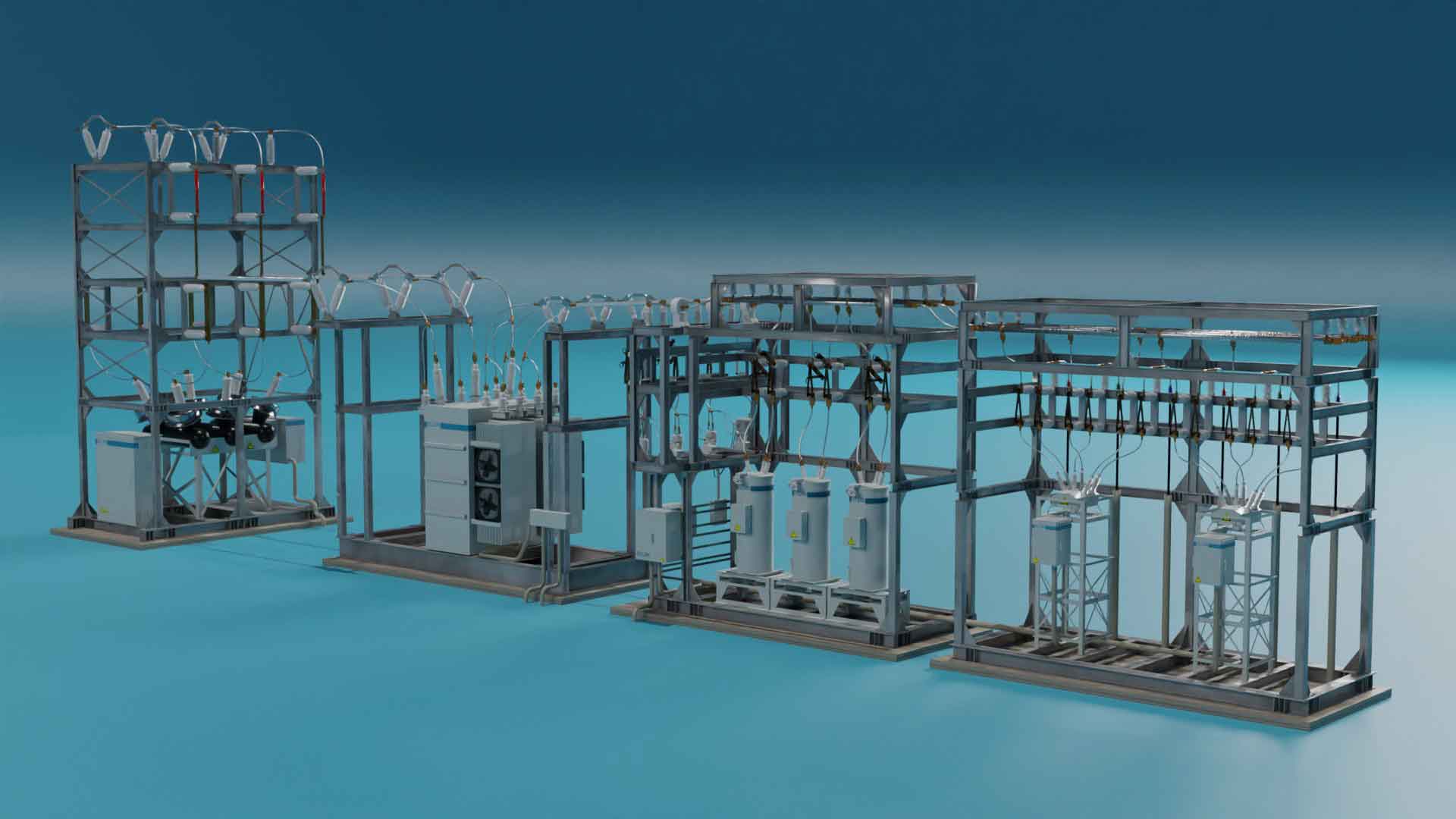
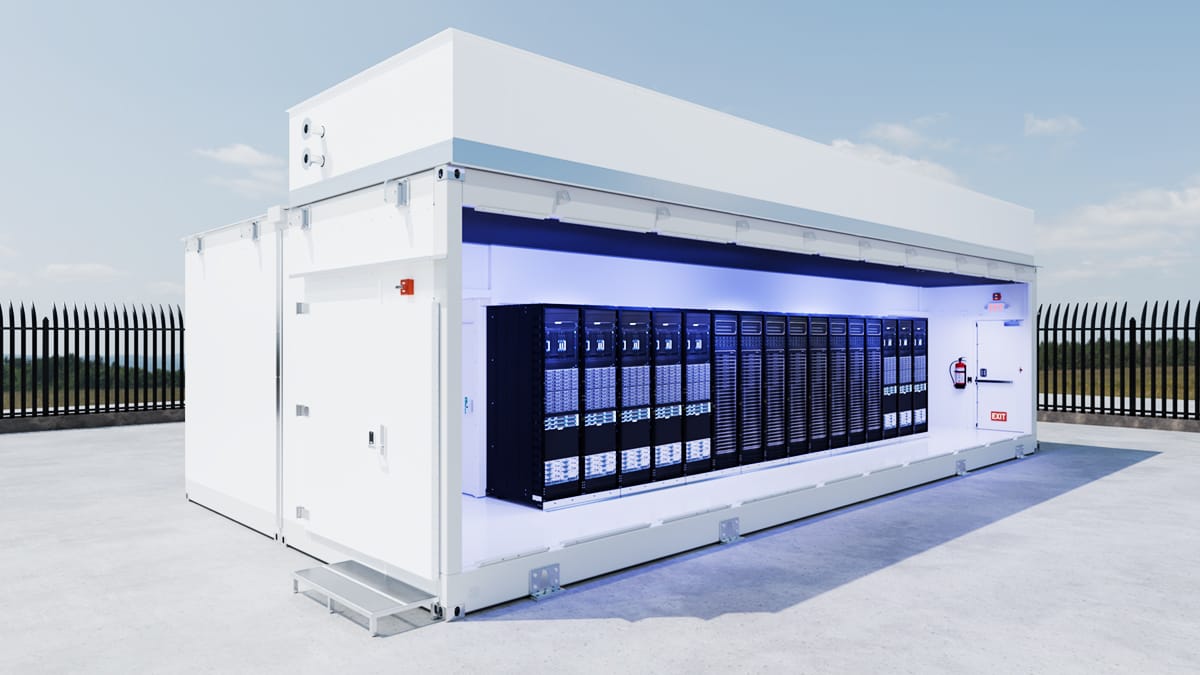
The numbers are large enough that they invite a simple question. What, exactly, is being built? The answer turns on a distinction that is worth drawing carefully. Modular datacentre construction falls into two broad categories. The first is factory-built prefabricated modules, fully integrated enclosures that ship to a site with server racks, power distribution, and cooling plant already installed and tested. The second is what the industry calls offsite prefabrication, where major subsystems such as electrical skids, pipe racks, and cooling loops are assembled in a factory and then trucked to a greenfield site for final integration. Both approaches share a common economic logic: they shift labour hours from the construction site, where skilled trades are scarce and weather delays are expensive, to a controlled factory floor where production can be standardised and scaled.
The supply chain behind this shift is worth watching because it reveals who is capturing value as the build method changes. Comfort Systems USA has invested heavily in its own prefabrication facilities, Simply Wall St. reported via Yahoo Finance in March, positioning the company as what one fund manager described as a "critical infrastructure partner for the datacentre buildout." On the server side, Super Micro Computer has expanded its modular datacentre offerings, including liquid-cooled racks that bolt directly into prefabricated enclosures, compressing what was once a multi-vendor integration into a single purchase order. And on the connectivity side, MarketBeat reported via Yahoo Finance on 12 May that Clearfield executives see fibre demand stabilising as datacentre and edge networking bookings rise, a pattern that suggests the modular buildout is already reaching the access-layer infrastructure that connects these facilities to the wider network.
Cooling is where the modular logic is perhaps most visible. In June 2025, LiquidStack announced a modular coolant distribution unit, or CDU, that it described as capable of scaling to hundreds of megawatts of cooling capacity, Facilities Dive reported via Yahoo Finance. The product is essentially a cooling plant on a skid, a self-contained unit that can be dropped into a modular datacentre enclosure or lined up in rows alongside hyperscale halls. The distinction matters because direct-to-chip liquid cooling demands infrastructure that most existing datacentres were never designed to accommodate. A modular CDU solves that problem by making the cooling plant a field-replaceable unit, decoupled from the building envelope. It is the same logic that has governed the server rack for two decades, extended now to the thermal plumbing.
The edge datacentre segment, long a story of promise and deferred delivery, is finally acquiring physical form. On 16 April 2026, Datavault AI announced that its first edge GPU sites in New York and Philadelphia had gone live, built on a quantum-resistant edge platform and aimed at enterprises facing extended lead times for traditional datacentre GPU deployments, USA Today reported. The company plans to reach more than 100 U.S. cities by the end of 2026, with a fleet of 48,000 GPUs. That is not a typical datacentre campus. It is a distributed compute fabric, assembled from modular building blocks and deployed wherever a fibre connection and a substation happen to intersect.
A panel convened by Construction Dive in New York City in March identified a single constraint that may determine whether the city captures the next wave of datacentre investment: power. New York’s grid is dense but old, and the usable capacity that exists is often in the wrong places. The panel’s conclusion, reported by Construction Dive via Yahoo Finance, was that edge datacentres, deployed in smaller increments at sites with existing capacity, represent the most plausible path to growth for a metro area where hyperscale campuses are politically and electrically impossible. The same logic applies, with local variations, in London, Tokyo, Frankfurt, and Singapore. Edge is not an alternative to hyperscale. It is an accommodation to the grid.
What the Substation Tells You About the Schedule
The single most important document in any modular datacentre project is not the architectural plan. It is the interconnection study filed with the regional transmission organisation. Substation capacity and the queue for grid interconnection now dictate site selection timelines far more than land acquisition or zoning. A hyperscale campus in Virginia’s Loudoun County might wait four to six years for a new transmission line. A modular edge deployment in an industrial park outside Poughkeepsie might connect within twelve months, if the existing 115 kV feeder has headroom. The arithmetic is brutal and the outcome predictable: capital is flowing to wherever interconnection can be secured fastest, and modular construction is the enabling technology that makes that capital deployable.
This shift has begun to reshape the valuation of infrastructure stocks. Vertiv Holdings, a manufacturer of power and thermal management equipment for datacentres, has seen its share price rise roughly 270 percent as the AI-driven datacentre expansion has accelerated, The Motley Fool reported on MSN in early May 2026. The company’s modular power skids, which integrate switchgear, uninterruptible power supplies, and battery storage into a single factory-tested unit, have become a standard specification for both hyperscale and edge builds. The economics are straightforward: factory integration reduces onsite commissioning time by weeks, and in a datacentre lease where every day of delay costs real revenue, weeks are money.
Clearfield’s earnings, reported in mid-May, offer a complementary view from the fibre end of the problem. The company’s executives told analysts that demand across fibre connectivity markets is stabilising after a period of inventory digestion, and that datacentre bookings are rising. Fibre is the circulatory system of the modular buildout. A prefabricated edge pod is only as useful as the dark fibre pairs that connect it to a carrier hotel or an internet exchange. Clearfield’s order book suggests that those connections are being provisioned in volume, which in turn implies that the edge pods are not merely being announced but actually being plugged in.
The cooling side of the modular story deserves its own scrutiny because it is where the engineering is most demanding. LiquidStack’s modular CDU addresses a problem that hyperscale operators have been wrestling with since the transition from air cooling to direct-to-chip liquid cooling began in earnest around 2023. A traditional chilled-water plant is a permanent installation, sized for a specific building, with a design life measured in decades. A modular CDU is a consumable. It can be swapped, upgraded, or relocated as chip thermal design power evolves, which it does with every new GPU generation. That flexibility has value, particularly for colocation providers who must accommodate tenants with divergent cooling requirements.
The modular data center space is quickly becoming one of the most important infrastructure segments for AI workloads, and Super Micro is positioning itself at the center of that shift., Barchart, via Yahoo Finance, April 2026
The Super Micro expansion is particularly instructive because the company straddles both the server and the enclosure. Its modular offerings include rack-level liquid cooling integrated with prefabricated enclosures, a combination that reduces the integration risk that has historically bedevilled liquid-cooled deployments. When the server vendor also supplies the rack, the power shelf, and the cooling loop, the finger-pointing that accompanies a coolant leak or a thermal trip is eliminated, or at least contained to a single supplier. That matters to colocation operators who lack the engineering depth of a hyperscale cloud provider.
Who Pays for the Grid, and Who Benefits
The modular buildout carries a political economy that is only beginning to surface in utility rate cases and state legislatures. When a developer proposes a 1,000-megawatt campus in Dutchess County, the cost of the necessary transmission upgrades does not fall on the developer alone. It is socialised across the rate base, allocated by formulas that were written decades before anyone imagined a datacentre drawing as much power as an aluminium smelter. PolitiFact analysed the claims in early May and found that while datacentres would not double household electricity use, as some critics had alleged, the energy footprint was substantial enough to warrant scrutiny. The tension is structural: modular construction makes it easier to build datacentres, but the grid upgrades that make them possible are a public cost.
Transmission planners at the independent system operators are watching this tension carefully. In POWER Magazine, analysts noted in May 2026 that hyperscale datacentres are "outpacing grid infrastructure" and that power availability is now the primary variable in site selection. Modular construction does not solve the grid problem, but it does change its character. A modular deployment can be sized to the available capacity at a given substation, rather than requiring the substation to be sized to the building. That is a small difference in engineering terms and a large one in financial terms. It means the building does not have to wait for the grid, and the grid does not have to be overbuilt for a single tenant.
The Data Center World 2026 expo, held in April, featured more than 500 exhibitors showcasing what MarketWatch described as the "world’s largest showcase of cutting-edge technologies driving the AI-powered datacentre era." Among the technologies on display were modular power skids from Vertiv, prefabricated enclosures from companies that a decade ago were building portable office trailers, and liquid cooling distribution units that can be hot-swapped without taking a server rack offline. The expo floor was, in effect, a catalogue of the modular supply chain, and the sheer breadth of it suggested that the transition from stick-built to factory-built datacentre infrastructure is no longer experimental.
The modular edge buildout also intersects with a development that would have seemed improbable five years ago: the nuclear option. In May 2026, NANO Nuclear Energy signed a memorandum of understanding with Super Micro Computer to pair advanced nuclear micro modular reactors with AI datacentres, FinanzNachrichten reported. The premise is that a modular reactor, factory-built and skid-mounted, can be co-located with a modular datacentre, creating a self-contained power-and-compute unit that is independent of the transmission grid. The engineering challenges are formidable and the regulatory hurdles larger still, but the MOU signals that at least some participants in the modular datacentre supply chain are already planning for a future in which grid interconnection is not merely a bottleneck but an existential risk.
The liquid cooling market that supports these deployments is itself expanding at a clip that reflects the underlying build rate. A report from Market Decipher, cited by FinanzNachrichten in late April, projected that the AI datacentre liquid cooling market would grow at a compound annual rate of 17.2 percent, reaching $18.1 billion by 2036. That forecast assumes a buildout that is predominantly modular, since direct-to-chip liquid cooling is far easier to integrate in a factory than on a construction site. The report is a lagging indicator, a market forecast derived from current procurement patterns, but it confirms what the supply chain already reflects: the cooling industry is being reorganised around the same prefabrication logic that is reshaping the rest of the datacentre stack.
What the modular buildout does not yet solve is the labour question, though it changes its character. Factory prefabrication shifts employment from construction sites, where union electricians and pipefitters command premium wages in tight markets, to manufacturing facilities where the workforce is different and the wage structure is too. The mechanical contractors who have invested most heavily in prefabrication, Comfort Systems prominent among them, describe the strategy as a response to skilled-labour scarcity. That is true as far as it goes, but it also represents a reallocation of economic rents from one set of workers to another, and from one set of communities to a different set. The county that hosts a prefabrication plant captures manufacturing jobs; the county that hosts a stick-built datacentre captures construction jobs. The modular transition shuffles that deck.
For now, the momentum is unmistakable. Comfort Systems’ $12.5 billion backlog is not a datacentre backlog in the narrow sense, the company also builds hospitals, semiconductor fabs, and pharmaceutical plants, but the datacentre segment is the growth engine, and the prefabrication strategy is how the company intends to convert that backlog into revenue and margin. Super Micro’s modular expansion, Clearfield’s stabilising fibre orders, LiquidStack’s skid-mounted cooling, Datavault AI’s edge GPU pods, and the growing queue of county zoning board hearings from Dutchess County to Maricopa County all point in the same direction. The datacentre is becoming a product, not a project.
The Dutchess County proposal will face its first substantive zoning review later this year. The outcome will be watched closely, not only by the developer, but by every utility commissioner, transmission planner, and site selection consultant whose job now involves matching compute demand to available electrons. The module, the skid, and the edge pod have made it possible to put a datacentre almost anywhere. Whether that anywhere has the power to run it is a question the next round of quarterly earnings calls will not answer, but the substation studies will.
Read next